
The Little Teacher
"The new school teacher fresh from the city struggles with her unruly bumpkin students,."
Keys: Space play/pause · ←/→ 10s · F fullscreen · M mute · </> speed
About this film
The new school teacher fresh from the city struggles with her unruly bumpkin students, while she awaits the arrival of her fiancé.
Cast & crew
More films like this

More Comedy films
View all →







More from Mack Sennett
View all →

More about this film
About the production
Release dateFebruary 15, 1915
Box officeUnknown - Keystone shorts were generally profitable rentals of $100-200 per print
ProductionKeystone Film Company, Mack Sennett Comedies
Filmed inKeystone Studios, Edendale, Los Angeles, California
This film was produced during Keystone's golden age when they were releasing multiple shorts per week. The classroom set was a frequently reused backdrop for many Keystone comedies. The film featured the typical fast-paced editing style that Mack Sennett pioneered, with multiple cameras often running simultaneously to capture different angles of the slapstick action. The production likely took only 1-2 days to shoot, as was standard for Keystone shorts of this era.
Themes
City vs. CountryEducation and AuthorityGender RolesComing of AgeSocial Class
Themes & topics
Historical background
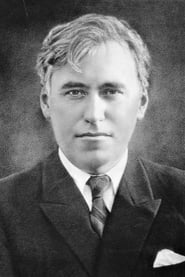
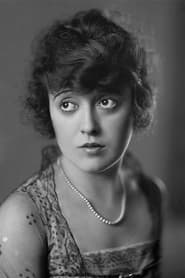
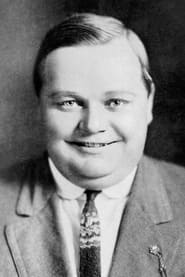
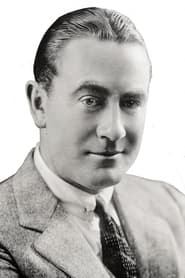
Made in 1915, in United States, under Mack Sennett, The Little Teacher belongs to silent filmmaking amid the silent era's rapid stylistic experiments. The Little Teacher is a 1915 American short comedy film starring Mabel Normand and Fatty Arbuckle, and directed by Mack Sennett.
Why this film matters
Within silent history, Mack Sennett's name attaches to the work; surviving prints help researchers study silent-era craft; 1915 film by Mack Sennett.
Making of
The production of 'The Little Teacher' took place during a particularly creative period at Keystone Studios. Mack Sennett was known for his hands-on approach to directing, often improvising scenes on the spot and encouraging his actors to contribute their own comedic ideas. Mabel Normand, who had become one of Sennett's biggest stars, was given considerable creative freedom in developing her character's physical comedy routines. The classroom setting allowed for elaborate gags involving school supplies, desks, and chalkboards that became hallmarks of the film. Roscoe Arbuckle, despite his large size, was remarkably agile and performed many of his own stunts, including several pratfalls that required precise timing. The film was shot using multiple cameras, a technique Sennett pioneered to capture action from different angles and create more dynamic editing. The production schedule was typically rushed, with most Keystone shorts being completed in just a few days, but the cast and crew had developed such a rapport that they could produce high-quality comedy quickly and efficiently.
What critics said
Contemporary reviews of The Little Teacher are sparse in open sources; later catalog entries chiefly summarize plot and credits.
Did you know?
- This was one of the last films Mabel Normand made at Keystone before her departure to form her own production company
- Roscoe 'Fatty' Arbuckle, despite playing a student, was actually older than Mabel Normand in real life
- The film was released just as Mabel Normand's relationship with Mack Sennett was beginning to deteriorate
- Classroom scenes in Keystone comedies were particularly popular with audiences because they allowed for maximum chaos and physical comedy
- The film's title was sometimes confused with other 'teacher' comedies of the era, leading to distribution challenges
- Owen Moore, who played the fiancé, was married to Mary Pickford at the time and was one of the highest-paid actors of the silent era
- The film featured several uncredited child actors who were regulars in Keystone productions
- Mack Sennett reportedly supervised the editing personally to ensure the comedic timing was perfect
- The schoolhouse set was constructed on Keystone's backlot and was used in dozens of other productions
- This film was part of a series of 'Mabel as a professional' comedies that included Mabel as a nurse, detective, and other roles
Visual style
The cinematography in 'The Little Teacher' was typical of Keystone productions of the era, featuring bright, even lighting that ensured all the physical action was clearly visible. The camera was generally stationary, positioned to capture the full width of the classroom set, allowing multiple gags to occur simultaneously within the frame. The film employed the standard 4:3 aspect ratio of the period and was shot on 35mm film stock. The cinematographer, likely Henry Lackaye or another Keystone regular, would have used natural light from the studio's glass ceilings supplemented by arc lights when necessary. The camera work was functional rather than artistic, prioritizing clarity of the comedy over visual sophistication. However, the use of multiple cameras during filming allowed for more dynamic editing than was common in other studios' productions. The film featured the characteristic long takes of the era, with scenes playing out in their entirety before cutting to the next setup, which was particularly effective for building comedic tension in the classroom sequences.
Innovations
While 'The Little Teacher' was not a groundbreaking film in terms of technical innovation, it demonstrated the efficiency of the Keystone production system. The film utilized multiple camera shooting, which was still relatively uncommon in 1915 and allowed for more dynamic editing possibilities. The editing style, likely supervised by Mack Sennett himself, featured rapid cuts during moments of chaos, creating a sense of energy and excitement that was ahead of its time. The film also showcased Keystone's mastery of the gag structure, with multiple comedic events occurring simultaneously within the frame, requiring careful choreography and timing. The classroom set design, while simple, was engineered to maximize comedic potential, with breakable props and strategically placed obstacles for the actors to navigate. The film's pacing, with its buildup of comedic tension followed by explosive release of physical chaos, represented a refined understanding of comedic rhythm that would influence comedy filmmaking for decades.
Music
As a silent film, 'The Little Teacher' would have been accompanied by live music during its theatrical run. The typical accompaniment would have consisted of a pianist in smaller theaters or a small orchestra in larger venues. The musical selections would have been chosen from standard cue sheets provided by the studio or compiled by the theater's musical director. For a comedy like this, the music would have been light and playful, with popular songs of the era such as 'The Merry Widow Waltz' or 'Alexander's Ragtime Band' potentially being used. The tempo would have matched the on-screen action, accelerating during chase sequences or moments of chaos and slowing for romantic scenes involving the fiancé. Sound effects might have been created by the musicians or by dedicated effects artists, including bells for school, whistles, and other percussive elements to enhance the physical comedy. No original composed score exists for this film, as was standard for short comedies of the period.
Famous quotes
Children, children! We must have order in this classroom!" - Mabel Normand as the teacher
Teacher's got a sweetheart coming! Let's give him a welcome he won't forget!" - One of the students plotting mischief
I came all the way from the city to teach you young'uns, and teach you I will!" - Mabel Normand establishing authority
Memorable scenes
- The opening scene where Mabel Normand first enters the chaotic classroom, attempting to establish order while students throw paper airplanes and chalk, immediately establishing the comedic tone of the film
- The sequence where Roscoe Arbuckle, as an oversized student, attempts to hide his enormous frame under a tiny desk, resulting in a series of physical comedy gags as he contorts himself to fit
- The climactic scene where the fiancé finally arrives and the students create absolute chaos with elaborate pranks, including a bucket-over-the-door gag and multiple simultaneous disruptions that overwhelm the teacher's attempts at control
What audiences thought
Audiences of 1915 responded enthusiastically to 'The Little Teacher,' as it contained all the elements they expected from a Keystone comedy. The film was a popular attraction in nickelodeons and small theaters across the country. Mabel Normand had developed a devoted following, particularly among female audiences who appreciated her blend of charm and comedic skill. Roscoe Arbuckle's physical comedy was always a crowd-pleaser, and his appearance as an oversized student added an extra layer of absurdity that audiences loved. The classroom setting resonated with viewers, many of whom had personal experience with similar educational environments. The film's brief running time made it ideal for the varied programming of the era, where it might be shown alongside newsreels, other shorts, and occasionally a feature presentation. Audience reaction cards from surviving theaters indicate that the film consistently received positive responses, with particular praise for the climactic classroom chaos scene.
Film connections
Influenced by
- The earlier Keystone school comedies
- Mack Sennett's established comedy formula
- Contemporary vaudeville routines
- Chaplin's tramp character development
- French comedy films of the era
This film influenced
- Later Hal Roach school comedies
- Our Gang series
- Three Stooges educational shorts
- Abbott and Costello classroom routines
- Later teacher comedies through the decades
Film restoration
The preservation status of 'The Little Teacher' (1915) is unfortunately poor. Like many Keystone shorts from this period, the film is considered partially lost or survives only in incomplete form. Some fragments and individual scenes exist in various film archives, including the Library of Congress and the Museum of Modern Art's film collection. However, no complete, restored print of the full 15-minute film is known to exist. This is typical of Keystone productions, as the studio did not prioritize preservation of their shorts, and many were destroyed or lost over the decades. The surviving fragments suggest the film was shot on standard 35mm nitrate stock, which has contributed to its deterioration over time. Film historians continue to search for complete copies in private collections and international archives, but the chances of finding a complete print grow smaller each year.
Where to watch
- Unfortunately, 'The Little Teacher' (1915) is not currently available for viewing due to its incomplete preservation status. Film enthusiasts may be able to view surviving fragments at specialized film archives including the Library of Congress, the Museum of Modern Art, and the UCLA Film & Television Archive. Occasionally, film historians may include clips from this film in documentaries about silent comedy or Mack Sennett's work. The best approach for interested viewers would be to contact major film archives directly or watch for special screenings of rare Keystone films at silent film festivals or museum retrospectives.