

The Oubliette
"Poet François Villon robs the rich to aid evicted tenants."
Keys: Space play/pause · ←/→ 10s · F fullscreen · M mute · </> speed
About this film
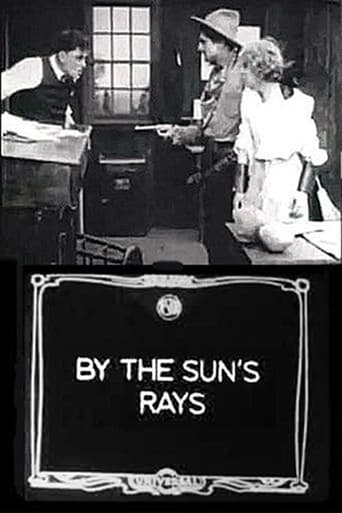
Poet Villon, vagabond, poet and philosopher, and his friend Colin, leave the vagabond camp and start for Paris. En route to that city, Villon's heart is touched at sight of the eviction of an elderly couple from their poor home. Whereupon he empties his own and Colin's purse, pays the Beadle, and then resume their journey. Overcome with the pangs of hunger, they "lift " the purses of a couple of corpulent monks. For this breach of law both Villon and Colin are arrested and thrown into prison. and By the Sun's Rays are two of Chaney's earliest surviving films.
Cast & crew
More films like this
More Drama films
View all →







More from Charles Giblyn
View all →
More about this film
About the production
Release dateMarch 7, 1914
ProductionUniversal Film Manufacturing Company
Filmed inUniversal City, California
This was one of the early productions at Universal City when the studio was still establishing itself as a major player in the film industry. The film was shot quickly on a modest budget, typical of Universal's short film productions of the era. The medieval setting was created using Universal's backlot facilities, with minimal but effective set design to evoke 15th century Paris. The production team utilized natural lighting and practical effects that were standard for the period.
Themes
Poverty and social injusticeRedemption and moral complexityThe duality of human natureCompassion versus survivalSocial class and economic disparity
Themes & topics
Historical background
By 1914, distribution networks were widening, and The Oubliette reached viewers through the same short-program bills that mixed comedy, news, and spectacle.
Why this film matters
Later homages and restorations keep The Oubliette circulating among silent- and classic-film communities long after its first run.
Making of
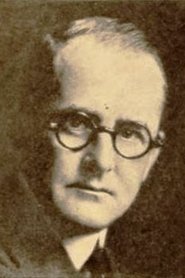
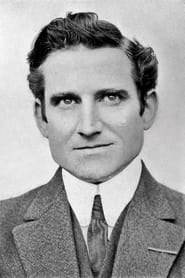
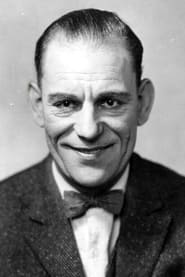
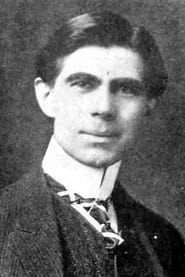
The production of 'The Oubliette' took place during Universal's formative years when Carl Laemmle was building his studio empire. Charles Giblyn, the director, was known for his efficiency and ability to complete productions quickly and economically. The cast worked long days typical of the era, often filming multiple scenes in a single day. Murdock MacQuarrie brought his extensive stage experience to the lead role, while Lon Chaney, still early in his career, was developing the character acting techniques that would later make him famous. The film's medieval setting was achieved through costumes and minimal set pieces, as location shooting was rare and expensive. The production team relied on natural light from outdoor stages or diffused window light for interior scenes, creating the characteristic soft look of early cinema.
What critics said
Specialist critics writing today emphasize preservation and access—praising archives when a viewable copy of The Oubliette survives rather than overstating original buzz.
Did you know?
- This film is one of only a handful of Lon Chaney's early works from 1914 that survive today, making it extremely valuable to film historians.
- The title 'Oubliette' refers to a type of dungeon with access only through a trapdoor in the ceiling, reflecting the prison themes in the film.
- Murdock MacQuarrie, who plays Francois Villon, was a respected stage actor who transitioned to films and became a regular in Universal productions.
- The film was released just months before World War I began, capturing a final moment of pre-war cinema innocence.
- Director Charles Giblyn was a prolific director in the 1910s who directed over 100 films during his career.
- The character of Francois Villon was based on the real 15th-century French poet who was indeed known for his criminal activities.
- This film was part of Universal's 'Universal Juniors' series of short dramatic films.
- The film's survival is remarkable given that an estimated 90% of American silent films have been lost.
- Lon Chaney appears in a supporting role, two years before his breakthrough performance in 'The Miracle Man' (1919).
- The film was shot on 35mm film at a frame rate of approximately 16 frames per second, standard for the era.
Visual style
The cinematography of 'The Oubliette' reflects the technical limitations and aesthetic preferences of 1914. The film was likely shot on a stationary camera with minimal movement, as mobile camera shots were still experimental and expensive. Natural lighting was used extensively, with scenes filmed outdoors or near large windows to achieve adequate exposure. The visual style emphasizes clarity and composition over artistic flourish, typical of the period's functional approach to cinematography. The film's visual narrative relies on medium shots and long shots, with close-ups used sparingly for emotional emphasis. The black and white photography exhibits the high contrast characteristic of early film stock, with deep shadows and bright highlights that enhance the dramatic atmosphere.
Innovations
While 'The Oubliette' does not feature groundbreaking technical innovations, it represents the standard technical capabilities of American cinema in 1914. The film demonstrates the established practices of continuity editing, though the techniques were still evolving. The production likely used the standard 35mm film format with approximately 16 frames per second projection speed. The lighting setup would have relied primarily on natural light supplemented by arc lights when necessary. The film's survival and preservation represent a technical achievement in itself, as maintaining nitrate film stock from this period requires specialized knowledge and facilities. The restoration work that may have been done on surviving copies would involve modern digital techniques while preserving the original film's historical integrity.
Music
As a silent film, 'The Oubliette' originally would have been accompanied by live musical performance in theaters. The specific musical score is not documented, but typical accompaniment for a dramatic short of this period would include a pianist or small ensemble performing classical pieces, popular songs, and improvised music that matched the on-screen action. The music would have emphasized the emotional beats - tender melodies for scenes of compassion, tense music for the theft sequence, and dramatic chords for the imprisonment. Modern screenings of the film typically feature newly composed scores or period-appropriate classical music to recreate the authentic silent film experience.
Famous quotes
The poet's heart is often heavier than his purse
In Paris, even angels must pay rent
A man may steal bread, but he cannot steal his conscience
Memorable scenes
- The eviction scene where Villon gives away his last money to help the elderly couple, demonstrating his moral complexity as a thief with a conscience
- The tense moment when Villon and Colin decide to steal from the monks, driven by hunger despite knowing the risks
- The final imprisonment sequence in the oubliette, emphasizing the harsh consequences of their actions
What audiences thought
Audience reception in 1914 is difficult to document precisely, as systematic audience research was not conducted. However, the film's subject matter - a historical drama with elements of crime and redemption - was popular with early cinema audiences. The presence of recognizable actors like Murdock MacQuarrie likely helped attract viewers. Modern audiences, primarily silent film enthusiasts and scholars, view the film primarily for its historical significance, especially as an early example of Lon Chaney's work. The film is occasionally screened at silent film festivals and archives, where it's appreciated as a rare surviving example of early American cinema.
Film connections
Influenced by
- Literary works about Francois Villon
- Victorian melodrama
- Stage plays of the early 20th century
- Contemporary social reform movements
This film influenced
- Later films about Francois Villon
- Universal's historical shorts of the 1910s
- Lon Chaney's later character-driven roles
Film restoration
The film survives in archives, making it one of the rare examples of Lon Chaney's 1914 work that has not been lost. It is preserved in film archives, though the quality may vary depending on the source material. The survival of this film is particularly significant given the estimated 90% loss rate of American silent films from this period. The film exists as a valuable historical artifact for studying early cinema and Chaney's career development.
Where to watch
- The film is occasionally screened at silent film festivals and special archive presentations
- Some film archives with access to rare prints may offer viewing opportunities for researchers
- The film may be available through specialized silent film distributors or archives
- Check with major film archives like the Library of Congress or UCLA Film & Television Archive for access to preserved copies