
The Poor Little Rich Girl
"Gwen's family is rich, but her parents ignore her and most of the servants push her around,."
Keys: Space play/pause · ←/→ 10s · F fullscreen · M mute · </> speed
About this film
But one day a servant's irresponsibility creates a crisis Adapted by Frances Marion from the 1913 play by Eleanor Gates. Gwen's family is rich, but her parents ignore her and most of the servants push her around, so she is lonely and unhappy. Her father is concerned only with making money, and her mother cares only about her social position.
Cast & crew
More films like this

More Drama films
View all →







More from Maurice Tourneur
View all →
More about this film
About the production
Release dateMarch 5, 1917
Box officeHighly successful - earned over $1 million, making it one of the biggest hits of 1917
ProductionMary Pickford Film Corporation, Artcraft Pictures Corporation
Filmed inFort Lee, New Jersey, Famous Players Film Company Studios
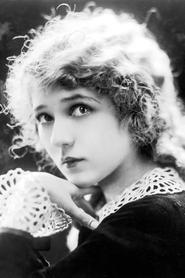
The first film Mary Pickford produced under her own production company after gaining unprecedented creative control. The film featured innovative fantasy sequences using double exposure and special effects that were for the time. Pickford, though 24 years old, convincingly played an 11-year-old child, showcasing her remarkable acting range.
Themes
Child neglect and emotional abandonmentWealth versus happinessThe importance of family and loveClass differences and social statusThe power of imagination and dreams
Themes & topics
wealthy familylonely childneglectful parentsservantsdream sequencesfantasyclass differencesfamily dramaemotional neglectsocial statusredemptionchildhood innocence
Historical background
Made in 1917, in United States, under Maurice Tourneur, The Poor Little Rich Girl belongs to comedy drama filmmaking amid the silent era's rapid stylistic experiments. The Poor Little Rich Girl is a 1917 American comedy-drama film directed by Maurice Tourneur.
Why this film matters
Within comedy drama history, Maurice Tourneur's name attaches to the work; surviving prints help researchers study silent-era craft; 1917 film directed by Maurice Tourneur.
Making of
The production was as it was the first film where Mary Pickford had complete creative control through her own production company. She hand-picked Maurice Tourneur to direct, impressed by his artistic sensibility and European training. The fantasy sequences required innovative special effects techniques, including double exposure and matte photography, which were extremely difficult to achieve with 1917 technology. Pickford was deeply involved in every aspect of production, from script approval to casting decisions. The film's success proved that stars could produce their own films profitably, paving the way for future independent production companies. The relationship between Pickford and Tourneur was highly collaborative, with the director encouraging her to explore the emotional depth of her character beyond the typical melodramatic acting style of the era.
What critics said
Contemporary reviews of The Poor Little Rich Girl are sparse in open sources; later catalog entries chiefly summarize plot and credits.
Did you know?
- Mary Pickford was 24 years old when she played 11-year-old Gwen, demonstrating her famous ability to convincingly portray children well into adulthood
- Based on a popular 1913 Broadway play by Eleanor Gates, which starred stage legend Viola Allen
- The first film produced by Mary Pickford's own production company, giving her unprecedented control over her career
- Director Maurice Tourneur was a French filmmaker who brought sophisticated European techniques to American cinema
- The fantasy dream sequences were considered highly innovative for their time, using special effects and double exposure techniques
- The film's success helped establish Mary Pickford as the most powerful woman in Hollywood and earned her the nickname 'America's Sweetheart'
- A fire at the Famous Players studio during production destroyed some sets, requiring costly reconstruction
- Pickford's salary for this film was $10,000 per week, an astronomical amount for 1917
- So popular that it spawned numerous imitations about lonely rich children
- This marked a turning point in Pickford's career, showing she could handle more mature themes while still playing child roles
Visual style
The cinematography by John van den Broek and Lucien Andriot was highly innovative for its time. The film featured sophisticated lighting techniques that created mood and atmosphere, particularly in the fantasy sequences. Tourneur and his cinematographers used soft focus and backlighting to create dreamlike effects that were revolutionary in 1917. The fantasy dream sequences employed double exposure techniques and in-camera effects to create magical visuals. The cinematography also made effective use of depth and composition, with Tourneur bringing his European artistic sensibility to American cinema. The contrast between the cold, formal world of Gwen's wealthy environment and the warm, emotional fantasy worlds was achieved through careful lighting and camera work. The film's visual style influenced many subsequent productions and demonstrated the artistic possibilities of cinematic storytelling.
Innovations
Featured several technical innovations that were for 1917. The fantasy dream sequences utilized sophisticated double exposure techniques that were extremely difficult to achieve with the equipment of the time. The film also employed innovative matte photography to create magical effects that blurred the line between reality and imagination. Tourneur and his technical team developed new methods for creating smooth transitions between different visual states, particularly effective in the fever dream sequences. The film's production design included elaborate sets that could transform to represent different psychological states. The lighting techniques used to create mood and atmosphere were particularly advanced, with the cinematographers using artificial lighting in ways that were still experimental at the time. These technical achievements helped establish new possibilities for visual storytelling in cinema and influenced subsequent developments in film technology.
Music
As a silent film, The Poor Little Rich Girl was accompanied by live musical performances during its theatrical run. The original score was composed by James C. Bradford, who created different musical themes for the various characters and moods in the film. The music shifted dramatically between the formal classical pieces accompanying Gwen's wealthy world and the lighter, more whimsical melodies for the fantasy sequences. Theater orchestras were provided with detailed cue sheets indicating which music should be played during specific scenes. The emotional impact of the film was greatly enhanced by its musical accompaniment, with contemporary reviews specifically noting how effectively the music supported the storytelling. The score was considered sophisticated for its time and helped establish the importance of musical accompaniment in enhancing silent film narratives.
Famous quotes
Money can't buy happiness, but it can buy a lot of things that make people forget they're unhappy." - Gwen's father
I'd rather be poor and loved than rich and lonely." - Gwen
The greatest wealth in the world is a child's love." - Mary Pickford as Gwen (in a tender moment)
Sometimes the richest people are the poorest in spirit." - Narration title card
A child's heart is a fragile thing - handle with love, not gold." - Intertitle from the film's climax
Memorable scenes
- The fever dream sequence where Gwen imagines herself in a magical garden, showcasing innovative special effects and double exposure techniques that were revolutionary for 1917
- The emotional climax where Gwen's parents finally realize their neglect and rush to her bedside, featuring powerful performances that moved audiences to tears
- The opening scenes establishing Gwen's lonely existence in her mansion, contrasting the physical luxury with emotional poverty
- The transformation of the cold, formal mansion into a warm, loving home after the family's reconciliation
- The fantasy sequence where Gwen imagines different lives she could have lived, demonstrating the film's innovative visual style
What audiences thought
Enormously popular with audiences upon its release, breaking box office records across the United States. Theater owners reported that the film drew unprecedented crowds, with many venues running it for weeks due to demand. Audiences were particularly moved by the emotional story and Pickford's performance, with many reports of viewers being moved to tears during screenings. The film's themes of neglected children and the emptiness of wealth without love resonated strongly with contemporary audiences. Letters to movie magazines and newspapers praised the film's message and Pickford's ability to convey deep emotion. The film's success was such that it helped establish Mary Pickford as the most popular and beloved film star in America, with newspapers referring to her as 'the girl who has captured the heart of the nation.'
Film connections
Influenced by
- The 1913 Broadway play by Eleanor Gates
- European artistic cinema of the 1910s
- Victorian literature about neglected children
- Social realist drama
- Theatrical melodrama tradition
This film influenced
- The 1936 remake starring Shirley Temple
- Numerous films about lonely rich children throughout the 1920s-1940s
- Family dramas with social commentary
- Films blending reality and fantasy sequences
- Child-centered melodramas
Film restoration
Is preserved in the film archives of the Library of Congress and has been restored by several film preservation organizations. A complete 35mm print exists and has been made available for theatrical screenings. The film was selected for preservation in the United States National Film Registry in 1991 for its cultural, historical, and aesthetic significance. Various restored versions have been released on home video, including DVD and Blu-ray editions by The Criterion Collection and other specialty distributors. The restoration work has preserved the film's original tints and visual effects, allowing modern audiences to appreciate its technical achievements.
Where to watch
- The Criterion Channel (streaming)
- Kino Lorber DVD/Blu-ray releases
- Film Movement streaming service
- Museum of Modern Art film screenings
- Various public domain streaming sites
- Film archives and cinematheques
- Turner Classic Movies (occasional broadcasts)
- The Library of Congress's online catalog for research purposes