

The Seventh Day
"A neglectful woman wants custody of her children in her divorce"
Keys: Space play/pause · ←/→ 10s · F fullscreen · M mute · </> speed
About this film
A neglectful woman wants custody of her children in her divorce. The judge rules that he will give her the children only if she can demonstrate her children's love for her within a week.
Cast & crew
More films like this

More Drama films
View all →







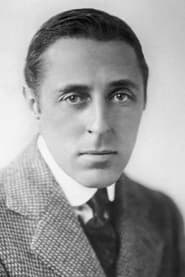
More from D.W. Griffith
View all →
More about this film
About the production
Release dateJuly 22, 1909
ProductionAmerican Mutoscope and Biograph Company
Filmed inNew York City, New York, Fort Lee, New Jersey
This film was produced during D.W. Griffith's prolific period at Biograph, where he directed approximately 450 short films between 1908 and 1913. The production utilized natural lighting and minimal sets, typical of Biograph's economical approach. The film was shot on 35mm black and white film stock, with intertitles created through the standard process of photographing text cards. Like many Biograph productions, it was likely completed in just one or two days of shooting.
Themes
Maternal love and redemptionFamily dynamics and divorceThe nature of genuine affection versus materialismJudgment and second chancesChild psychology and emotional needs
Themes & topics
divorcecustody battlematernal lovechild custodyfamily dramaemotional transformationjudicial decisionweek-long challengeneglectful parentredemption arc
Historical background
Released in 1909 during cinema's first decade, The Seventh Day reached audiences when exhibitors were still defining programming conventions. The narrative hook—A neglectful woman wants custody of her children in her divorce—reflects what contemporary producers thought would draw viewers.
Why this film matters
The Seventh Day remains discussed by archivists tracing how screen stories of its period represented work, desire, conflict, and social order. Its central situation—A neglectful woman wants custody of her children in her divorce—still prompts questions about genre conventions and audience expectations.
Making of
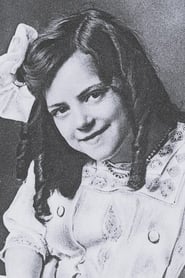
The production of 'The Seventh Day' took place during a transformative period in American cinema. D.W. Griffith was rapidly developing his directorial techniques at Biograph, experimenting with narrative structure and emotional depth. The casting of child actors like Gladys Egan was common in Griffith's films, as he believed children could convey pure emotion more effectively than adult actors. The film was shot on location in Fort Lee, New Jersey, which was then a major filmmaking center before the industry's migration to Hollywood. Griffith worked with cinematographer G.W. Bitzer, who would become his long-term collaborator, to create the visual narrative. The minimal sets and natural lighting reflect both the technical limitations of the era and Biograph's cost-conscious production methods. Griffith's direction of the child actors was reportedly gentle and patient, as he understood the importance of capturing authentic performances from young performers.
What critics said
Trade and newspaper notices for The Seventh Day generally emphasized casting, spectacle, and program fit rather than extended aesthetic argument. Retrospective screenings and archival notes continue to shape how viewers evaluate The Seventh Day today.
Did you know?
- This film was released during the same month that D.W. Griffith directed at least 8 other films for Biograph, demonstrating his incredible productivity.
- The Seventh Day was one of over 30 films Griffith directed in 1909 alone, helping establish his reputation as one of cinema's first master directors.
- James Kirkwood, who plays a supporting role, would later become a prominent director himself, directing over 100 films.
- The film's theme of maternal redemption was one that Griffith would return to multiple times throughout his career.
- This short film was distributed on a 'split reel' with another Biograph production, a common practice to maximize theater programming efficiency.
- The film was created before the establishment of Hollywood as the center of American film production, when New York and New Jersey dominated the industry.
- Gladys Egan, one of the child actors, was one of Biograph's most frequently used child performers, appearing in dozens of Griffith's films.
- The film's running time of approximately 12 minutes was considered relatively long for a single-reel production of the era.
- Like many Biograph films of this period, original prints were tinted by hand to add color to certain scenes, though most surviving copies are in black and white.
- The film was released just three years after the first narrative films began appearing in American theaters, representing an early example of sophisticated storytelling.
Visual style
The cinematography in The Seventh Day was handled by G.W. Bitzer, Griffith's regular collaborator at Biograph. The film employs the stationary camera techniques typical of the era, with the camera remaining fixed for most scenes. Bitzer utilized natural lighting from windows and studio skylights to create atmospheric effects. The film's visual composition follows the theatrical tradition of the period, with actors arranged in tableaux-like compositions. Close-ups were used sparingly but effectively, particularly for emotional moments involving the children. The intertitles were photographed separately and spliced into the final print, using elegant typography that was characteristic of Biograph productions. The visual style emphasizes clarity and emotional expression over technical sophistication, reflecting the priorities of early narrative cinema.
Innovations
While The Seventh Day does not feature technical innovations, it demonstrates several important achievements in early filmmaking technique. The film's effective use of continuity editing to tell a coherent story across multiple scenes was still relatively sophisticated for 1909. Griffith's direction of child actors to produce naturalistic performances was notable at a time when most acting remained highly theatrical. The film's pacing and narrative structure show an understanding of how to build emotional tension within the constraints of a short format. The intertitles were effectively integrated into the narrative flow, helping audiences follow the story without disrupting the visual continuity. The film also demonstrates early use of parallel action to show the passage of time during the one-week period.
Music
Like all films of 1909, The Seventh Day was produced as a silent film with no synchronized soundtrack. During theatrical exhibition, the film would have been accompanied by live music, typically provided by a pianist or small theater orchestra. The musical accompaniment would have been selected by the theater's musical director to match the mood of each scene, with popular songs of the era and classical pieces adapted to fit the narrative. Some theaters may have used cue sheets provided by Biograph suggesting appropriate musical selections. The emotional nature of the story would have required particularly expressive musical accompaniment, with tender melodies for scenes involving the children and more dramatic music for moments of maternal revelation.
Famous quotes
No dialogue survives from this silent film era production
Memorable scenes
- The courtroom scene where the judge issues his challenge, establishing the film's central conflict and moral premise; The mother's failed attempts to win her children's affection with gifts, showing the emptiness of material approaches to love; The climactic scene where the mother demonstrates genuine concern for her children's wellbeing, triggering their emotional response and the film's resolution
What audiences thought
Audiences in 1909 responded positively to The Seventh Day, as evidenced by Biograph's continued production of similar dramatic shorts. The film's emotional core and relatable family themes resonated with nickelodeon audiences of the era. Child performers were particularly popular with early film audiences, and Gladys Egan's presence likely contributed to the film's success. The film's clear moral message about the importance of genuine maternal love aligned with Progressive Era values, making it acceptable for family viewing. Contemporary exhibition reports suggest that the film performed well in various markets across the United States, helping establish Biograph's reputation for quality dramatic productions.
Film connections
Influenced by
- Stage melodramas of the late 19th century
- Contemporary social reform literature
- Victorian family values literature
- Earlier Biograph dramatic shorts
- Griffith's own theatrical background
This film influenced
- Later Griffith films dealing with family themes
- Biograph productions focusing on maternal melodrama
- Early 1910s films exploring divorce and family issues
Film restoration
The Seventh Day survives in the film archives of the Museum of Modern Art and the Library of Congress. While not considered a lost film, complete original prints are rare, with most surviving copies being 16mm reduction prints made for archival purposes. The film has been preserved on safety film stock and is occasionally screened at film festivals and museum retrospectives dedicated to early cinema. Some restoration work has been done to stabilize the surviving elements, though the original color tinting is largely lost in existing copies.
Where to watch
- The film is available on the DVD collection 'D.W. Griffith: Years of Discovery 1909-1913'
- It can be streamed through the Kino Lorber streaming service
- Some film archives and museums occasionally screen the film as part of early cinema retrospectives
- The film may be accessible through academic film databases and library collections specializing in early cinema