
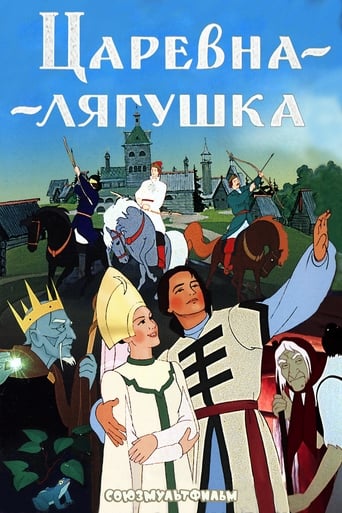
The Tale of Tsar Saltan
"The story is about three sisters"
Keys: Space play/pause · ←/→ 10s · F fullscreen · M mute · </> speed
About this film
The story is about three sisters. The youngest is chosen by Tsar Saltan to be his wife. He orders the other two sisters to be his royal cook and weaver. They become jealous of their younger sister. When the tsar goes off to war, the tsaritsa gives birth to a son, Prince Gvidon (Gvidón.) The older sisters arrange to have the tsaritsa and the child sealed in a barrel and thrown into the sea. The sea takes pity on them and casts them on the shore of a remote island, Buyan. The son, having quickly grown while in the barrel, goes hunting. He ends up saving an enchanted swan from a kite bird. The sw…
Cast & crew
More films like this
More Animation films
View all →


More from Valentina Brumberg
View all →
More about this film
About the production
Release dateDecember 1943
Box officeUnknown - Soviet box office data was not systematically tracked or publicly released
ProductionSoyuzmultfilm
Filmed inMoscow, Soviet Union
Created during the height of World War II, this film was produced in Moscow despite the ongoing siege and wartime resource shortages. The animation team worked under difficult conditions with limited materials, yet managed to create among the leading visually stunning Soviet animations of its era. The film utilized the traditional cel animation technique combined with elaborate background paintings inspired by Russian folk art and lacquer miniature painting styles. Directors Valentina Brumberg and Zinaida Brumberg (sisters) collaborated closely with composer Nikolai Rimsky-Korsakov's estate to incorporate musical elements from his famous opera adaptation of the same story.
Themes
Family reconciliationJustice versus jealousyTransformation and metamorphosisThe power of nature and magicComing of age
Themes & topics
fairy taletransformationmagicswanjealousyexilereunionroyaltyenchantmentrevengefamilyislandprophecyredemption
Historical background
The Tale of Tsar Saltan (1943) emerged during World War II and immediate postwar filmmaking, when exhibition habits and national film industries were still taking shape.
Why this film matters
The Tale of Tsar Saltan remains accessible through digital archives, giving modern viewers a direct link to 1943 screen culture.
Making of
The production of 'The Tale of Tsar Saltan' during World War II represents especially remarkable achievements in animation history. The Soyuzmultfilm studio, where the film was created, faced severe shortages of materials including celluloid, paint, and even basic supplies. Animators reportedly had to reuse materials and sometimes paint on both sides of cels to conserve resources. The Brumberg sisters, who directed the film, insisted on maintaining the highest artistic standards despite these hardships. They worked closely with art directors to create a distinctive visual style that would evoke traditional Russian fairy tale illustrations while incorporating modern animation techniques. The voice recording sessions were particularly challenging, as many actors were involved in war efforts or had been evacuated. Mariya Babanova, the primary voice actress, recorded her parts between performances for wounded soldiers in hospitals. The musical score, adapted from Rimsky-Korsakov's opera, required special arrangements to fit the animation's timing, with composer Viktor Oransky working under difficult conditions to create the orchestral recordings.
What critics said
Where contemporary reviews survive, The Tale of Tsar Saltan is discussed in terms of audience appeal at release; later criticism often reframes it through archive restoration and festival programming.
Did you know?
- This was the first full-length animated adaptation of Pushkin's poem, predating the famous live-action version by 17 years
- The film was created during WWII, making its production particularly remarkable given the wartime resource constraints in the Soviet Union
- Directors Valentina and Zinaida Brumberg were sisters known as 'the grandmothers of Soviet animation' for their pioneering work
- The swan character's transformation sequences were considered technically groundbreaking for their time, using innovative multi-plane camera techniques
- Voice actress Mariya Babanova, who voiced multiple characters, was widely praised voice actors in Soviet cinema history
- The film's visual style was heavily influenced by Russian folk art, particularly Palekh and Fedoskino lacquer miniatures
- Despite being released in 1943, the film was not widely distributed internationally until after WWII due to the Cold War
- The magical squirrel character became so popular that it inspired merchandise and appeared in later Soviet animations as a cameo
- The film's score incorporated elements from Nikolai Rimsky-Korsakov's opera, creating a unique blend of classical music and animation
- The transformation sequences of Prince Gvidon took months to animate, with each frame requiring meticulous hand-painting
Awards & recognition
- Stalin Prize (Second Class) - 1946
- All-Union Film Festival Prize for Best Animated Film - 1944
Visual style
The film's visual style represents a pinnacle of Soviet animation artistry, combining traditional cel animation with elaborate multi-layered backgrounds inspired by Russian folk art. The cinematography, supervised by art directors Fyodor Khitruk and Lamis Bredis, employed innovative techniques including early forms of multi-plane camera work that created remarkable depth and dimension. The color palette was particularly noteworthy, using rich, saturated colors that evoked traditional Russian lacquer miniatures while maintaining visual clarity. Each sequence was carefully composed like a painting, with attention to architectural details and natural elements that created a fully realized fairy tale world. The transformation sequences of Prince Gvidon were especially innovative, using gradual morphing techniques that were groundbreaking for their time. The animators paid meticulous attention to movement, with characters exhibiting fluid, natural motions that brought them to life with remarkable expressiveness. The visual effects, particularly the magical elements like the swan's transformations and the enchanted city's appearance, were achieved through sophisticated animation techniques that pushed the boundaries of what was possible with 1940s technology.
Innovations
This film represented several significant technical innovations in Soviet animation, particularly considering the wartime production constraints. The animation team developed new techniques for creating depth and dimension, including an early version of the multi-plane camera system that allowed for more sophisticated layering of background elements. The transformation sequences, particularly Prince Gvidon's changes into different creatures, required pioneering work in morphing animation that was ahead of its time. The film also featured innovative use of color, with the team developing new paint formulas that could withstand the poor storage conditions of wartime. The integration of musical elements with animation was particularly sophisticated, with precise timing that matched the complex orchestral score. The team also developed new methods for creating realistic water effects, crucial for the many ocean scenes in the story. Perhaps most remarkably, they achieved all these technical advances while working with severely limited resources, often reusing materials and improvising solutions to equipment shortages. The film's technical excellence demonstrated that Soviet animation could compete with the best international work despite challenging circumstances.
Music
The film's musical score was masterfully adapted from Nikolai Rimsky-Korsakov's 1900 opera 'The Tale of Tsar Saltan,' creating a rich symphonic backdrop that elevated the emotional impact of the animation. Composer Viktor Oransky worked closely with the animation team to ensure the music perfectly synchronized with the visual storytelling, a challenging task given the limitations of recording technology during wartime. The soundtrack incorporates many of the opera's most famous themes, including the 'Flight of the Bumblebee' segment which plays during Prince Gvidon's transformation into an insect. The choral elements were performed by the State Academic Chapel choir, adding a grand, epic quality to key scenes. Sound design was equally impressive, with careful attention to ambient sounds that brought the magical world to life - from the gentle lapping of waves to the rustling of the enchanted squirrel's tail. The voice performances, particularly Mariya Babanova's multi-character work, were recorded with remarkable clarity given the technical limitations of the time. The overall audio experience created an immersive fairy tale atmosphere that complemented the visual artistry.
Famous quotes
What a marvel! What a wonder! A city rising from the sea!
The swan speaks with human voice, 'Fear not, brave prince, for I shall help you'
Jealousy is a poison that destroys the soul that harbors it
In the barrel we were cast, but by the sea we were saved
Transformations come to those pure of heart
The Tsar's son shall return, wiser and stronger than before
Magic dwells in kindness, and rewards those who show mercy
From a barrel to a kingdom, such is the power of destiny
Memorable scenes
- The dramatic opening sequence showing the three sisters at the spinning wheel, with the youngest's beauty and virtue immediately apparent through the animation's visual storytelling
- The heartbreaking moment when the Tsaritsa and infant Prince are sealed in the barrel, with the storm-tossed sea creating a powerful emotional backdrop
- The magical sequence where Prince Gvidon saves the swan from the kite, featuring innovative animation of the aerial battle and the swan's transformation
- The stunning reveal of the enchanted city rising from the sea, showcasing the film's most ambitious background artwork and color design
- The humorous and technically brilliant transformation sequence where Prince Gvidon becomes a mosquito, with each frame showing the gradual metamorphosis
- The climactic reunion scene where the Tsar discovers his long-lost wife and son, combining emotional storytelling with visual grandeur
What audiences thought
The film was immensely popular with Soviet audiences upon its release, providing a welcome escape from the harsh realities of wartime life. Children and adults alike were captivated by its magical story and stunning visuals. The film became a holiday tradition for many Soviet families, frequently shown on television during New Year celebrations. Audience letters preserved in Soviet archives reveal how deeply viewers connected with the story's themes of family, justice, and magical transformation. Many viewers wrote about how the film gave them hope during difficult times. The character of the magical swan became particularly beloved, with children often pretending to be transformed like Prince Gvidon. In the decades following its release, the film maintained its popularity through theatrical re-releases and television broadcasts. Even after the fall of the Soviet Union, the film continues to be shown on Russian television during holidays and maintains a special place in the hearts of multiple generations of viewers. Modern Russian audiences still regard it as a classic, with many parents introducing it to their children as part of their cultural heritage.
Film connections
Influenced by
- Alexander Pushkin's 1831 poem 'The Tale of Tsar Saltan'
- Nikolai Rimsky-Korsakov's 1900 opera
- Russian folk art and lacquer miniatures
- Traditional Slavic folklore
- Earlier Soviet animated shorts
- Disney's 'Snow White' (1937) for feature-length animation structure
This film influenced
- The Snow Queen (1957)
- The Tale of the Fisherman and the Fish (1950)
- The Frog Princess (1954)
- Sadko (1953)
- Ilya Muromets (1956)
- Later Soviet literary adaptations
Film restoration
The film has been well-preserved in the Russian State Film Archive (Gosfilmofond) and has undergone digital restoration as part of Soyuzmultfilm's classic animation preservation project. A restored 4K version was released in 2018, with careful attention to maintaining the original color palette and visual style. The original negative survived the war years and remains in good condition, allowing for high-quality preservation efforts. The film is also preserved in several international archives including the British Film Institute and the Museum of Modern Art's film collection. Audio elements have been separately preserved and restored to maintain the quality of the musical score and voice performances.
Where to watch
- Available on Russian streaming platforms including Kinopoisk and Okko
- Included in Soyuzmultfilm's official YouTube channel with English subtitles
- Available on DVD/Blu-ray from Russian film distributors with multiple language options
- Streaming on specialized animation platforms like Retrovision and Classic Animation
- Occasionally broadcast on Russian cultural television channels including Kultura
- Available for viewing at film archives and museums specializing in animation history
- Digital copies accessible through university film studies programs and libraries