


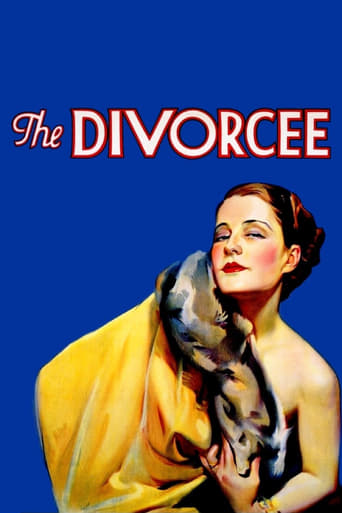
Their Own Desire
"Lally is a rich girl whose father writes books and"
Keys: Space play/pause · ←/→ 10s · F fullscreen · M mute · </> speed
About this film
Lally is a rich girl whose father writes books and plays polo. After 23 years of marriage her father decides to divorce Lally's mother and remarry to soon-to-be-divorced Beth Cheever. This sours Lally on all men. While on vacation with her mother she meets Jack, who succeeds in stealing her heart. Then Lally discovers that Jack is the son of Beth Cheever, the woman who is to marry her father.
Cast & crew
More films like this
More Drama films
View all →







More from E. Mason Hopper
View all →

More about this film
About the production
Release dateNovember 23, 1929
ProductionMetro-Goldwyn-Mayer (MGM)
Filmed inMGM Studios, Culver City, California, USA
Their Own Desire was one of MGM's early sound productions, filmed during the transitional period when the studio was converting from silent films to talkies. The picture was produced with both sound and silent versions to accommodate theaters that had not yet converted to sound equipment. Norma Shearer was one of the few silent stars who successfully transitioned to sound, and the short was instrumental in establishing her as a major dramatic actress in the new era. The production faced challenges with early sound recording technology, requiring actors to remain relatively stationary near microphones, which limited some of the dynamic camera movements common in late silent films.
Themes
Family dysfunctionDivorce and its consequencesLove versus social obligationParent-child relationshipsClass and social status
Themes & topics
divorcefamily dramaforbidden lovewealthy familystep-siblingsvacation romancefather-daughter relationshipsocial classbetrayalemotional conflictpolomarriageadult relationshipsmoral dilemma
Historical background
By 1929, Metro-Goldwyn-Mayer (MGM) was supplying United States theaters with titles like Their Own Desire, part of the broader expansion of filmed entertainment into working-class districts and small towns.
Why this film matters
Programmers and historians revisit Their Own Desire (1929) because its story—lally is a rich girl whose father writes books and plays polo—illustrates popular narrative habits and production norms of the period.
Making of
The production of 'Their Own Desire' took place during a pivotal moment in Hollywood history as studios rushed to convert to sound technology. MGM invested heavily in new sound stages and recording equipment for this and other early talkies. Director E. Mason Hopper, who had primarily directed silent films, had to adapt his techniques to accommodate the limitations of early sound recording. The cast underwent extensive voice coaching to ensure their speaking voices would record well on the primitive equipment of the era. Norma Shearer, in particular, worked diligently to overcome the tendency of many silent actors to over-emote when speaking their lines. the picture's polo sequences required specialized camera setups to capture the action while maintaining audio quality, presenting unique technical challenges for the production team. The chemistry between Shearer and Montgomery was so apparent during filming that MGM immediately planned future projects to capitalize on their on-screen pairing.
What critics said
English-language trade reviews of Their Own Desire are limited for 1929. Where notices survive, they stress pacing and photographic clarity; later criticism values the title as archival evidence of studio style.
Did you know?
- This was Robert Montgomery's film debut, and he was immediately paired with MGM's top female star Norma Shearer, showing the studio's confidence in his potential.
- the picture was based on the 1929 novel 'Their Own Desire' by Sarita Fuller, though significant changes were made for the screen adaptation.
- Norma Shearer was nominated for an Academy Award for Best Actress for her role in, though she won that year for 'The Divorcee' instead.
- the picture was released in both sound and silent versions, a common practice during the transition period of 1928-1929.
- Lewis Stone, who played Norma Shearer's father, was only 22 years older than her in real life, though they played father and daughter.
- the picture's title refers to the characters' struggle to follow their own desires despite family obligations and societal expectations.
- This was one of the first films to deal with the controversial topic of divorce and its effects on adult children in a relatively frank manner.
- The polo scenes featuring Lewis Stone were filmed at the Riviera Country Club in Pacific Palisades, California.
- the picture's success helped establish Robert Montgomery as a leading man and led to his pairing with Shearer in several subsequent films.
- The movie was considered quite daring for its time due to its frank discussion of divorce and adult relationships.
Awards & recognition
- Academy Award for Best Actress (Norma Shearer - nomination)
Visual style
The cinematography by William H. Daniels reflects the transitional nature of early sound films, with more static camera work than late silent films but still showing artistic composition. Daniels, who frequently worked with Greta Garbo, brought his signature lighting techniques to create glamorous yet naturalistic images of the stars. the picture features the soft, diffused lighting characteristic of MGM productions of the era, particularly in the romantic scenes between Shearer and Montgomery. The polo sequences demonstrate more dynamic camera movement, taking advantage of outdoor locations where sound recording was less restrictive. The interior scenes often feature medium shots and two-shots to accommodate the microphone placement requirements of early sound recording. Despite these technical limitations, Daniels managed to create visually interesting compositions that enhanced the emotional content of each scene.
Innovations
Their Own Desire demonstrated several technical achievements for early sound cinema. the picture successfully integrated location shooting with sound recording, particularly in the polo sequences which required innovative microphone placement strategies. The production team developed techniques to minimize the visual impact of microphone placement, using furniture and props to conceal recording equipment. the picture's sound mixing represented an advancement over earlier talkies, with better balance between dialogue, music, and sound effects. The movie also showcased improvements in post-production dubbing, allowing for cleaner audio tracks than many contemporaneous films. The cinematography department developed new lighting techniques that accommodated both the needs of sound recording and the aesthetic requirements of the scenes. These technical innovations contributed to the picture's overall polish and helped establish standards for subsequent MGM sound productions.
Music
the picture's musical score was composed by William Axt, one of MGM's house composers during the early sound era. The soundtrack included both diegetic music (music within the story, such as at social events) and non-diegetic underscoring to enhance emotional moments. As was common in early talkies, the picture featured musical interludes that allowed for visual storytelling without dialogue. The sound design represents the state of the art for 1929, with relatively clear dialogue recording despite the technical limitations of the period. the picture used the Western Electric sound-on-film system, which was MGM's preferred technology for early sound productions. The soundtrack also included sound effects that were innovative for the time, particularly in the polo sequences where the sounds of horses and crowds were integrated into the narrative.
Famous quotes
Lally: 'I hate all men! Every one of them!'
Jack: 'You can't judge all men by one mistake.'
Lally: 'When your own father can throw away 23 years of marriage, what can you believe in?'
Beth Cheever: 'Sometimes we have to choose between our own happiness and what others expect of us.'
Jack: 'Love doesn't follow rules, Lally. It just happens.'
Lally: 'How can I love you when you're part of the thing that's destroying my family?'
Memorable scenes
- The polo match where Lally first sees Jack, capturing the excitement and glamour of high society sports
- The emotional confrontation scene where Lally discovers Jack's true identity as Beth Cheever's son
- The tender beach scene where Jack and Lally declare their love before the truth is revealed
- The tense family dinner where the complicated relationships between all characters become apparent
- The final scene where Lally and Jack must decide whether to follow their hearts or bow to family pressure
What audiences thought
Audiences in 1929 responded positively to Their Own Desire, particularly drawn to the chemistry between Norma Shearer and the newcomer Robert Montgomery. the picture's adult themes resonated with viewers experiencing social changes in their own lives. The movie performed well at the box office, especially in urban areas where divorce was becoming more common and less scandalous. Contemporary audience letters and reviews in fan magazines expressed appreciation for the picture's realistic portrayal of family conflicts and its refusal to provide easy answers to complex emotional situations. the picture's success helped establish Montgomery as a bankable leading man and reinforced Shearer's status as one of the era's most popular actresses. Modern audiences who have seen the picture through revival screenings or home video have often commented on its surprisingly contemporary treatment of family dynamics and relationships.
Film connections
Influenced by
- The Divorcee (1930) - similar themes of divorce and modern relationships
- Our Modern Maidens (1929) - similar young adult romance themes
- The Kiss (1929) - another Shearer film dealing with complicated relationships
This film influenced
- The Divorcee (1930) - built on similar themes with same star
- A Free Soul (1931) - another Shearer drama about family and love
- Laughing Sinners (1931) - Montgomery in similar romantic drama
Film restoration
Their Own Desire survives in complete form and has been preserved by the MGM archive (now owned by Warner Bros.). Both the sound and silent versions are known to exist in various archives. the picture has undergone restoration work to preserve the audio quality, which had deteriorated over time. A 16mm version exists in several film archives, and the movie occasionally appears in classic film revival screenings. The Warner Archive Collection has made the picture available on DVD through their made-on-demand program, ensuring its accessibility to modern audiences. The preservation status is considered good for a film of its era, with no significant portions of the original known to be lost.
Where to watch
- Warner Archive DVD (manufactured on demand)
- Classic film streaming services (availability varies)
- Film archives and museum screenings
- TCM (Turner Classic Movies) occasional broadcasts
- Public domain streaming sites (verify legality)