



True to the Navy
"A soda-shop girl juggles sailors until love anchors her."
Keys: Space play/pause · ←/→ 10s · F fullscreen · M mute · </> speed
About this film
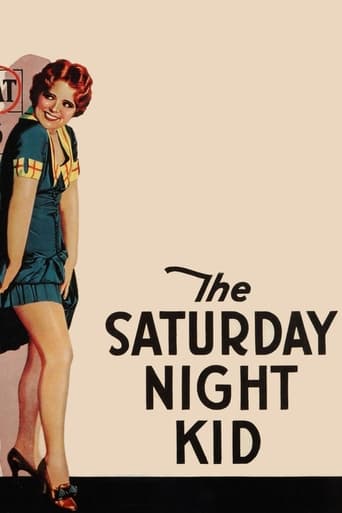
Ruby is a counter girl at the San Diego Soda Shop with a habit of being a girlfriend to Sailors stopping by. Things get a little zany when she sets her eyes on Bull's Eye McCoy a gunner who refuses to settle down.
Cast & crew
More films like this
More Action films
View all →






More from Frank Tuttle
View all →

More about this film
About the production
Release dateMay 17, 1930
BudgetApproximately $500,000
Box officeEstimated $1,200,000 (Domestic)
ProductionParamount Famous Lasky Corporation
Filmed inSan Diego, California, USA, USS Nevada (BB-36), Paramount Studios - 5555 Melrose Avenue, Hollywood, Los Angeles, California, USA
The film was one of the early 'talkies' for Clara Bow, who was struggling with the transition from silent films due to her Brooklyn accent and anxiety over microphone placement. Director Frank Tuttle worked closely with Bow to maintain her high-energy screen presence while managing the technical limitations of 1930s sound recording. Real naval vessels and personnel were utilized to give the film an authentic atmosphere, a common practice for Paramount during this era to bolster production value without building massive sets. The production faced minor delays due to the logistical challenges of filming on active military ships and coordinating with the U.S. Navy's schedule.
Themes
Monogamy vs. FlirtationMilitary CamaraderieWorking Class AmbitionThe Nature of ReputationHonesty in Romance
Themes & topics
SailorSoda FountainSan DiegoGunnerMultiple BoyfriendsU.S. NavyRomantic Rivalry1930sPre-Code
Historical background
True to the Navy (1930) survives in catalogs and archives as a record of the early sound era.
Why this film matters
Scholars and collectors reference True to the Navy when discussing how the early sound era filmmakers addressed popular themes.
Making of
The production of 'True to the Navy' was marked by the transitionary period of Hollywood sound. Microphones were often hidden in props, such as the soda fountain equipment, which limited the actors' movements—a frustration for the naturally kinetic Clara Bow. Director Frank Tuttle, known for his efficiency, had to balance the technical needs of the sound engineers with Bow's improvisational style. Fredric March reportedly found the lighthearted material a pleasant break from his more serious stage work, though he remained professional despite the chaotic nature of the set. The U.S. Navy provided significant cooperation, allowing the crew to film during actual maneuvers, which added a level of scale that would have been impossible on a studio backlot alone.
What critics said
Modern notes on True to the Navy emphasize preservation, stylistic choices, and its place within director or studio filmographies.
Did you know?
- Clara Bow's Brooklyn accent, which was a point of contention for critics during the early sound era, was actually considered fitting for her character Ruby in this film.
- The film features the USS Nevada, which later gained historical significance for being the only battleship to get underway during the attack on Pearl Harbor in 1941.
- Fredric March was still a rising star at the time, and this film helped solidify his status as a versatile leading man capable of both comedy and drama.
- The 'Soda Jerk' culture of the 1930s is depicted in detail, showing the specific slang and fast-paced environment of Depression-era service jobs.
- Harry Green provides the comedic relief as Solomon Binberg, utilizing the 'Yiddish' humor that was popular in vaudeville and early sound cinema.
- This was one of fifteen films Clara Bow made between 1929 and 1931, highlighting the grueling pace of her contract with Paramount.
- The film includes a musical number, 'In the Navy,' which was a common requirement for early talkies to show off the new sound technology.
- Publicity for the film focused heavily on Bow's 'It Girl' persona, despite the film being a more traditional romantic comedy.
Visual style
The cinematography by Victor Milner is notable for its use of deep focus during the shipboard scenes and the fluid movement within the confined space of the soda shop. Milner utilized the natural light of the San Diego coast to create a bright, airy feel that complemented the comedic tone. The challenges of early sound meant that many shots were static, but Milner attempted to introduce visual variety through creative angles during the gunnery practice sequences.
Innovations
The film is an early example of successful location sound recording on a moving naval vessel. Coordinating the heavy, 'icebox' camera housings and primitive microphones on the deck of the USS Nevada was a significant technical feat for 1930. It also demonstrated the ability to mix dialogue with loud background noises, such as ship whistles and machinery, which was a developing skill for sound engineers at the time.
Music
The soundtrack features early synchronized sound recording, including the song 'In the Navy' performed by the cast. The score is primarily diegetic, coming from the environment of the soda shop or the military band on the ship. The sound design focuses heavily on the 'clink and clatter' of the soda fountain to ground the film in its setting.
Famous quotes
Ruby: 'I'm true to the Navy! It's just that there's so much of it!'
Bull's Eye McCoy: 'I don't miss my targets, and I don't miss the truth about women.'
Solomon: 'In the soda business, a heart is just something you put on a sundae.'
Memorable scenes
- The opening sequence at the soda fountain where Ruby manages four different orders and four different sailors with dizzying speed.
- The 'confrontation' scene where several of Ruby's boyfriends all show up at the shop simultaneously, realizing they have been duped.
- The gunnery practice on the USS Nevada where McCoy proves his skills while distracted by thoughts of Ruby.
- The final reconciliation on the docks as the fleet prepares to depart.
What audiences thought
The film was a commercial success, drawing in fans of Clara Bow who were eager to hear her voice. Audiences in naval towns like San Diego and Norfolk were particularly enthusiastic, as the film portrayed their local culture and the life of sailors with a mix of humor and affection. It helped maintain Bow's status as a top box-office draw for another year before her eventual retirement.
Film connections
Influenced by
- The 'It' girl persona established in Bow's 1927 film 'It'
- Vaudeville comedy sketches involving service members
- The real-life presence of the U.S. Navy in Southern California
This film influenced
- Follow the Fleet (1936)
- Anchors Aweigh (1945)
- On the Town (1949)
Film restoration
The film is preserved and exists in the archives of the Library of Congress and the UCLA Film & Television Archive. While not widely available in high-definition restoration, it has been screened at various film festivals specializing in Pre-Code cinema.
Where to watch
- Turner Classic Movies (TCM) occasionally broadcasts the film
- Available for research viewing at the Library of Congress
- Rarely found on boutique DVD collections of Clara Bow's work