
Wives Under Suspicion
"Merciless district attorney."
Keys: Space play/pause · ←/→ 10s · F fullscreen · M mute · </> speed
About this film
A merciless district attorney prosecutes a case that mirrors his own life.
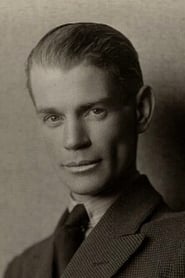
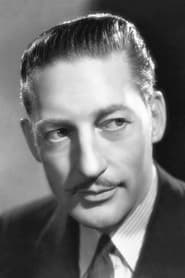
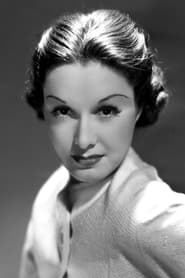
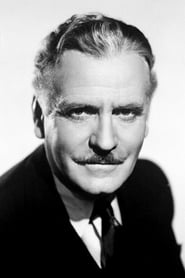
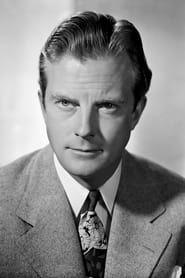
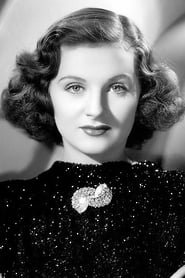
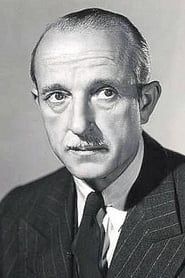
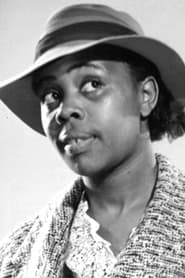
Cast & crew
More Crime films
View all →

More from James Whale
View all →
More about this film
About the production
Release dateDecember 9, 1938
Box officeModest commercial performance, typical of Universal's secondary features of the period
ProductionUniversal Pictures
Filmed inUniversal Studios lot, Universal City, California
was a remake of director James Whale's earlier 1933 film 'The Kiss Before the Mirror.' The production was completed quickly in just 18 days, typical of Universal's efficient B-unit operations. Whale, who was coming off the success of 'Show Boat' (1936), took on this project as part of his contract with Universal. The film's pre-Code themes of marital infidelity and psychological tension were toned down for 1938 Production Code compliance, though Whale still managed to maintain the story's dark, psychological undertones.
Themes
Themes & topics
mercilessdistrictattorneyprosecutescasemirrorslife
Historical background
By 1938, distribution was widening and Wives Under Suspicion reached audiences through the theatrical channels dominant before television.
Why this film matters
Historians treat Wives Under Suspicion as evidence of what typical 1938 audiences could see in a program slot.
Making of
Production details for Wives Under Suspicion are sparse in surviving records. Direction is attributed to James Whale.
What critics said
Trade papers near 1938 listed Wives Under Suspicion as program material rather than headline art cinema.
Did you know?
- Directed by James Whale.
- Production country: United States.
- Release year commonly listed as 1938.
- TMDB identifier: 130243.
Visual style
The cinematography, credited to George Robinson, employs classic Universal style with notable expressionistic influences from James Whale's background. The film uses dramatic chiaroscuro lighting to create psychological tension, particularly in scenes where Warren William's character wrestles with his jealousy. Robinson utilizes low-angle shots in the courtroom sequences to emphasize the power dynamics and claustrophobic pressure of the legal proceedings. The domestic scenes feature more conventional lighting but still maintain a sense of unease through carefully composed shots that trap characters in doorways and shadows. Whale's influence is evident in the deliberate pacing of visual information and the use of mirrors and reflective surfaces to suggest the duality of the characters' natures. The black and white photography enhances the film's moral ambiguity, with no clear visual distinction between the 'good' and 'bad' characters.
Innovations
While not groundbreaking in its technical aspects, 'Wives Under Suspicion' demonstrates several notable achievements typical of Universal's efficient production system. The film's sound recording, handled by the studio's experienced technical team, achieves excellent clarity in the crucial courtroom dialogue scenes despite the challenging acoustics of the large set. The editing by Ted J. Kent effectively maintains the film's brisk 67-minute pace while allowing psychological moments to breathe. Universal's special effects department contributed subtle but effective optical effects for the mirror sequences, creating haunting visual metaphors for the characters' psychological states. The film's production design, though modest, makes clever use of existing Universal sets and props to create a convincing environment for the drama. Perhaps most significantly, the film represents a technical achievement in adapting Pre-Code themes to Production Code requirements without completely losing the story's psychological impact.
Music
The musical score was composed by Charles Previn, Universal's resident music director during this period. Previn's approach emphasizes the psychological tension of the story with subtle, understated themes that enhance rather than dominate the dramatic scenes. The score makes effective use of leitmotifs, particularly a recurring theme associated with Stephen de Lorca's growing paranoia that becomes more distorted as the film progresses. The courtroom scenes feature more traditional, dramatic orchestration, while the intimate domestic moments are scored with smaller, more chamber-like arrangements. Previn's work demonstrates the sophisticated approach to film music that was developing in the late 1930s, moving away from the wall-to-wall scoring of earlier films toward a more selective, psychologically motivated use of music. The soundtrack also makes effective use of diegetic music, particularly in scenes set in the couple's home, adding to the film's realistic texture.
Famous quotes
The law is clear, but the human heart is not.
When a man suspects his wife, he becomes his own judge and jury.
In the courtroom, we seek truth. At home, we fear it.
Justice is blind, but jealousy has perfect vision.
The difference between a prosecutor and a murderer? Sometimes, just a verdict.
Memorable scenes
- The intense courtroom confrontation where Stephen de Lorca realizes he's prosecuting a man for a crime he's contemplating himself
- The psychological mirror sequence where Stephen imagines his wife's betrayal
- The climactic scene where Stephen must choose between his professional duty and personal jealousy
- The tense dinner scene where suspicion first poisons the marital relationship
- The final courtroom revelation that exposes the hypocrisy of the entire situation
What audiences thought
Patrons who saw Wives Under Suspicion during initial runs judged it alongside other drama film releases of the day.
Film connections
Influenced by
- The Kiss Before the Mirror (1933) - James Whale's earlier version of the same story
- German Expressionist cinema - particularly in visual style and psychological themes
- Pre-Code Hollywood dramas dealing with adult relationships
- Courtroom melodramas of the 1930s
- Psychological thrillers emerging in the late 1930s
This film influenced
- Later film noir works dealing with marital suspicion
- Psychological dramas of the 1940s and 1950s
- Courtroom thrillers that blur the line between legal and personal drama
- Films exploring the darker aspects of suburban marriage
Film restoration
The film survives in 35mm nitrate and safety film elements at the Universal Studios archives. While not officially restored, prints exist in various film archives and private collections. The film has been preserved as part of Universal's library holdings, though it has not received a formal restoration like some of the studio's more famous titles. Some deterioration is evident in surviving prints, particularly in the nitrate elements, but the film remains watchable and complete.
Where to watch
- Available on DVD through Universal's Vault Series
- Streaming on various classic film platforms
- Occasionally airs on Turner Classic Movies
- Available for digital rental or purchase through major online retailers
- Can be found in some classic film streaming subscription services