

A Clever Dummy
"Ben Turpin is a janitor who is in love with an inventor's daughter"
Keys: Space play/pause · ←/→ 10s · F fullscreen · M mute · </> speed
About this film
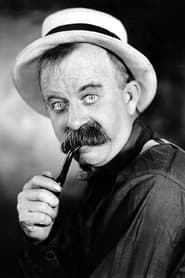
Ben Turpin is a janitor who is in love with an inventor's daughter, and is used as a model for the inventor's new mechanical dummy. To be near to her, he hides inside the dummy's case and is shipped off to a vaudeville company. He has to stay in character as the dummy, which he succeeds at.
Cast & crew
More films like this
More Comedy films
View all →







More from Herman C. Raymaker
View all →
More about this film
About the production
Release date1917 (specific date not documented)
Box officeUnknown - individual short film box office records were not systematically tracked in 1917
ProductionMack Sennett Comedies
Filmed inMack Sennett Studios, Edendale, Los Angeles, California
This was one of many comedy shorts produced during Mack Sennett's most prolific period. The film was likely shot in just 2-3 days, which was standard for Sennett productions. The mechanical dummy prop would have been a significant expense and technical challenge for the time, requiring elaborate construction and operation mechanisms.
Themes
Technology and automationCommercial exploitationMistaken identityHuman vs. machineGreed and opportunism
Themes & topics
Historical background
A Clever Dummy (1917) emerged during the silent-film era. Ben Turpin is a janitor who is in love with an inventor's daughter, and is used as a model for the inventor's new mechanical dummy. Archival records and catalog entries help place the work within film-history surveys of the period.
Why this film matters
Preserved under Wikidata ID Q4655966, A Clever Dummy is valued as a comedy within catalog and archive collections. Wikipedia's "A Clever Dummy" entry connect it to broader histories of cinema exhibition and restoration.
Making of
The production of 'A Clever Dummy' exemplified the fast-paced, factory-like approach of Mack Sennett's studio system. The film was likely conceived, written, shot, and edited within a week. The mechanical dummy prop would have been constructed by the studio's prop department, possibly inspired by contemporary automatons and mechanical exhibits. The physical comedy required precise timing and coordination, especially during scenes involving the dummy's malfunctions. Ben Turpin's crossed eyes became a central visual gag, as the dummy's eyes would have been designed to match his distinctive appearance. The film was shot on the studio's backlot sets, with minimal location shooting. Like most Sennett productions, improvisation was encouraged, and actors often contributed their own gags during filming. The rapid production schedule meant that retakes were minimal, and many scenes were captured in single takes.
What critics said
Trade and archival sources offer limited day-one review coverage for A Clever Dummy. Modern reception rests on its availability in collections, repertory screenings, and reference works that document 1917 cinema.
Did you know?
- This film was made during the height of Ben Turpin's popularity as a silent comedy star, known for his trademark crossed eyes
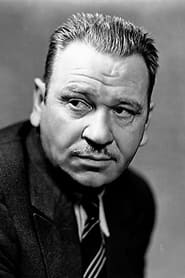
- Wallace Beery, who appears in this film, would later become one of MGM's biggest stars in the 1930s, winning an Academy Award for 'The Champ' (1931)
- The mechanical dummy theme was particularly popular in 1917, reflecting public fascination with automation and technological progress
- Director Herman C. Raymaker was a prolific director for Mack Sennett, directing over 100 comedy shorts between 1916-1920
- Mack Sennett Studios was known as 'The Keystone Lot' and was the birthplace of American slapstick comedy
- The film was released during World War I, when audiences particularly needed comic relief from wartime tensions
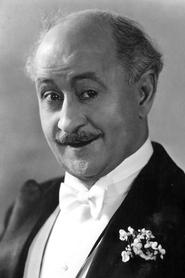
- Chester Conklin, one of the stars, was a veteran Keystone Kop who had been working with Sennett since 1913
- The dummy prop was likely inspired by the 'automata' craze of the early 20th century, when mechanical dolls and robots were popular attractions
- This film represents an early example of the 'robot comedy' genre that would later become popular in films like 'The Mechanical Man' (1921) and 'Metropolis' (1927)
- Silent comedy shorts like this were typically shown as part of a larger program with newsreels, travelogues, and feature films
Visual style
The cinematography, typical of Mack Sennett productions, would have been functional and straightforward, emphasizing clarity for the physical comedy. The camera work likely used static shots for most scenes, with occasional tracking shots during chase sequences. The lighting would have been bright and even, characteristic of studio productions of the era. Special attention would have been paid to framing the mechanical dummy to maximize its comedic effect, and the cinematography would have ensured that all physical gags were clearly visible to the audience. The film was probably shot on 35mm film at a standard frame rate for the period (16-18 frames per second).
Innovations
The primary technical achievement in 'A Clever Dummy' was the creation and operation of the mechanical dummy prop. This would have required sophisticated craftsmanship for the period, including articulated joints, movable eyes (to match Ben Turpin's crossed eyes), and possibly simple remote control mechanisms via wires or off-camera operators. The dummy's ability to move and perform actions convincingly would have been significant for 1917. The film also demonstrates the efficient production techniques that made Mack Sennett's studio so successful, including rapid set construction, effective use of studio space, and streamlined editing processes that could complete a short film in record time.
Music
As a silent film, 'A Clever Dummy' had no synchronized soundtrack. The musical accompaniment would have been provided live in theaters, typically by a pianist or small orchestra. The score would have consisted of popular songs of the era, classical pieces, and specially composed mood music that matched the on-screen action. Comedic scenes would have been accompanied by upbeat, lively music, while moments of tension or confusion might have used more dramatic or dissonant selections. The mechanical dummy's appearances would likely have been signaled by distinctive musical cues.
Famous quotes
No dialogue survives as this is a silent film with lost intertitles
Memorable scenes
- The reveal of the mechanical dummy, which perfectly mimics the janitor's appearance, leading to initial confusion and then recognition of its commercial value
What audiences thought
Audiences in 1917 responded enthusiastically to Sennett comedies, which provided welcome relief from wartime anxieties. The combination of established comedy stars like Ben Turpin and Chester Conklin with the novelty of the mechanical dummy premise likely made the film popular with theatergoers. The visual nature of the humor made it accessible to immigrant audiences who might have struggled with English-language intertitles. The film's gags, particularly those involving mistaken identity and mechanical mishaps, were typical of the broad physical comedy that appealed to contemporary audiences. While specific box office figures for individual shorts are unavailable, the continued production of similar films throughout 1917 suggests strong audience demand for this type of entertainment.
Film connections
Influenced by
- Earlier Keystone comedies
- Contemporary automatons and mechanical exhibits
- The tradition of mistaken identity comedies
- Vaudeville comedy routines
This film influenced
- The Mechanical Man (1921)
- Metropolis (1927)
- Modern Times (1936)
- The Man in the White Suit (1951)
- The Absent-Minded Professor (1961)
Film restoration
The preservation status of 'A Clever Dummy' (1917) is unclear, but like many silent shorts from this period, it may be partially or completely lost. The Library of Congress and film archives continue to search for and restore silent comedies, but the survival rate for two-reel shorts from 1917 is estimated at less than 20%. If copies exist, they would likely be in archives such as the Library of Congress, the Museum of Modern Art, or the UCLA Film & Television Archive.
Where to watch
- Currently unavailable for viewing - this appears to be a lost or extremely rare film. If copies exist, they would be accessible only through film archives or special screenings at silent film festivals.