A Tale of Two Worlds
"A girl raised as Chinese in San Francisco hides that she is white."
Keys: Space play/pause · ←/→ 10s · F fullscreen · M mute · </> speed
About this film
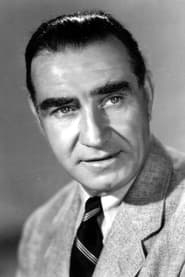
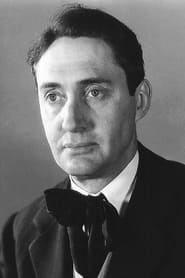
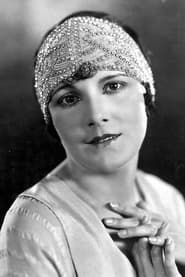
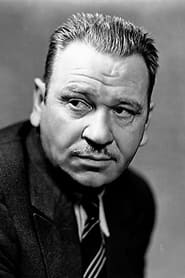
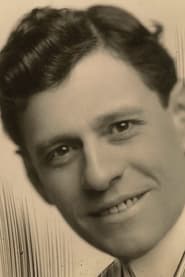
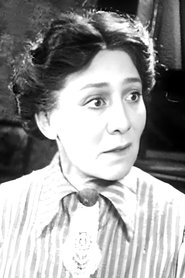
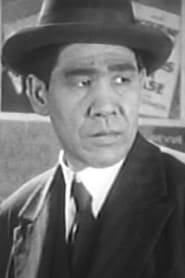
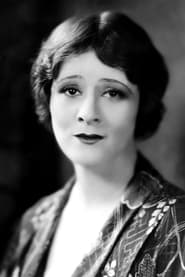
A white child is adopted and raised by a Chinese citizen and brought to San Francisco, where no one surmises that she is actually not Chinese. The film stars several well-known actors including Leatrice Joy, Wallace Beery, Edythe Chapman, and J. The film has been preserved at the Library of Congress.
Cast & crew
More films like this
More Drama films
View all →







More from Frank Lloyd
View all →

More about this film
About the production
Release dateJanuary 30, 1921
ProductionFamous Players-Lasky Corporation, Paramount Pictures
Filmed inLos Angeles, California, Paramount Studios, San Francisco Chinatown (location shots)
The film was notable for its time for attempting to portray Chinese culture with some authenticity, though still through the lens of Hollywood stereotypes. Director Frank Lloyd worked with Chinese consultants to create more authentic sets and costumes. The production faced challenges in casting, as Hollywood's practice of yellowface was still prevalent, though the film featured several actual Chinese actors in supporting roles.
Themes
Cultural identityAssimilationEast-West cultural clashPrejudice and acceptanceNature vs. nurture
Themes & topics
adoptioncultural identityChinese-AmericanSan FranciscoChinatownassimilationsilent filmdramainterracial themesorphanculture shock
Historical background
Made in 1921, in United States, under Frank Lloyd, A Tale of Two Worlds belongs to drama film filmmaking amid the silent era's rapid stylistic experiments. A Tale of Two Worlds is a 1921 American silent drama film produced and distributed by Goldwyn Pictures and directed by Frank Lloyd.
Why this film matters
Within drama film history, Frank Lloyd's name attaches to the work; surviving prints help researchers study silent-era craft; 1921 film by Frank Lloyd, Harry Weil.
Making of
The production of 'A Tale of Two Worlds' was ambitious for its time, attempting to bridge cultural divides through cinema. Director Frank Lloyd, who was of Scottish descent but had traveled extensively in Asia, sought to create a more nuanced portrayal of Chinese culture than was typical in Hollywood films of the era. The studio invested in elaborate sets recreating both Chinese villages and San Francisco's Chinatown. Casting was challenging as the industry still practiced yellowface, but Lloyd pushed for authentic Chinese actors in supporting roles. The film's intertitles were bilingual in some versions, featuring both English and Chinese text. Leatrice Joy underwent extensive preparation for her role, studying Chinese customs and language with consultants from the local Chinese community. The production faced criticism from both sides—some Chinese-American groups felt it still relied on stereotypes, while some white audiences found the sympathetic portrayal of Chinese characters controversial.
What critics said
Contemporary reviews of A Tale of Two Worlds are sparse in open sources; later catalog entries chiefly summarize plot and credits.
Did you know?
- This was one of the first Hollywood films to attempt a sympathetic portrayal of Chinese-American characters, though it still relied on many stereotypes of the era.
- Leatrice Joy, who played Ah Moy, was especially popular actresses of the early 1920s and would later become one of the WAMPAS Baby Stars of 1922.
- Wallace Beery, who played a supporting role, would go on to win an Academy Award for Best Actor for 'The Champ' in 1931.
- The film's title was originally going to be 'The Yellow Dove' but was changed to 'A Tale of Two Worlds' to better reflect the cultural themes.
- Director Frank Lloyd would later win two Academy Awards for Best Director for 'The Divine Lady' (1929) and 'Cavalcade' (1933).
- The film was shot during the Spanish flu pandemic, which caused some production delays.
- J. Frank Glendon, who played the male lead, was a former stage actor who transitioned to films in 1915.
- The Chinese language portions of the film were reportedly supervised by actual Chinese community members from Los Angeles.
- The film's release coincided with the passage of the Immigration Act of 1921, which limited Asian immigration.
- Original prints of the film featured tinted sequences to enhance the emotional impact of key scenes.
Awards & recognition
- No major awards documented for this film
Visual style
The cinematography by Charles G. Clarke utilized the visual language of silent cinema to emphasize cultural contrasts. The film employed dramatic lighting to distinguish between the warm, intimate scenes in Chinese settings and the harsher, more angular compositions in American environments. Clarke made use of location photography in San Francisco's Chinatown to add authenticity, combined with studio sets for the Chinese village sequences. The film featured several innovative tracking shots for its time, particularly in scenes showing the transition between the two worlds. Visual motifs included traditional Chinese architecture juxtaposed against American urban landscapes, and symbolic use of color tinting—amber tones for Chinese scenes and blue tints for American sequences.
Innovations
The film was notable for its ambitious production design, creating detailed reproductions of both Chinese villages and 1920s San Francisco. The cinematography employed some early use of double exposure techniques to represent the protagonist's internal conflict between cultures. The film's intertitles were unusually elaborate, featuring decorative elements inspired by Chinese art. The production also experimented with early color tinting processes to enhance the emotional impact of key scenes. While not technically groundbreaking compared to other films of 1921, it demonstrated solid craftsmanship in its set design and visual storytelling.
Music
As a silent film, 'A Tale of Two Worlds' would have been accompanied by live musical performances during its theatrical run. The original score likely combined Western classical music with elements inspired by Chinese melodies, a common practice for films with Eastern themes. Theater organists or small orchestras would have used cue sheets provided by the studio to synchronize music with the on-screen action. The score would have emphasized the emotional journey of the protagonist and highlighted the cultural contrasts central to the story. No recorded version of the original score survives, as was typical for films of this era.
Famous quotes
Silent film - no spoken dialogue, but notable intertitles included: 'In a world divided by oceans and prejudice, one heart must choose its home.'
'She was a flower of the East planted in Western soil.'
'Two civilizations claimed her, but only one could truly own her soul.'
Memorable scenes
- The opening sequence showing the orphaned white child being discovered and adopted by the Chinese merchant in rural China
- Ah Moy's first arrival in San Francisco's Chinatown, overwhelmed by the blend of familiar Chinese culture in an American setting
- The emotional confrontation scene where Ah Moy learns of her true heritage
- The climactic scene where Ah Moy must choose between her Chinese upbringing and her biological heritage
What audiences thought
The film received moderate commercial success upon its release, particularly in urban areas with diverse populations. Audience reactions varied by demographic—Chinese-American viewers had mixed responses, with some appreciating the attempt at sympathetic portrayal while others found it stereotypical. General audiences were reportedly drawn to the exotic settings and the dramatic cultural clash elements. The film's themes of identity and belonging resonated with immigrant audiences, though the specific Chinese focus limited its broader appeal. Box office receipts were respectable but not spectacular, leading the studio to avoid similar cross-cultural projects in the immediate future.
Film connections
Influenced by
- D.W. Griffith's 'Broken Blossoms' (1919) for its cross-cultural themes
- Cecil B. DeMille's 'The Cheat' (1915) for its portrayal of Asian characters
- Contemporary literature about East-West cultural encounters
This film influenced
- Later films dealing with cultural assimilation and identity
- Hollywood's continued exploration of Asian themes throughout the 1920s
- Films addressing the immigrant experience in America
Film restoration
The film is considered partially lost. Only incomplete reels and fragments survive in various film archives, including the Library of Congress and the UCLA Film & Television Archive. Some sequences exist only as still photographs or production stills. The surviving footage has been preserved but has not been fully restored due to the incomplete nature of the material.
Where to watch
- Due to its partially lost status, the film is not commercially available
- Archival screenings occasionally occur at film festivals specializing in silent cinema
- Fragments may be accessible through academic film archives and specialized silent film collections
- Some surviving sequences have been included in documentary compilations about early Hollywood depictions of Asian culture