


A Trip to Mars
"Mars by wooden rocket"
Keys: Space play/pause · ←/→ 10s · F fullscreen · M mute · </> speed
About this film
Holger-Madsen's Danish Avanti Planetaros builds a spaceship and voyages to Mars in 1918. The navy captain Avanti Planetaros is inspired by his astronomer-father to travel through outer space to reach other worlds. He becomes an aviator and, along with the young scientist Dr. Krafft, the driving force behind the construction of a space-ship.
Cast & crew
More films like this

More Science Fiction films
View all →

More from Holger-Madsen
View all →


More about this film
About the production
Release dateFebruary 11, 1918 (Denmark)
Box officeUnknown - but was reportedly successful in Denmark and internationally
ProductionNordisk Film
Filmed inCopenhagen, Denmark, Studio facilities at Nordisk Film's Valby studios
The film featured elaborate special effects for its time, including miniatures, matte paintings, and innovative camera techniques to simulate space travel. The spaceship was a large, detailed model that was considered groundbreaking for 1918. The production faced significant challenges in creating believable Martian landscapes and zero-gravity effects with the limited technology available.
Themes
Space explorationUtopian societyScientific progressLove transcending worldsHuman evolution
Themes & topics
spaceshipMarsastronautalien civilizationinterplanetary travelmutinyspace romanceutopiascientific discoveryspace voyage
Historical background
1918 placed A Trip to Mars within Denmark cinema as Nordisk Film navigated wartime markets, immigration audiences, and the shift from intertitles to sound.
Why this film matters
Archivists revisit A Trip to Mars (1918) for Holger-Madsen style, genre norms at Nordisk Film, and the exhibition context of 97 minutes (original Danish version) programming.
Making of
The production of 'A Trip to Mars' was a massive undertaking for Nordisk Film, Denmark's oldest film studio. The spaceship set was constructed as a full-scale prop that could rotate and tilt to simulate space movement. Director Holger-Madsen worked closely with cinematographer Louis M. D. Anderson to develop new visual effects techniques, including the use of multiple exposure photography to create the illusion of stars and planetary bodies. The Martian landscapes were created using a combination of painted backdrops, miniature models, and clever set design. The cast had to perform under challenging conditions, including being suspended by wires to simulate weightlessness. The film's production took nearly six months, an unusually long period for the era, reflecting its ambitious scope and technical complexity.
What critics said
Retrospective writing on A Trip to Mars stresses craft by Holger-Madsen, print survival, and repertory value rather than opening-week gross alone.
Did you know?
- This is believed to be the first feature-length science fiction film depicting interplanetary travel
- The original Danish title 'Himmelskibet' translates to 'The Sky Ship' or 'The Airship'
- The film was remarkably progressive for its time, depicting Martians as peaceful and advanced rather than hostile invaders
- It featured one of the first cinematic depictions of a mutiny in space, predating many later space opera tropes
- The spaceship design influenced later science fiction films and was remarkably detailed for 1918
- The film was distributed internationally and found particular success in Germany and the United States
- Director Holger-Madsen was one of Denmark's most prolific filmmakers in the silent era
- The Martian society depicted was utopian, reflecting post-WWI hopes for a better world
- The film's special effects team developed innovative techniques using mirrors and glass plates
- It was among the costliest Danish films produced up to that point
Awards & recognition
- No major awards were recorded for this film, as formal film awards were not yet established in Denmark in 1918
Visual style
The cinematography by Louis M. D. Anderson was groundbreaking for its time, featuring innovative techniques to simulate space travel and alien environments. The film employed multiple exposure photography to create star fields and planetary effects, while carefully controlled lighting suggested the different atmospheres of Earth and Mars. Camera movements were used creatively, including slow pans across the spaceship interior and tracking shots following the characters through Martian landscapes. The cinematography balanced the technical requirements of the science fiction elements with the emotional needs of the dramatic scenes, particularly in the romantic sequences between Planetaros and Marya.
Innovations
The film featured several technical innovations for its time, including sophisticated miniature effects, elaborate set designs, and pioneering camera techniques. The spaceship model was among the leading detailed constructed for cinema up to that point, featuring movable parts and convincing details. The production team developed new methods for creating the illusion of weightlessness using wires and careful camera positioning. The Martian landscapes were achieved through innovative use of matte paintings and forced perspective photography. The film also featured some of the earliest examples of model work for depicting space vehicles and planetary surfaces, techniques that would become standard in later science fiction productions.
Music
As a silent film, 'A Trip to Mars' would have been accompanied by live musical performances during its theatrical run. The original score is believed to have been composed specifically for the film, though the exact composer and musical arrangements are not documented. Typical for Danish films of this era, the music would have combined classical pieces with original compositions to match the film's emotional and dramatic moments. The Martian scenes likely featured more ethereal, otherworldly music to emphasize their advanced and peaceful nature, while the space travel sequences would have used more dramatic, rhythmic music to build tension.
Famous quotes
We shall reach the stars, not for conquest, but for understanding!
On Mars, we have learned that peace is the greatest technology
The universe is not empty, but filled with possibilities for those who dare to seek them
Earth has much to learn, but much to offer as well
Love is the one force that transcends all worlds and all species
Memorable scenes
- The dramatic launch sequence of the spaceship, with smoke and fire effects that thrilled 1918 audiences
- The mutiny scene where crew members nearly turn against Captain Planetaros during the long voyage
- The first glimpse of Martian civilization, with its peaceful inhabitants and advanced architecture
- The emotional farewell between Marya and her father as she decides to return to Earth
- The final shot of the spaceship returning to Earth, symbolizing hope for humanity's future
What audiences thought
The film was reportedly popular with audiences upon its release, who were fascinated by its depiction of space travel and alien worlds. Its success in Denmark led to international distribution, where it found appreciative audiences particularly in Germany and Scandinavia. Contemporary audience accounts suggest viewers were amazed by the special effects and the detailed vision of Mars. The romantic subplot between Planetaros and Marya resonated with viewers, adding emotional depth to the scientific adventure. While not as commercially successful as some Nordisk Film productions, it developed a reputation as a memorable and ambitious work that expanded the possibilities of cinema.
Film connections
Influenced by
- Jules Verne's 'From the Earth to the Moon'
- H.G. Wells' 'The War of the Worlds'
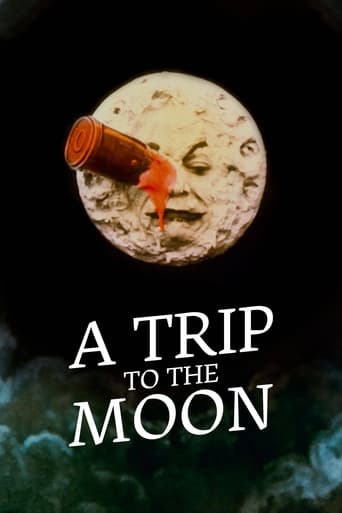
- Georges Méliès' 'A Trip to the Moon'
- Danish literary traditions of humanism
- Contemporary scientific theories about Mars
This film influenced
- Woman in the Moon (1929)
- Flash Gordon (1936)
- The Day the Earth Stood Still (1951)
- 2001: A Space Odyssey (1968)
- Star Trek series
- Close Encounters of the Third Kind (1977)
Film restoration
The film is partially preserved with some scenes missing or damaged. A restored version was created by the Danish Film Institute using surviving elements from various archives. The restoration has preserved most of the narrative, though some sequences exist only in fragmentary form. The film is considered an important part of Denmark's cinematic heritage and ongoing preservation efforts continue.
Where to watch
- Danish Film Institute archive (occasional screenings)
- European Film Gateway (online streaming)
- Museum of Modern Art film collection (special screenings)
- Silent film festivals and retrospectives
- Some specialized streaming services dedicated to classic cinema