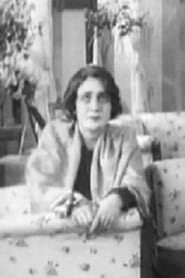
After Death
"The price of young"
Keys: Space play/pause · ←/→ 10s · F fullscreen · M mute · </> speed
About this film
Until silent era life, young scholar Andrei, fascinated by haunting actress Zoia Kadmina, is surprised when she sends him a note. The two have a brief scheduled meeting, then three months later Andrei is shocked to learn she has died. He becomes obsessed with Zoia's memory and decides he must find out
Cast & crew
More films like this
More Drama films
View all →







More from Yevgeni Bauer
View all →
More about this film
About the production
Release dateOctober 1915
Box officeBox office records from 1915 Russian Empire are not preserved
ProductionKhanzhonkov Company
Filmed inMoscow, Russian Empire
Filmed during the height of Russian cinema's golden age before the Bolshevik Revolution. The production utilized the Khanzhonkov studio's advanced facilities for the time. Director Yevgeni Bauer was known for his innovative use of lighting and camera movement, which were particularly evident in this production. The film was shot during summer 1915 when the Russian film industry was experiencing unprecedented creative freedom despite the ongoing World War I.
Themes
Themes & topics
scholaractressobsessiondeathmemoryhauntingpsychological dramaunrequited loveartperformancedreamsmelancholy
Historical background
Production in 1915 placed After Death among silent era releases competing for attention in a rapidly expanding market. It is based on the novella Klara Milich by Ivan Turgenev. After the October Revolution, the Cinema Committee had the film's title changed to Klara Milich to associate it more with Turgenev, as they did not approve of Bauer's significant departures from the original text.
Why this film matters
Retrospective programs include After Death when mapping silent era output across genres and national cinemas. After Death (Russian: По́сле сме́рти, Pósle smérti, "After death") is a 1915 Russian film directed by Yevgeni Bauer.
Making of
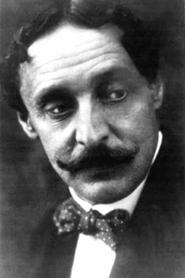
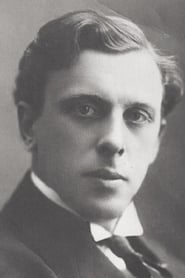
The making of 'After Death' represented the peak of pre-revolutionary Russian cinema sophistication. Director Yevgeni Bauer was known for his meticulous attention to detail and innovative techniques that were years ahead of contemporary Western cinema. He employed complex lighting setups to create mood and atmosphere, using shadows and light to psychological effect. The casting of Vitold Polonsky as Andrei was particularly significant, as the actor had a reputation for portraying sensitive, intellectual characters with depth. The production took place at the Khanzhonkov studio in Moscow, which was equipped with state-of-the-art facilities for 1915. Bauer's direction emphasized psychological realism over melodrama, requiring subtle performances from his actors. The film's dream sequences were particularly challenging to create, requiring innovative camera techniques and double exposure effects that were cutting-edge for the period.
What critics said
Festival revivals have renewed discussion of After Death among silent era specialists.
Did you know?
- Director Yevgeni Bauer was among the leading sophisticated filmmakers of his era, often compared to D.W. Griffith for his technical innovations
- The film was based on a story by Ivan Turgenev, though adapted significantly for the screen
- Vitold Polonsky, who played Andrei, was especially popular leading men in Russian cinema before the revolution
- The film's exploration of psychological obsession was remarkably advanced for its time
- Only fragments of the complete film survive today, though enough remains to appreciate Bauer's artistic vision
- The film was one of over 80 films Bauer directed during his prolific career before his death in 1917
- The Khanzhonkov Company was the largest and most prestigious film studio in the Russian Empire
- The film's themes of death and obsession reflected the morbid fascination of Russian Symbolist literature
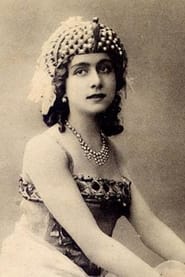
- Olga Rakhmanova, who played Zoia Kadmina, was known for her ethereal screen presence
- The film was released just two years before the Russian Revolution would dramatically transform the country's film industry
Visual style
The cinematography of 'After Death' was groundbreaking for its time, featuring sophisticated use of lighting and shadow to create psychological atmosphere. Director Yevgeni Bauer employed innovative camera movements and angles to convey emotional states and subjective experiences. The film made extensive use of chiaroscuro lighting effects that would later become associated with German Expressionist cinema. The dream sequences utilized double exposure and other special effects to create surreal, otherworldly imagery. The cinematography emphasized psychological realism through careful composition and lighting that reflected the characters' emotional states. The visual style was influenced by Russian Symbolist painting and photography, with its emphasis on mood and atmosphere. The surviving footage demonstrates remarkable technical sophistication in its use of focus and depth of field.
Innovations
The film showcased several technical innovations that were ahead of their time. Bauer's use of moving camera shots was particularly advanced for 1915, creating a sense of fluidity and psychological immersion. The film's lighting techniques were revolutionary, employing complex setups to create mood and atmosphere. The dream sequences featured innovative special effects using double exposure and in-camera tricks. The editing style was sophisticated, using cross-cutting and montage to create psychological connections between scenes. The film demonstrated an advanced understanding of visual storytelling through composition and movement. These technical achievements represented some of the most sophisticated filmmaking techniques of the era.
Music
As a silent film, 'After Death' would have been accompanied by live musical performance during its original theatrical run. The typical accompaniment would have been a pianist or small ensemble playing classical pieces or improvised music to match the film's mood. The score likely included works by Russian composers such as Tchaikovsky or Rachmaninoff, whose romantic and melancholic compositions suited the film's themes. The musical accompaniment would have been crucial in conveying the psychological tension and emotional depth of the narrative. Modern screenings of the surviving fragments are often accompanied by newly composed scores that attempt to recreate the emotional impact of the original performances.
Famous quotes
Silent films from this era did not contain recorded dialogue, but intertitles would have conveyed key narrative points and emotional states through written text
Memorable scenes
- The dream sequence where Andrei imagines conversations with the deceased Zoia, utilizing innovative double exposure techniques to create ghostly, ethereal imagery that blurs the line between memory and hallucination
What audiences thought
The film was well received by Russian audiences in 1915, who appreciated its sophisticated approach to psychological drama. The themes of love, death, and obsession resonated strongly with viewers living through the turmoil of World War I. Vitold Polonsky's performance as the obsessed scholar was particularly praised by audiences. The film's artistic ambitions were appreciated by the growing urban middle class that formed the core of cinema audiences in major Russian cities. The film's success helped establish psychological drama as a respected genre in Russian cinema. Contemporary audience reactions were recorded in film magazines of the period, which noted the film's powerful emotional impact. The film's reputation among Russian film enthusiasts has endured through the decades despite its incomplete survival.
Film connections
Influenced by
- Russian Symbolist literature
- Ivan Turgenev's stories
- German Romanticism
- Fyodor Dostoevsky's psychological novels
- Edgar Allan Poe's tales of obsession and death
This film influenced
- German Expressionist films of the 1920s
- Alfred Hitchcock's psychological thrillers
- Ingmar Bergman's psychological dramas
- Andrei Tarkovsky's poetic cinema
- David Lynch's surrealist films
Film restoration
The film survives only in incomplete fragments, with approximately 20-30 minutes of footage preserved in various film archives. The surviving material is held by the Gosfilmofond archive in Russia and has been partially restored. The incomplete nature of the survival makes it difficult to appreciate the full scope of Bauer's original vision, but the remaining footage demonstrates the film's technical and artistic sophistication. The film is considered partially lost, though enough remains to study its significance in cinema history.
Where to watch
- The surviving fragments are occasionally screened at film festivals and cinematheques specializing in silent cinema
- Some segments may be available through specialized film archives and academic institutions
- Occasionally included in DVD collections of early Russian cinema or Yevgeni Bauer retrospectives
- Available through some specialized streaming services focusing on classic and silent films