Alice's Brown Derby
Plot
Alice and her friends are drawn into another comic horse-racing contest in this Julius the Cat short, with Julius riding a mechanical horse to compete against Pete. Pete, true to his usual role as the scheming bully, tries a series of underhanded tricks to secure a win, but his cheating repeatedly backfires. The film plays as a fast, gag-driven race comedy built around escalating mishaps, visual slapstick, and the playful elastic logic of the Alice/Julius cartoons. As the race progresses, the mechanical horse becomes the source of increasingly absurd complications, and the rivalry between Julius and Pete drives the action to a chaotic finish. Like many entries in the series, the narrative is less about realism than about inventive timing, cartoon physics, and personality-based comedy.
Director
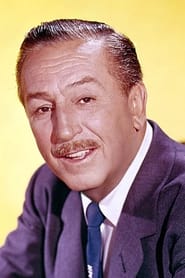
Walt DisneyCast
About the Production
Alice's Brown Derby was produced during Walt Disney's early silent-era work on the Alice Comedies, when the studio was still experimenting with the balance between live-action framing and animated cartoon action. The film belongs to the late phase of the series and reflects the shift toward more fully animated comedy with Julius the Cat becoming a central recurring character. As with other Disney shorts of the period, it was made on a modest independent-animation schedule for distribution through the Winkler network, and surviving documentation on exact budgetary details is limited. The cartoon's race premise allowed the animators to stage a variety of motion gags, timing jokes, and slapstick cheating bits without relying on intertitles for complex plot exposition. No verified location-specific live-action shooting site is generally documented in surviving summaries, but the series was produced in Southern California during Disney's early studio years.
Historical Background
Alice's Brown Derby was made in 1926, during the final years of the silent-film era and before synchronized sound transformed Hollywood production and exhibition. Walt Disney was still operating as an independent cartoon producer in Southern California, working in a highly competitive market where short subjects were a crucial part of theater programs. The Alice Comedies were important historically because they bridged live-action filmmaking and animated fantasy at a time when animation was still defining its narrative possibilities. This short matters because it shows Disney refining recurring characters, slapstick timing, and short-form storytelling just before the studio's major breakthroughs with sound and later feature animation. It also reflects the broader 1920s fascination with racing, speed, mechanical novelty, and comic competition, all of which were common subjects in popular entertainment of the period.
Why This Film Matters
While not a widely famous title today, Alice's Brown Derby is culturally significant as part of the developmental history of Walt Disney animation. It demonstrates the studio's early efforts to create recognizable cartoon personalities and to sustain audience interest through serial-style repetition and variation. The short also belongs to the small corpus of silent Disney cartoons that illustrate how the studio evolved from experimental novelty acts into a coherent character-animation enterprise. For historians, it is valuable evidence of the transitional stage between the Alice Comedies and the later dominance of fully animated stars such as Mickey Mouse. Its preservation and cataloging help document the roots of one of the world's most influential entertainment companies.
Making Of
The short was created in the middle of Walt Disney's silent animation apprenticeship years, when the studio was producing a large volume of compact, gag-oriented cartoons on tight schedules. These films often had to maximize visual clarity because they were screened in silent houses where intertitles had to carry the setup efficiently. Alice's Brown Derby likely drew on the production team's growing confidence in comic staging, especially with moving vehicles, animal characters, and elaborate pursuit sequences that could be animated economically yet still feel lively. Julius the Cat's continued prominence suggests Disney was already gravitating toward reusable animated stars who could anchor a cartoon even as the live-action Alice framework became less essential. Exact personnel assignments and surviving production paperwork for this specific short are limited, but it sits squarely within the phase when Disney was building the craft and personality animation techniques that would later define the studio's reputation.
Visual Style
Because this is a silent animated short, cinematography is better understood as staging and visual composition within the animated frame. The short likely uses broad, clear character silhouettes, readable motion paths, and exaggerated physical comedy to keep the action legible at high speed. Racing sequences in early Disney cartoons often depended on strong directional movement, repeated visual beats, and carefully timed slapstick reversals, and this film fits that tradition. The animation would have been designed to remain understandable even in small theatrical presentations, with emphasis on facial expression, gesture, and the comic contrast between Julius's controlled movement and Pete's chaotic cheating.
Innovations
There are no known headline technical inventions associated uniquely with this short, but it reflects important early mastery of cartoon timing, mechanical motion gags, and character staging. The use of a mechanical horse as a comic device allowed animators to explore repeated movement patterns and absurd physical situations that were well suited to the silent medium. The film also belongs to the period in which Disney was steadily improving the fluidity and personality of his animation, skills that would later underpin major technical and artistic advances. Its value is less in a single innovation than in how it demonstrates the studio's accumulating craft.
Music
The film was produced as a silent short, so it did not have a synchronized recorded soundtrack at the time of its original release. Like most silent cartoons, it would have been accompanied in theaters by live music chosen by the exhibitor, often piano or small ensemble accompaniment. No original composed score specific to the production is widely documented in surviving public references. Modern screenings or restorations may use archival-style accompaniment, but the historical release itself was intended for silent exhibition.
Memorable Scenes
- Julius racing on a mechanical horse, a comic visual conceit that drives the short's central gimmick.
- Pete repeatedly attempting to cheat in the race, only for his schemes to unravel in slapstick fashion.
- The escalating race sequence, where speed, timing, and cartoon chaos overtake any sense of realism.
Did You Know?
- This is one of the later Alice Comedies made after the series had increasingly shifted focus away from the live-action Alice character and toward fully animated comic action.
- Julius the Cat, one of Disney's earliest recurring animated characters, is featured prominently and was an important step in the studio's move toward character-driven cartoon storytelling.
- Pete appears here in one of his early villainous roles, continuing the long Disney tradition of Pete as a scheming antagonist.
- The film is a silent cartoon, so its comedy depends entirely on visual gags, pantomime, and intertitles rather than synchronized sound.
- The title references the famous Brown Derby restaurant brand, evoking the era's pop-cultural association with horse-racing and fashionable Los Angeles nightlife, though the cartoon itself is primarily a race gag short.
- Like many early Disney shorts, it was distributed through the Margaret J. Winkler arrangement before Disney's later studio independence and sound breakthroughs.
- The film is a useful example of how Disney was refining timing, motion, and recurring personalities several years before the introduction of Mickey Mouse.
- Surviving references to the short are relatively sparse compared with more famous Disney works, which makes it a minor but important archival item in the studio's silent-film history.
What Critics Said
Contemporary critical reception for this specific short is not well preserved in widely cited modern sources, and it was likely reviewed, if at all, as part of general program notices for short subjects rather than as a standalone event. At the time, cartoons in the Alice series were generally appreciated for their novelty, brisk pacing, and clever gags rather than for high artistic distinction. Modern critics and historians tend to view the film primarily as an archival and developmental piece, important for understanding Disney's early style rather than for being a canonical masterpiece. It is usually discussed in the context of the broader Alice Comedies and early silent animation history, where its value lies in showing the evolution of character, slapstick, and studio craftsmanship.
What Audiences Thought
Specific audience-response records for this short are scarce, which is common for 1920s animated shorts. It was likely received as a lightweight comic attraction within a theater program, with audiences responding to the race premise, the tricks of the antagonist, and the energetic animal-cartoon humor. The appeal of the Alice shorts in general depended on familiarity with the recurring characters and the novelty of seeing live-action and animation combined. For modern viewers, the film is mainly of interest to Disney historians, silent-film enthusiasts, and animation scholars rather than as a mass-revival title.
Film Connections
Influenced By
- Silent slapstick comedy
- Early race and chase cartoons
- Vaudeville-style visual gags
- Popular horse-racing imagery of the 1920s
This Film Influenced
- Later Disney character cartoons featuring Pete
- The development of recurring animated sidekick characters in Disney shorts
- Early Mickey Mouse-era slapstick race and chase cartoons
You Might Also Like
More Animation Films
View allMore from Walt Disney
View allFilm Restoration
Surviving reference material indicates the film is preserved or at least extant in archival circulation, though it is not among the most commonly screened Disney shorts. As with many silent-era cartoons, availability may depend on archival prints, specialty releases, or curated restorations rather than mainstream distribution.