
At the Edge of the World
"Border mill workers become pawns of coming war."
Keys: Space play/pause · ←/→ 10s · F fullscreen · M mute · </> speed
About this film
A mill situated on the border between two unnamed countries and the residents therein become pawns in a future war.
Cast & crew
More films like this
More War films
View all →

More from Karl Grune
View all →
More about this film
About the production
Release dateOctober 14, 1927
Box officeUnknown
ProductionKarl Grune Filmproduktion, Universum Film AG (UFA)
Filmed inBerlin, Germany, Studio locations in Germany
The film was produced during the peak of German Expressionist cinema, though it incorporated more realistic elements than earlier Expressionist works. Director Karl Grune was known for his meticulous attention to visual detail and often used natural locations alongside studio sets. The border mill set was an elaborate construction designed to emphasize the liminal space between the two countries. The production faced challenges due to the economic instability in Weimar Germany, which affected funding and resources.
Themes
Anti-war sentimentThe arbitrary nature of bordersHuman relationships vs. political divisionsThe innocence of ordinary peopleNationalism vs. humanity
Themes & topics
Historical background
At the Edge of the World (1927) reached screens through Karl Grune Filmproduktion. Exhibitors of the time built silent-era bills that mixed shorts, features, and live acts, so a clear premise helped At the Edge of the World travel between cities and exchange markets.
Why this film matters
Archivists and revival programmers still cite At the Edge of the World (1927) when tracing studio habits, casting pools, and the visual rhetoric audiences once took for granted. Even modest surviving prints help map how At the Edge of the World fit beside competing releases of its day.
Making of
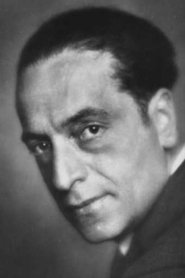
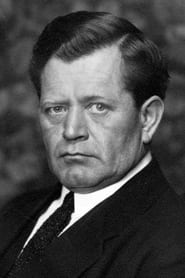
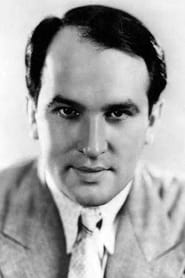
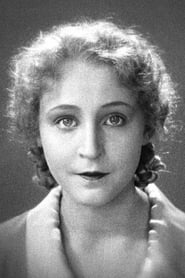
The production of 'At the Edge of the World' took place during a tumultuous period in German history, with the Weimar Republic facing economic challenges and political polarization. Director Karl Grune assembled a talented cast, including the rising star Brigitte Helm, who was at the height of her fame following 'Metropolis'. The filming required elaborate sets, particularly the mill that straddled the border between two fictional countries. The production team spent considerable time creating a realistic border environment, complete with customs posts and distinct national characteristics on each side. William Dieterle, who would later emigrate to Hollywood and become a successful director, brought his acting experience to create a nuanced performance. The film's anti-war message was considered bold for its time, as Germany was still grappling with the trauma of World War I and the controversial Treaty of Versailles. The cinematography employed both location shooting and studio work, blending naturalistic elements with the dramatic lighting characteristic of German Expressionism.
What critics said
Trade coverage around 1927 discussed At the Edge of the World for pacing, clarity, and program fit rather than blockbuster grosses. Later writers value it as evidence of period style and as a reference point beside other films from the same era.
Did you know?
- Brigitte Helm, who stars in the production, was also famous for her dual role as Maria and the Maschinenmensch in Fritz Lang's 'Metropolis' (1927), released the same year
- William Dieterle, who appears as an actor in the production, later became a prominent Hollywood director, known for films like 'The Life of Emile Zola' (1937)
- Director Karl Grune was one of the prominent figures in Weimar cinema, known for his innovative visual storytelling techniques
- The film's anti-war themes were particularly resonant in 1927 Germany, as the country was still recovering from World War I and experiencing political instability
- The mill setting was inspired by real border situations in Europe following the Treaty of Versailles, which had created many new international boundaries
- The film was one of the last major silent productions before German cinema began transitioning to sound
- Cinematographer Carl Hoffmann also worked on other notable German classics including 'The Blue Angel' (1930)
- The film's original German title was 'Am Rande der Welt'
- Despite its artistic merits, the film was banned by the Nazi regime in 1933 due to its pacifist themes
- The border concept was innovative for its time, prefiguring later Cold War cinema that would use borders as central metaphors
Visual style
The cinematography by Carl Hoffmann employed sophisticated techniques characteristic of late Weimar cinema, blending Expressionist influences with emerging realist tendencies. The film made effective use of chiaroscuro lighting to create dramatic tension, particularly in scenes emphasizing the division between the two countries. The mill setting was filmed to emphasize its liminal quality, with careful composition to show how it literally straddled the border. Hoffmann used both static and moving camera shots to create visual variety, with tracking shots following characters as they moved between the two sides of the border. The cinematography paid particular attention to the contrast between the peaceful mill environment and the encroaching military presence, using visual metaphors to reinforce the film's themes. The black and white photography created stark contrasts that enhanced the emotional impact of key scenes, particularly those involving the disruption of the mill's peaceful existence.
Innovations
The film demonstrated several technical innovations for its time, particularly in its sophisticated use of set design to create the border mill environment. The production employed advanced matte painting techniques to extend the physical sets and create the illusion of a vast border region. The film's editing was notably advanced for 1927, using cross-cutting techniques to build tension between the different sides of the border. The lighting design incorporated both studio and natural lighting techniques to create a consistent visual style. The production also made innovative use of location shooting combined with studio work, a technique that was becoming more sophisticated in late Weimar cinema. The film's special effects, while subtle by modern standards, were effective in creating the sense of a divided landscape and the encroaching threat of war.
Music
As a silent film, 'At the Edge of the World' would have been accompanied by live musical performance during its original theatrical run. The typical German cinema of 1927 would have featured a full orchestra for major productions like this one. The original score likely incorporated popular classical pieces along with specially composed music to enhance the dramatic moments. The music would have been particularly important during scenes without intertitles, helping to convey emotion and advance the narrative. While the original score has not survived, modern screenings of restored versions typically feature newly composed music or carefully selected period-appropriate pieces. The musical accompaniment would have emphasized the film's emotional arc, from peaceful beginnings through rising tension to dramatic climax.
Famous quotes
Borders are lines drawn on maps by men who have never lived on them.
In war, the first casualty is not truth, but humanity.
A mill that grinds grain cannot grind guns without breaking itself.
Memorable scenes
- The opening sequence establishing the mill's precarious position on the border, with characters moving freely between the two countries before tensions rise
- The scene where military forces first arrive at the border, disrupting the peaceful life of the mill
- The emotional climax where characters must choose between their personal relationships and their national loyalties
- The final scenes showing the aftermath of conflict and the cost of war on ordinary lives
What audiences thought
Upon its release in 1927, the film resonated strongly with German audiences who were still processing the effects of World War I and the ongoing political instability of the Weimar Republic. Many viewers connected with the film's pacifist message and its portrayal of ordinary people caught in political conflicts beyond their control. The presence of Brigitte Helm, fresh from her success in 'Metropolis', likely drew additional audiences to theaters. However, the film's serious tone and political themes may have limited its commercial success compared to more escapist entertainment of the period. As political tensions increased in Germany during the early 1930s, the film's message became more controversial, and it was eventually banned by the Nazi regime. Modern audiences who have seen the film at retrospectives or in restored versions generally appreciate its artistic merits and historical significance, though its relative obscurity means it has not achieved the widespread recognition of other Weimar classics.
Film connections
Influenced by
- German Expressionism
- Post-WWI German literature
- Pacifist movements of the 1920s
- Weimar Republic cinema
- Fritz Lang's visual style
- F.W. Murnau's narrative techniques
This film influenced
- Later border films of the 1930s
- German anti-war films of the early 1930s
- Cold War border cinema
- Political allegory films
- European art cinema of the 1950s-60s
Film restoration
The film is considered partially lost, with only fragments and some complete reels surviving in various film archives. Some portions exist in the Bundesarchiv-Filmarchiv in Berlin and other European film archives. Restoration efforts have been ongoing, but a complete version of the film as originally released may no longer exist. The surviving footage has been preserved and occasionally screened at film retrospectives and silent film festivals.
Where to watch
- Available through European film archives
- Occasionally screened at silent film festivals
- Some fragments may be accessible through film preservation organizations
- Not currently available on mainstream streaming platforms due to its partial loss status