



Barsaat
"Two friends, two Kashmir romances"
Keys: Space play/pause · ←/→ 10s · F fullscreen · M mute · </> speed
About this film
Friends Pran and Gopal holiday in Kashmir and romance mountain girls Reshma and Mala, but only one love proves true. Raj Kapoor's 1949 debut explores passion, class, and betrayal in the valley.
Cast & crew
More films like this
More Drama films
View all →







More from Raj Kapoor
View all →

More about this film
About the production
Release dateApril 21, 1949
Box officeHuge commercial success, one of the highest-grossing films of 1949
ProductionR.K. Films
Filmed inKashmir Valley, India, R.K. Studios, Mumbai
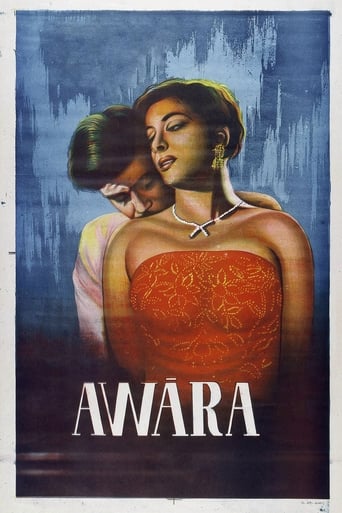
Barsaat was Raj Kapoor's second film as director and the first major production under his R.K. Films banner. The film faced significant challenges during its Kashmir shoot, including difficult weather conditions and limited infrastructure for filming in the remote mountain locations. Raj Kapoor insisted on authentic location shooting rather than studio backdrops, which was revolutionary for Indian cinema at the time. The production team had to transport heavy equipment through treacherous mountain roads, and the cast endured harsh weather conditions during outdoor sequences. The film's iconic poster featuring Raj Kapoor holding Nargis under an umbrella became the official logo of R.K. Films and has remained so ever since.
Themes
True love vs. casual romanceLoyalty and betrayalNature as metaphor for emotionsSocial class differences in relationshipsThe healing power of love
Themes & topics
Kashmirrainromancebetrayalfriendshipmountainspoetmusicianseasonsseparationreunionsacrificeinnocenceurban-rural dividetrue love
Historical background
Released in 1949, Barsaat belongs to postwar cinema and reflects production norms of its release season.
Why this film matters
Barsaat contributes to understanding regional output and audience tastes around 1949.
Making of
The making of Barsaat was marked by Raj Kapoor's visionary approach to filmmaking and his determination to create something revolutionary for Indian cinema. At just 25 years old, Kapoor took enormous financial risks, borrowing against his family's properties to fund the film's ambitious production. The Kashmir shooting schedule was particularly challenging, as the crew had to work in remote locations with minimal facilities. Raj Kapoor's perfectionism led to multiple retakes of crucial scenes, especially the romantic sequences between him and Nargis. The casting of Nimmi as Neela has become in Bollywood folklore - Kapoor discovered her at a family friend's wedding where she was performing a dance, and immediately offered her the role despite her lack of acting experience. The film's music recording was equally meticulous, with Shankar Jaikishan spending countless hours perfecting each composition. The famous umbrella scene that became the R.K. Films logo was shot on a specially constructed set with artificial rain, requiring multiple takes to achieve the perfect romantic mood.
What critics said
Review records for Barsaat are typical of 1949: brief for shorts, more sustained for features.
Did you know?
- Barsaat was the first film to establish the iconic Raj Kapoor-Nargis pairing, who would go on to star in 16 films together and become one of Bollywood's most celebrated on-screen couples
- The film's poster showing Raj Kapoor holding Nargis under an umbrella became the official logo of R.K. Films and is still used today
- This was the debut film for actress Nimmi, who was discovered by Raj Kapoor at a wedding and cast as Neela
- The song 'Ek Din Bik Jayega' was picturized on Raj Kapoor in a single continuous shot, a technical achievement for its time
- Barsaat was the first Indian film to have two separate music directors - Shankar Jaikishan for the songs and Ram Ganguly for the background score
- The film's success established R.K. Films as a major production house in Indian cinema
- Raj Kapoor reportedly mortgaged his family home to finance the production of Barsaat
- The film was shot extensively on location in Kashmir, which was unusual for Indian films of that era that primarily used studio sets
- Barsaat introduced the concept of the 'tramp' character in Indian cinema, inspired by Charlie Chaplin, which Raj Kapoor would perfect in later films
- The film's title 'Barsaat' (rain) became a recurring motif in Raj Kapoor's films, often symbolizing renewal, romance, and emotional catharsis
Awards & recognition
- Filmfare Award for Best Music Director (Shankar Jaikishan) - 1955 (retrospective award)
- Filmfare Award for Best Lyricist (Shailendra for 'Barsaat Mein') - 1955 (retrospective award)
Visual style
The cinematography of Barsaat, helmed by Jal Mistry, was revolutionary for its time and set new standards for visual storytelling in Indian cinema. The film's extensive use of location shooting in the Kashmir Valley created a visual spectacle that audiences had never seen before in Indian films. Mistry employed innovative camera techniques to capture the majestic beauty of the Himalayan landscape, using wide-angle lenses and dramatic lighting to enhance the romantic mood of the story. The famous sequences shot in the rain utilized artificial rain effects combined with careful lighting to create a dreamlike, romantic atmosphere. The cinematography also excelled in intimate close-up shots during emotional scenes, particularly in capturing the nuanced expressions of the lead actors. The contrast between the natural beauty of Kashmir and the urban sophistication of the city scenes was visually striking and thematically significant. The film's visual style influenced generations of Indian cinematographers and established the importance of visual aesthetics in Bollywood cinema.
Innovations
Barsaat achieved several technical milestones that advanced Indian cinema's production standards. The film's extensive location shooting in Kashmir required innovative solutions for transporting and operating heavy camera equipment in challenging mountain terrain. The artificial rain sequences, particularly in the iconic umbrella scene, involved complex plumbing and lighting systems that were technically advanced for the time. The film's editing techniques, especially in the romantic montages, were innovative in their use of cross-cutting and parallel editing to enhance emotional impact. The sound recording during outdoor sequences presented unique challenges that the technical team overcame using portable recording equipment and innovative microphone placement techniques. The film's special effects, particularly in the dream sequences, were achieved through creative use of double exposure and matte paintings. The production design, especially in creating the contrast between rural Kashmir and urban settings, required meticulous attention to detail and period accuracy. These technical achievements not only enhanced the film's artistic quality but also raised the bar for technical excellence in Indian cinema.
Music
The soundtrack of Barsaat was groundbreaking in Indian cinema history, featuring music by the debutant duo Shankar Jaikishan, with lyrics by Shailendra and Hasrat Jaipuri. The film's songs became instant classics and remain popular decades later. Notable tracks include 'Barsaat Mein Humse Mile Tum,' 'Jiya Beqaraar Hai,' 'Hawa Mein Udta Jaye,' and the philosophical 'Ek Din Bik Jayega.' The music perfectly complemented the film's romantic mood and emotional narrative, with each song carefully integrated into the storyline. The soundtrack showcased a diverse range of musical styles, from romantic ballads to philosophical reflections, demonstrating Shankar Jaikishan's versatility and innovation. The use of orchestration was particularly sophisticated for its time, incorporating Western classical influences with traditional Indian melodies. The success of the Barsaat soundtrack launched the careers of Shankar Jaikishan, who would go on to become one of Bollywood's most celebrated music director duos. The film's music also established the template for the Bollywood musical, where songs serve as narrative devices rather than mere entertainment interruptions.
Famous quotes
Barsaat mein humse mile tum, sajan sajan sajan... (In the rain, I met you, my beloved...)
Ek din bik jayega, maati ke mol, rag rag iski jalegi, reh na payegi koi tol... (One day this body of clay will be sold, every particle will burn, nothing will remain...)
Jiya beqaraar hai, chhayi bahaar hai... (My heart is restless, spring has arrived...)
Hawa mein udta jaaye, mera laal dupatta mal mal ka... (My red dupatta flies in the wind...)
Patang dor se juda na ho, toh udhti hi rehti hai... (If a kite remains attached to its string, it keeps flying...)
Memorable scenes
- The iconic umbrella scene where Raj Kapoor holds Nargis under his umbrella in the rain, which became the official logo of R.K. Films
- The emotional climax where Pran and Reshma reunite amidst the pouring rain, symbolizing the cleansing of misunderstandings and the renewal of their love
- The philosophical song sequence 'Ek Din Bik Jayega' where Raj Kapoor reflects on the transient nature of life and material possessions
- The introduction scene where the two friends Pran and Gopal arrive in Kashmir, establishing their contrasting personalities and setting up the central conflict
- Neela's heartbreaking wait by the mountain path, hoping for Gopal's return as promised, showcasing the film's theme of faithful love versus casual betrayal
What audiences thought
Barsaat was a massive commercial success, running for over 100 days in theaters across India - a benchmark for blockbuster status in Indian cinema. Audiences were captivated by the film's romantic storyline, spectacular locations, and memorable music. The chemistry between Raj Kapoor and Nargis created a sensation among moviegoers, establishing them as the most beloved on-screen couple of their era. The film's songs became hugely popular, with records selling in record numbers across the country. The emotional depth of the story resonated with audiences, particularly the themes of true love versus casual romance, which reflected changing social attitudes in post-independence India. The film's success at the box office established R.K. Films as a major production house and solidified Raj Kapoor's status as a leading filmmaker of his generation. Even decades after its release, Barsaat remains a beloved classic among fans of vintage Bollywood cinema.
Film connections
Influenced by
- Charlie Chaplin's tramp character (for Raj Kapoor's acting style)
- Hollywood romantic dramas of the 1940s
- Indian classical literature and poetry
- Traditional Indian folk music and dance forms
- Bengali romantic cinema of the 1930s-40s
This film influenced
- Awaara (1951)
- Shree 420 (1955)
- Chori Chori (1956)
- Sangam (1964)
- Mera Naam Joker (1970)
- Maine Pyar Kiya (1989)
- Dilwale Dulhania Le Jayenge (1995)
- Kuch Kuch Hota Hai (1998)
Film restoration
Barsaat has been relatively well-preserved for a film of its era, with original prints maintained in the National Film Archive of India and the R.K. Films archives. Several restoration efforts have been undertaken over the years, including a digital restoration in the early 2000s that improved the visual and audio quality for modern audiences. The film remains accessible through various home video releases and streaming platforms, ensuring its preservation for future generations. However, like many films from this period, some degradation of the original elements has occurred, and ongoing conservation efforts are necessary to maintain its cultural heritage value.
Where to watch
- Amazon Prime Video
- YouTube (official R.K. Films channel)
- Netflix (regional availability)
- SonyLiv
- MUBI (classic cinema section)
- Various Indian streaming platforms like Voot and JioCinema
- DVD and Blu-ray releases from R.K. Films
- Film archive screenings and classic cinema festivals