

Beauty's Worth
"A Quaker girl learns that beauty and snobbery rarely mix."
Keys: Space play/pause · ←/→ 10s · F fullscreen · M mute · </> speed
About this film
Prudence Cole is an unsophisticated Quaker girl being raised by her two aunts. Prudence is flirted with by snobbish Henry Garrison, who actually disdains the girl for her lack of worldliness and savoir faire. When Henry and his friends try to embarrass her at a posh resort, Prudence turns the tables on them.
Cast & crew
More films like this

More Drama films
View all →







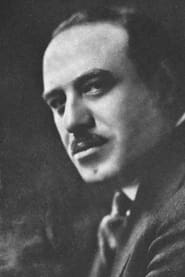
More from Robert G. Vignola
View all →
More about this film
About the production
Release dateJanuary 29, 1922
Box officeUnknown - but the film was reportedly successful as part of Davies' string of popular productions in the early 1920s
ProductionCosmopolitan Productions, Paramount Pictures
Filmed inParamount Studios, Hollywood, California, On-location shots at resort settings in California
This film was one of many Marion Davies vehicles produced by William Randolph Hearst's Cosmopolitan Productions. The production featured elaborate costumes and sets typical of Hearst's lavish spending on Davies' films. The Quaker costumes and settings required careful research to ensure authenticity while maintaining the glamorous aesthetic expected of a Marion Davies picture.
Themes
Social class and prejudiceAuthenticity versus superficialityFemale empowerment and intelligenceThe value of inner worth over external appearanceRural innocence confronting urban sophistication
Themes & topics
Quakersocial classtransformationresortdeceptionrevengeromancecomedydramacoming of agesocietyprejudiceempowerment
Historical background
By 1922, Beauty's Worth was shaped by late silent cinema technology, distribution, and audience expectations.
Why this film matters
Beauty's Worth (1922) helps trace genre evolution, performer careers, and exhibition practices of its period.
Making of
The production of 'Beauty's Worth' was marked by the typical extravagance associated with Marion Davies films under William Randolph Hearst's patronage. Hearst, deeply invested in Davies' career, often visited the set and offered suggestions, though director Robert G. Vignola maintained creative control. The transformation of Davies from the sophisticated socialite she was in real life to the naive Quaker girl required extensive makeup and costume work. The resort sequences were particularly challenging to film, requiring coordination of numerous extras in period costumes. Davies, known for her professionalism, performed many of her own stunts in scenes where her character outsmarts her antagonists. The film's script underwent several revisions to ensure the perfect balance between comedy and drama, showcasing Davies' versatility as an actress.
What critics said
Later retrospectives treat Beauty's Worth (1922) as representative late silent cinema fare valued by archivists and genre historians.
Did you know?
- This was one of the first films where Marion Davies played a more dramatic role, moving away from pure comedy
- William Randolph Hearst, Davies' powerful benefactor, reportedly had significant input on the film's production
- The film was adapted from a story by Rupert Hughes, who was Hearst's brother-in-law
- Marion Davies wore over 20 different costume changes throughout the film, showcasing the lavish production values
- The Quaker scenes were filmed with special attention to historical accuracy in costume and dialogue
- This film helped establish Davies as more than just a comedienne, proving her dramatic acting range
- The resort scenes were filmed at a real California luxury hotel, adding authenticity to the production
- Director Robert G. Vignola was one of Paramount's most reliable directors, known for his work with female stars
- The film's success led to Davies receiving more dramatic roles in subsequent productions
- A young and uncredited Carole Lombard reportedly appeared as an extra in some resort scenes
Awards & recognition
- No major awards were documented for this film, as the first Academy Awards were not presented until 1929
Visual style
The cinematography by Ira H. Morgan employed the sophisticated techniques typical of Paramount productions in the early 1920s. The film utilized extensive use of natural lighting in outdoor scenes, particularly in the resort sequences, creating a luminous quality that enhanced the glamorous atmosphere. Interior scenes featured careful lighting design to emphasize the contrast between the simple Quaker household and the luxurious resort settings. Morgan employed soft focus techniques for close-ups of Marion Davies, creating the romantic glow favored in portraits of female stars of the era. The camera work included dynamic tracking shots during the social scenes at the resort, adding energy to the sequences where Prudence confronts her antagonists. The film's visual style balanced realism in the Quaker scenes with the dreamlike quality of the resort sequences, effectively supporting the narrative's thematic contrasts.
Innovations
While 'Beauty's Worth' did not introduce groundbreaking technical innovations, it demonstrated the high production standards and technical polish characteristic of major studio productions in the early 1920s. The film featured sophisticated use of multiple camera setups for complex scenes, particularly in the resort sequences involving large groups of characters. The makeup and costume departments achieved notable transformations in Marion Davies' appearance, effectively creating the contrast between her character's Quaker simplicity and later sophistication. The lighting techniques employed in the film represented the state of the art for 1922, with careful attention to creating flattering portraits of the stars while maintaining naturalistic effects. The film's editing demonstrated the growing sophistication of narrative construction in silent cinema, with smooth transitions between scenes and effective pacing of the dramatic and comedic elements.
Music
As a silent film, 'Beauty's Worth' would have been accompanied by live musical performance during its original theatrical run. The score would typically have been compiled from classical pieces and popular songs of the era, adapted to match the film's mood and action. The emotional scenes, particularly those featuring Prudence's moments of vulnerability or triumph, would have been accompanied by romantic piano or orchestral pieces. The comedic moments likely featured lighter, more whimsical musical selections, while the social scenes at the resort would have been scored with sophisticated, jazz-influenced compositions popular in the early 1920s. The musical accompaniment would have varied by theater size, with larger cinemas employing full orchestras and smaller venues using piano or organ accompaniment. No original composed score for the film survives, as was typical for productions of this period.
Famous quotes
As a silent film, dialogue was conveyed through intertitles. Key intertitles included: 'True beauty is not in the face, but in the heart', 'Society teaches many things, but it cannot teach character', 'The simplest people often possess the greatest wisdom', 'When you have nothing to hide, you have everything to gain'
Memorable scenes
- The pivotal scene where Prudence first arrives at the luxurious resort, her simple Quaker dress contrasting sharply with the fashionable guests, immediately establishing the film's central conflict. The transformation sequence where Prudence, having learned from her experiences, emerges in sophisticated attire while maintaining her essential character. The climactic scene at the resort dinner where Prudence cleverly exposes the hypocrisy of her tormentors through her quick wit and moral clarity. The emotional moment when Prudence's aunts realize their niece has grown into a confident, worldly woman while remaining true to her values. The final scene where Henry recognizes Prudence's true worth, having learned to see beyond social pretensions to appreciate genuine character and intelligence.
What audiences thought
Audiences in 1922 responded enthusiastically to 'Beauty's Worth,' with the film proving to be a commercial success for Marion Davies and Cosmopolitan Productions. Moviegoers appreciated the film's mix of comedy, romance, and social commentary, as well as Davies' charismatic performance. The transformation of Davies' character from naive Quaker girl to sophisticated woman who maintains her values resonated with contemporary audiences, particularly women. The film's resort settings and glamorous costumes provided the visual spectacle that silent film audiences expected. The satisfying conclusion, where the protagonist outsmarts her sophisticated tormentors, provided audiences with the wish-fulfillment they sought in entertainment of the era. The film's strong box office performance helped cement Davies' status as one of the era's most popular stars.
Film connections
Influenced by
- The tradition of Cinderella stories where the underestimated heroine triumphs
- Contemporary novels about social mobility and class conflict
- The popular 'fish out of water' narrative structure common in 1920s cinema
- Stage plays contrasting rural virtue with urban corruption
- William Randolph Hearst's own social views and preferences in storytelling
This film influenced
- Subsequent Marion Davies vehicles that balanced comedy and drama
- Later films featuring naive protagonists confronting sophisticated society
- 1930s comedies about social class and transformation
- Films that contrasted simple values with sophisticated society
Film restoration
Incomplete - While 'Beauty's Worth' is not considered a completely lost film, only fragments and portions of the original film survive in various archives. Some reels are held at the Library of Congress and the Museum of Modern Art, but a complete print has not been located. The surviving material includes key scenes but lacks the complete narrative sequence. This incomplete preservation status is unfortunately common for films of this era, particularly those from the 1920s before systematic preservation efforts were established.
Where to watch
- Due to its incomplete preservation status, 'Beauty's Worth' is not commercially available on home video or streaming platforms. Film enthusiasts may be able to view surviving fragments at specialized film archives including the Library of Congress, the Museum of Modern Art's film department, or the UCLA Film & Television Archive. Occasionally, fragments may be screened at silent film festivals or special archival presentations. The film is also occasionally referenced in documentaries about Marion Davies' career or the history of Cosmopolitan Productions.