Captain Thunder
"Falls under pressure"
Keys: Space play/pause · ←/→ 10s · F fullscreen · M mute · </> speed
About this film
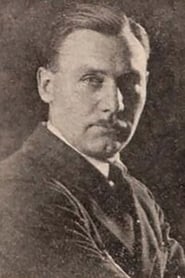
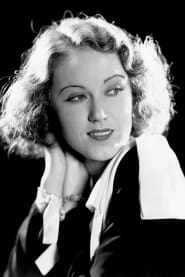
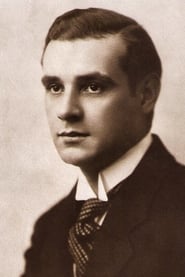
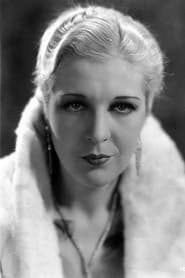
A notorious Mexican bandit goes all soft and mushy when he falls for a beautiful senorita. Warner Bros.' Captain Thunder contains some of the darndest Mexican accents you've ever heard in your life. The star is Hungarian-born Victor Varconi, portraying a legendary south of the border outlaw who tries to force Canadian senorita Fay Wray to marry a rival rustler whom she despises. She pleads with the bandito so pathetically that he is moved to grant her a single wish. Without hesitation she chooses her poor but true love. The bandit king, being a somewhat honorable fellow grants the wish and wit…
Cast & crew
More Western films
View all →

More from Alan Crosland
View all →


More about this film
About the production
Release dateDecember 27, 1930
BudgetApproximately $250,000 (estimated for standard Warner Bros. features of the era)
ProductionWarner Bros. Pictures, The Vitaphone Corporation
Filmed inWarner Bros. Burbank Studios - 4000 Warner Boulevard, Burbank, California, USA
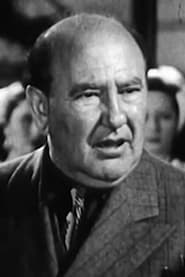
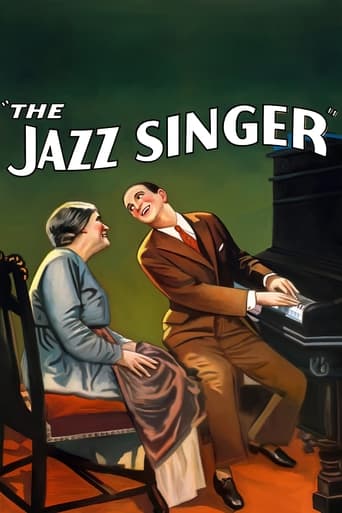
The film was one of the early 'all-talking' features produced by Warner Bros. following the success of 'The Jazz Singer.' Director Alan Crosland, who had helmed that landmark film, was tasked with bringing this Western-musical hybrid to life. The production utilized the Vitaphone sound-on-disc system, which was standard for Warner Bros. at the time. A significant portion of the film's charm and criticism stems from its casting choices, specifically featuring a Hungarian actor (Victor Varconi) and a Dutch actor (Charles Judels) playing Mexican characters with thick, often impenetrable accents.
Themes
Honor among thievesClass conflict in the Old WestThe 'Robin Hood' archetypeUnrequited love and sacrificeCultural stereotypes
Themes & topics
Mexican banditforced marriagereward moneypre-codestolen clothesbumbling sheriffhaciendaoutlaw hero
Historical background
Captain Thunder (1930) emerged during the studio-system peak and early sound decades, when exhibition habits and national film industries were still taking shape.
Why this film matters
Captain Thunder remains accessible through digital archives, giving modern viewers a direct link to 1930 screen culture.
Making of
The production of 'Captain Thunder' was marked by the challenges of early sound recording. Director Alan Crosland had to balance the action-oriented Western sequences with the static requirements of early microphones, which were often hidden in props like cactus or furniture. The casting of Victor Varconi was a gamble; while he was a respected silent actor, his heavy accent made some of his dialogue difficult for American audiences to understand, a common hurdle for international stars during the transition to talkies. The film also features a notable 'pre-Code' moment where Fay Wray's character is seen in a skimpy slip after her outer clothes are stolen, a scene that would have been heavily censored just a few years later after the strict enforcement of the Hays Code.
What critics said
Retrospective notes on Captain Thunder emphasize its value as a period production rather than blockbuster reception.
Did you know?
- Victor Varconi, a Hungarian-born silent film star, made his first full-length 'all-talking' feature appearance in this film.
- Fay Wray appears in this film with her natural brunette hair, years before she became a world-famous 'scream queen' blonde in 'King Kong' (1933).
- The film features an early screen appearance by the Latin bandleader Xavier Cugat, who contributed to the music.
- The script is based on a short story titled 'The Gay Caballero' by Pierre Couderc and Hal Davitt.
- The film was released during a period when the Mexican government was actively protesting the stereotypical 'greaser' and 'bandit' portrayals of Mexicans in Hollywood films.
- Despite being a Western, the film contains several musical numbers, reflecting the early sound era's obsession with including songs in almost every genre.
- The character of El Capitan Thunder was intended to be a charismatic rogue, but contemporary critics found his constant laughing and thick accent more annoying than charming.
- Charles Judels, who plays the bumbling Commandante Ruiz, later became famous as the voice of Stromboli and The Coachman in Disney's 'Pinocchio' (1940).
Visual style
James Van Trees utilized the standard high-key lighting typical of early 1930s studio productions. While the film features some outdoor Western vistas, much of the action is confined to hacienda sets and studio-built 'Mexican' villages, which allowed for better control of the primitive sound recording equipment.
Innovations
The film is a standard example of the Vitaphone sound-on-disc process. Its main technical 'achievement' was the integration of musical sequences into a Western narrative, a precursor to the more polished musical Westerns of the mid-1930s.
Music
The score and musical numbers were a collaborative effort involving Xavier Cugat, David Mendoza, and Leon Rosebrook. The music leans heavily into 'Spanish' and 'Mexican' motifs, featuring guitars and rhythmic percussion to emphasize the setting.
Famous quotes
Thunder: 'What does a bandito know of promises and honor?'
Ynez: 'You are a thief, but you have a heart!'
Thunder: 'Big boy! Little girl! Aren't you afraid of me?'
Memorable scenes
- The opening stagecoach robbery where Captain Thunder demands the passengers' outer clothing as 'tribute,' leaving Fay Wray in her undergarments.
- The scene where Commandante Ruiz attempts to use a series of bonfires to track the bandit, only to be repeatedly outsmarted in a slapstick fashion.
- The climax at the wedding where Thunder interrupts the ceremony and 'frees' Ynez by shooting the groom, Morgan, in cold blood.
What audiences thought
Contemporary audiences were somewhat baffled by the film's tonal shifts between straight drama and broad comedy. While the action sequences and the presence of Fay Wray provided some draw, the film did not achieve the lasting popularity of other 1930s Westerns. Today, it is mostly watched by enthusiasts of Pre-Code cinema and early sound-era oddities.
Film connections
Influenced by
- The Mark of Zorro (1920)
- The Robin Hood legend
- The Gay Caballero (short story)
This film influenced
- The Gay Caballero (1932)
- The Cisco Kid film series
Film restoration
The film is preserved and survives in its complete form. A copy is held at the Library of Congress, and it has been aired on Turner Classic Movies (TCM).
Where to watch
- Turner Classic Movies (TCM) occasional broadcasts
- Warner Archive Collection (DVD-on-demand)
- Internet Archive (Public Domain/Archival copies)