1900 · approximately 1 minute

Also available on: Wikimedia Archive.org
Capture of Boer Battery by British

Capture of Boer Battery by British

1900 approximately 1 minute United States
Imperial warfareMilitary spectacleMedia reconstruction of current eventsColonial conflictPatriotic display

Plot

This very short actualite9-style war film shows British forces in South Africa capturing a Boer artillery battery during the Second Boer War. Rather than a staged dramatic narrative, the film presents a brief, observational record of military action as understood and reconstructed by early cinematograph operators working for the Edison company. The camera remains fixed on the scene, emphasizing the movement of troops, horses, smoke, and artillery as the British advance and seize the Boer position. Like many films of this period, it is less a conventional story than a visual document designed to give audiences a vivid sense of a recent overseas war.

About the Production

Release Date 1900
Production Edison Manufacturing Company
Filmed In United States studio or staged exterior setting associated with Edison production work, Likely staged battlefield setting rather than an on-location South African war zone

This film belongs to the Edison war-topical output of the earliest cinema era, when actual events were frequently recreated rather than filmed in the field. Despite its title, surviving scholarship generally treats it as a reconstructed battlefield scene designed to resemble a news event from the Second Boer War rather than a genuine battlefield documentary shot under combat conditions. The production reflects the period's fascination with imperial warfare and the public appetite for moving-picture representations of current events, especially from foreign conflicts. As with many Edison films of 1900, precise crew and set details are sparse, and the surviving record emphasizes the film's catalog identity more than its production logistics.

Historical Background

The film was made in 1900 during the Second Boer War, a conflict that drew enormous international press attention and became one of the first wars to be widely mediated through modern mass communication. Newspapers, illustrated magazines, lantern slides, and moving pictures all competed to satisfy public curiosity about colonial warfare and British military campaigns in southern Africa. Cinema was still a new medium, and short topical films served as a major attraction because they appeared to bring distant events to life with unprecedented immediacy. At the same time, early film companies often blurred the line between documentation and reenactment, so audiences frequently accepted staged reconstructions as plausible representations of recent history.

Why This Film Matters

This film is significant as part of the earliest wave of war cinema and as evidence of how rapidly film became a tool for packaging current events. It helped establish the idea that motion pictures could supplement newspapers by visually dramatizing newsworthy events, even when the images were simulated. The film also illuminates early cinematic attitudes toward empire, military spectacle, and audience fascination with overseas conflict. In film history terms, it belongs to the lineage of actuality filmmaking and early reenactment cinema that would later evolve into newsreels, war films, and documentary dramatization.

Making Of

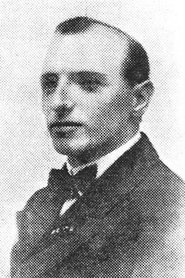
There is little surviving documentation on the exact shoot, which is typical for Edison one-shot actualities from 1900. The most important behind-the-scenes detail is that many Boer War subjects made by American companies were reconstructed in controlled settings, with soldiers, artillery props, smoke effects, and staged movement arranged to simulate combat. James H. White was part of the Edison team responsible for transforming newspaper and telegraphic war reports into moving images that looked immediate and topical to audiences. The production likely relied on the company's standard studio resources and outdoor set work rather than any direct filming in South Africa, which would have been impractical for an American commercial film crew at the time.

Visual Style

The film likely uses a fixed-camera setup typical of turn-of-the-century Edison productions, with the action staged in front of the lens in a wide, legible composition. Early war reconstructions relied on clear spatial arrangements so audiences could follow troop movement, artillery activity, and the implied capture of a position without cutting or camera movement. The visual style would have been blunt and theatrical, with smoke, uniforms, horses, and battlefield props arranged to maximize readability in a single shot. This approach is characteristic of early actuality and reenactment films, where the camera functioned more like a witness than an editor.

Innovations

The film's primary technical significance lies in its use of cinema to simulate or represent contemporary warfare for mass audiences at a time when the medium itself was barely five years old in commercial circulation. It exemplifies early mastery of staged actuality filmmaking, in which real-world subjects were reconstructed to fit the limitations of the single static shot. Its concise composition and visual legibility show how early filmmakers learned to communicate complex action within a very short runtime. While not an innovation in the modern sense, it is historically important as part of the development of war reenactment, news cinema, and documentary-style presentation.

Music

As a silent film, it had no synchronized recorded soundtrack. In exhibition, it would typically have been accompanied by live music, which could range from a lone pianist to a small theater ensemble, depending on venue and local practice. The musical accompaniment would have been improvised or compiled from stock repertory rather than specifically preserved for this title. Any sound effects associated with battle would have been suggested by the accompanist or by theater practice rather than built into the film itself.

Memorable Scenes

  • The broad battlefield tableau in which British troops advance on the Boer position while smoke and artillery fire suggest the chaos of battle.
  • The moment of apparent capture, which serves as the film's dramatic endpoint and gives the short its title's sense of triumph.

Did You Know?

  • The film is associated with James H. White, one of the key early Edison cameramen and producers who helped define the company's actualities and topical scenes.
  • Although the title implies documentary authenticity, early war films of this type were often staged or heavily simulated for the camera.
  • The film reflects the intense international fascination with the Second Boer War, which was widely covered in newspapers and early cinema.
  • Edison regularly produced short films based on recent events, and this title fits the company's broader strategy of turning current affairs into saleable moving pictures.
  • The film is extremely brief, typical of 1900-era productions that often ran only a minute or less.
  • It demonstrates the early cinema practice of using a static camera and broad action within a single shot to convey an event efficiently.
  • The title suggests imperial military triumph, revealing how British military victories were marketed to audiences in the late Victorian era.
  • Because many early film titles were catalog descriptions rather than narrative titles, the name functions almost like a label for a news scene.
  • The film is an example of how cinema was already being used to dramatize and circulate foreign conflict for mass audiences.
  • Works like this helped establish the war film as a genre long before feature-length combat narratives became common.

What Critics Said

Contemporary critical commentary specific to this title is scarce, which is common for films from 1900. At the time, such shorts were usually judged less by artistic criteria than by their novelty, topicality, and ability to attract spectators in nickelodeons and vaudeville exhibitions. Modern historians view it as an important artifact of early cinema rather than as a work of dramatic realism, and they often emphasize the ambiguous status of early "documentary" war films. Its present-day reputation is primarily archival and scholarly, valued for what it reveals about production practices, media culture, and imperial representation at the dawn of film.

What Audiences Thought

No reliable audience-survey records survive for this specific title, but films of this type were generally popular with early cinema audiences because they offered sensational subject matter and the appeal of current events. Viewers in 1900 were often eager to see visual recreations of distant battles and military exploits, especially when titles referenced well-known conflicts. The short running time and straightforward spectacle made such films easy to program in variety theaters and storefront cinemas. Its appeal likely rested on immediacy, novelty, and patriotic or imperial curiosity rather than character-driven storytelling.

Film Connections

Influenced By

  • Newspaper war reporting from the Second Boer War
  • Lantern-slide wartime illustrations
  • Earlier Edison actuality films
  • Stage melodrama and military spectacle traditions

This Film Influenced

  • Early newsreels and actuality films
  • War reenactment shorts of the silent era
  • Later documentary and news cinema approaches to battlefield coverage

Film Restoration

The film is generally considered extant in archival form, though prints may be fragile and access can be limited by archive holdings; it is not commonly known as a lost film.

Themes & Topics

Second Boer WarBritish armyBoer artillerybattle reenactmentwar actualite9