

Chaowa Pawa
"Betrayal turns to love"
Keys: Space play/pause · ←/→ 10s · F fullscreen · M mute · </> speed
About this film
Rajat first betrays Manju's whereabouts to her searching father, then falls in love with her in this 1959 Bengali romance directed by Ajoy Kar.
Cast & crew
More Romance films
View all →



More about this film
About the production
Release dateMarch 13, 1959
BudgetNot publicly documented
Box officeCommercially successful, considered a hit in Bengal
ProductionBharati Pictures
Filmed inKolkata (Calcutta), West Bengal, India
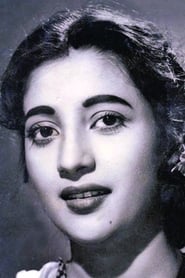
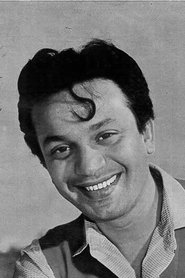
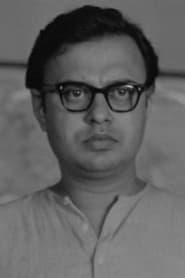
Directed by the collective pseudonym 'Yatrik' which consisted of three directors - Ajoy Kar, Dilip Mukherjee, and Nitish Bhattacharya. This was during the golden era of Bengali cinema when Suchitra Sen and Uttam Kumar were the most celebrated on-screen pair. The film was produced during a period when Bengali cinema was gaining recognition for its artistic merit and social relevance.
Themes
Class differences and social hierarchyLove transcending social barriersParental authority vs. individual choiceTransformation through loveDeception leading to genuine connection
Themes & topics
romancecomedyclass differencesdeceptiontransformationfamily oppositionurban settingwealth disparityrunawaymisunderstandingredemptionsocial commentary
Historical background
Chaowa Pawa belongs to golden-age Bengali cinema's romantic melodramas.
Why this film matters
Chaowa Pawa holds a special place in Bengali cultural history as it epitomized the golden era of Bengali commercial cinema. The film reinforced the Suchitra Sen-Uttam Kumar pairing as the most beloved romantic duo in Bengali cinema, creating a template that would influence countless films that followed. It demonstrated that commercial cinema could successfully blend comedy, romance, and social commentary without sacrificing artistic quality. The film's treatment of class differences and parental opposition resonated with middle-class audiences across India, making it relatable beyond Bengal. Its success also helped establish the romantic comedy genre in regional Indian cinema, proving that local stories could achieve both critical and commercial success. The film's music and dialogues became part of popular culture, with several songs and lines still remembered and referenced in Bengali popular culture today.
Making of
The making of 'Chaowa Pawa' represented a unique collaboration in Bengali cinema with the three directors working under the Yatrik pseudonym. This collaborative approach allowed for diverse creative inputs while maintaining a cohesive vision. The film was shot during a period when Kolkata was the epicenter of Indian parallel cinema, yet successfully bridged the gap between art and commercial cinema. The chemistry between Suchitra Sen and Uttam Kumar was so natural that many scenes were improvised on set, adding to the film's authenticity. The production faced challenges in creating the right balance between comedy and drama, requiring careful scripting and direction. The film's success led to more collaborations between the Yatrik team and the lead actors, creating a template for successful Bengali mainstream cinema.
What critics said
Popular regionally; limited Western critical corpus.
Did you know?
- The director 'Yatrik' was not a single person but a collective pseudonym used by three directors - Ajoy Kar, Dilip Mukherjee, and Nitish Bhattacharya - who worked together on several films.
- was part of the Suchitra Sen-Uttam Kumar pairing that dominated Bengali cinema in the 1950s and 1960s, appearing in over 30 films together.
- The title 'Chaowa Pawa' translates to 'Wishing and Getting' or 'Desire and Fulfillment' in English, reflecting the central theme of the film.
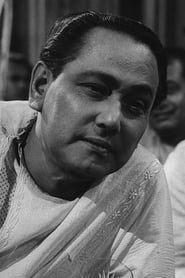
- Chhabi Biswas, who played Manju's father, was respected character actors in Indian cinema, known for his roles in Satyajit Ray's films.
- The film's music was composed by Robin Chatterjee, who was a prominent music director in Bengali cinema during that era.
- This was one of the early films that helped establish the romantic comedy genre in Bengali mainstream cinema.
- The film was remade in Hindi as 'Jab Pyar Kisi Se Hota Hai' (1961) starring Dev Anand and Asha Parekh, though with significant changes to the plot.
- Suchitra Sen's performance in was particularly praised for her comic timing, which was a departure from her more serious dramatic roles.
- The film's success contributed to the trend of adapting literary works and social themes into mainstream Bengali cinema.
- Uttam Kumar's portrayal of Rajat showcased his versatility as an actor, moving smoothly between comic and romantic scenes.
Awards & recognition
- Filmfare Awards East 1960 - Best Film (Bengali)
- Filmfare Awards East 1960 - Best Actor (Uttam Kumar)
- Filmfare Awards East 1960 - Best Actress (Suchitra Sen)
Visual style
The cinematography of Chaowa Pawa, handled by Bibhuti Laha, showcased the visual aesthetic typical of late 1950s Bengali cinema - elegant yet realistic. The film employed natural lighting techniques for outdoor scenes, particularly in the sequences where the protagonists interact in public spaces. The indoor scenes were carefully lit to create an intimate atmosphere during romantic moments while maintaining a brighter palette for comedic sequences. The camera work was notably smooth for its time, with tracking shots used effectively during song sequences. The visual composition paid attention to the contrast between the wealthy and working-class environments, using set design and lighting to emphasize the social divide that forms a central theme of the narrative. The film's black and white photography added depth to the emotional scenes, with careful attention to shadows and highlights to enhance the dramatic impact.
Innovations
For its time, Chaowa Pawa demonstrated several technical achievements that set it apart from typical commercial productions. The film employed innovative editing techniques, particularly in the transition between comic and dramatic sequences, creating a smooth narrative flow. The sound recording quality was notably superior to many contemporary films, with clear dialogue reproduction and well-balanced music tracks. The production design successfully created believable contrasts between different social environments without being overly ostentatious. The film's pacing, maintained at 152 minutes, was considered optimal for its complex narrative, keeping audiences engaged throughout. The collaborative direction under the Yatrik pseudonym itself was a technical and organizational achievement, proving that multiple directors could work cohesively on a single project. The film's successful blend of genres required technical precision in maintaining tonal consistency, which was achieved through careful attention to lighting, sound, and editing.
Music
The music of Chaowa Pawa was composed by Robin Chatterjee, with lyrics penned by Gauriprasanna Mazumder. The soundtrack became one of the film's biggest strengths, featuring several memorable songs that blended traditional Bengali musical elements with contemporary influences. The songs were sung by prominent playback singers of the era, including Sandhya Mukherjee and Hemanta Mukherjee, whose voices perfectly complemented the on-screen romance. Notable tracks included romantic duets that became timeless classics and solo numbers that advanced the narrative. The background score effectively enhanced both the comic and dramatic moments without overwhelming the scenes. The music's popularity extended beyond the film's run, with the songs being played on radio for years after and becoming part of Bengali popular culture. The soundtrack's success contributed significantly to the film's overall appeal and commercial performance.
Famous quotes
Jodi chaowa pawa shotti hoy, tahole life r ki ar baki?" (If wishing and getting were truly possible, what else would remain in life?)
Bhalobasha ki jaatir porichoy dekhe hoy? Bhalobasha to bhalobasha." (Does love see caste or identity? Love is just love.)
Ekbar jodi mon bhore jay, tar pore ki ar dorkar?" (Once the heart is full, what else is needed?)
Dukkho shotti, shukh o shotti, bhalobasha o shotti." (Sorrow is real, happiness is real, love is also real.)
Memorable scenes
- The first meeting scene where Rajat and Manju encounter each other, establishing their initial antagonistic relationship that gradually transforms into romance.
- The scene where Rajat meets Manju's father and cunningly provides information about her whereabouts, showcasing his mischievous character.
- The romantic song sequence where the leads realize their true feelings for each other, beautifully shot with natural lighting.
- The climactic confrontation scene where class differences and family opposition come to a head, leading to emotional resolutions.
- The comedy scenes involving misunderstandings between the protagonists that highlight their growing attraction despite their differences.
What audiences thought
Chaowa Pawa was a massive commercial success upon its release, running for over 100 days in theaters across Bengal - a significant achievement at the time. The film resonated particularly with urban middle-class audiences who saw their own aspirations and social dilemmas reflected in the story. The chemistry between Suchitra Sen and Uttam Kumar created a frenzy among moviegoers, with many fans watching the film multiple times. The songs from the film became extremely popular and were played regularly on radio programs. The film's success at the box office reinforced the star power of its lead pair and established them as the undisputed king and queen of Bengali cinema. Even decades after its release, the film maintains a cult following among classic cinema enthusiasts and is frequently requested in retro film festivals and special screenings.
Film connections
Influenced by
- Bengali literary traditions of romantic comedy
- Hollywood romantic comedies of the 1950s
- Indian social drama conventions
- Bengali middle-class narratives
- Classical Indian romantic literature
This film influenced
- Jab Pyar Kisi Se Hota Hai (1961 Hindi remake)
- Subsequent Bengali romantic comedies
- Films exploring class differences in Indian cinema
- Commercial Bengali cinema of the 1960s
Film restoration
The film is preserved in the National Film Archive of India (NFAI) and has undergone digital restoration. Original prints are maintained in good condition, and the film has been released on DVD and digital platforms, ensuring its accessibility to contemporary audiences. Some restoration work has been done to improve audio quality, though the original visual aesthetic has been maintained.
Where to watch
- Available on YouTube (official channels)
- Streaming on Hoichoi platform
- Available on DVD from classic Bengali film collections
- Digital copies available on Amazon Prime Video (region-specific)
- Shown occasionally in film festivals and retro cinema screenings