
Circus
"The price of an american"
Keys: Space play/pause · ←/→ 10s · F fullscreen · M mute · </> speed
About this film
Hard-pressed, pre-war life, an American circus performer finds herself the victim of racism after it is revealed that she's the mother of a mixed-race child. In the midst of the public scandal, she finds happiness, love, and refuge in the USSR.
Cast & crew
More films like this
More Music films
View all →
More from Grigori Aleksandrov
View all →


More about this film
About the production
Release dateMay 25, 1936
Budget1.2 million rubles (estimated)
Box officeEnormous success - seen by over 30 million viewers in the USSR within the first year, making it especially successful Soviet films of the 1930s
ProductionMosfilm, Goskino
Filmed inMoscow Film Studio (Mosfilm), Moscow, USSR, Circus on Tsvetnoy Boulevard, Moscow
The film was shot during the height of Stalin's cultural revolution and was explicitly designed to showcase Soviet values. Director Grigori Aleksandrov, who was married to star Lyubov Orlova, created the film after being inspired by American musical comedies during his time in Hollywood. The circus sequences required extensive preparation, with real circus performers consulting on the choreography. The famous finale scene with representatives of all Soviet nationalities was filmed over several days and involved hundreds of extras in traditional costumes.
Themes
Racial equality and anti-racismInternational solidarityThe superiority of Soviet values over Western capitalismThe transformative power of acceptance and loveArt as a bridge between cultures
Themes & topics
circus performerracismmixed-race childSoviet Unionpropagandamusical comedyinternational solidaritypolitical asylummotherhoodcultural acceptanceshow businesslove storyideological conversion
Historical background
Production in 1936 placed Circus among pre-war releases competing for attention in a rapidly expanding market. It was directed by Grigori Aleksandrov and Isidor Simkov at the Mosfilm studios. In his own words, it was conceived as "an eccentric comedy...a real side splitter." Starring the glamorous and immensely popular Lyubov Orlova (Aleksandrov's wife), the first recognized star of Soviet cinema and a gifted singer, the film contains several songs which instantly became Soviet classics.
Why this film matters
Retrospective programs include Circus when mapping pre-war output across genres and national cinemas. Circus (Russian: Цирк, romanized: Tsirk) is a 1936 Soviet melodramatic comedy musical film.
Making of
The making of 'Circus' was a major cultural event in the Soviet Union. Director Grigori Aleksandrov had recently returned from a trip to Hollywood where he studied American filmmaking techniques, particularly musical comedies. He was determined to create a Soviet film that could compete with Hollywood productions while promoting communist values. The casting of Lyubov Orlova was significant - she was Aleksandrov's wife and had been discovered by director Eisenstein. Her transformation from a provincial actress to a glamorous movie star was carefully managed by Soviet cultural authorities. The film's production involved extensive cooperation with real circus performers, and many of the stunt sequences were performed by professional circus artists rather than stunt doubles. The controversial casting of James Patterson, an African American child living in the USSR, as Marion's baby was a bold statement for its time, as the Soviet Union wanted to contrast its supposed racial harmony with American segregation. The musical numbers were choreographed by combining Soviet folk dance traditions with American Broadway-style choreography.
What critics said
Festival revivals have renewed discussion of Circus among pre-war specialists. In his own words, it was conceived as "an eccentric comedy...a real side splitter." Starring the glamorous and immensely popular Lyubov Orlova (Aleksandrov's wife), the first recognized star of Soviet cinema and a gifted singer, the film contains several songs which instantly became Soviet classics.
Did you know?
- Lyubov Orlova, the film's star, was the first officially recognized star of Soviet cinema and was personally favored by Stalin
- The film's most famous song 'Wide is My Motherland' (Широка страна моя родная) became especially popular Soviet patriotic songs and is still recognized in Russia today
- The mixed-race baby in the film was played by James Patterson, an African American child whose parents had emigrated to the Soviet Union
- Director Grigori Aleksandrov had previously worked with Sergei Eisenstein before studying Hollywood filmmaking techniques in the United States
- The film was banned in Nazi Germany for its themes of racial equality and international solidarity
- Stalin reportedly watched the film multiple times and praised it as a perfect example of Socialist Realism in cinema
- The circus performance scenes were inspired by real Soviet circus acts of the 1930s
- The film's success led to Lyubov Orlova becoming the highest-paid actress in the Soviet Union
- The international theme of the finale was meant to contrast with the growing racial tensions in Europe and America at the time
- The film was one of the first Soviet musicals to incorporate Western-style production numbers while maintaining Soviet ideological content
Awards & recognition
- Stalin Prize (1941) - Grigori Aleksandrov and Lyubov Orlova
- Order of Lenin awarded to director Grigori Aleksandrov for the film
- Venice Film Festival - Special Mention (1936)
Visual style
The cinematography of Circus, handled by Vladimir Nilsson and Boris Petrov, was groundbreaking for Soviet cinema. The film employed innovative camera techniques learned from Hollywood, including complex tracking shots during musical numbers and dramatic lighting that created a glamorous atmosphere unusual for Soviet films of the period. The circus sequences featured dynamic camera movements that captured the excitement and danger of the performances, using multiple camera setups and innovative angles. The film's visual style contrasted the dark, shadowy scenes of Marion's life in America with bright, vibrant colors (in the original color sequences) and lighting in the Soviet portions. The famous finale scene was shot with a wide-angle lens to capture the massive scale of the production, with hundreds of performers in traditional costumes. The cinematography successfully blended the spectacle of American musical films with Soviet realism, creating a unique visual language that influenced subsequent Soviet productions. The film also featured some of the first use of montage sequences in Soviet musical comedy, cutting between different performers and reactions to create rhythmic energy.
Innovations
Circus featured several technical innovations for Soviet cinema of the 1930s. The film employed sophisticated sound recording techniques that allowed for clearer dialogue and music than was typical in Soviet productions of the era. The circus sequences required innovative camera rigs and safety equipment to capture the dangerous performances up close. The film included some early experiments with color photography in certain sequences, though most of the film was in black and white. The complex musical numbers required precise synchronization between sound and image, challenging the technical capabilities of Soviet film studios. The film's production design, led by Ivan Stepanov, created elaborate sets that could accommodate both the circus performances and the musical numbers, requiring innovative construction techniques. The lighting design was particularly advanced for its time, using multiple light sources to create the glamorous atmosphere of the circus while maintaining visibility during complex action sequences. The film's editing, supervised by Esfir Tobak, employed rapid cutting techniques learned from American films to create dynamic energy during musical numbers. These technical achievements helped establish Soviet cinema as capable of producing films that could compete with Hollywood productions in terms of technical sophistication.
Music
The soundtrack of Circus was composed by Isaak Dunayevsky, who became one of the Soviet Union's most celebrated composers through his work on this film. The music brilliantly blended American jazz and swing influences with Russian folk melodies and Soviet patriotic themes. The most famous song, 'Wide is My Motherland' (Широка страна моя родная), with lyrics by Vasily Lebedev-Kumach, became an instant classic and remains among the leading recognized Russian songs of all time. Other notable musical numbers include 'Laughter and Tears' and the various circus performance pieces. The film's score was innovative in its use of leitmotifs to represent different characters and themes, particularly the contrast between American and Soviet musical styles. The soundtrack was recorded using the most advanced sound equipment available in the USSR at the time, resulting in unusually clear audio for the period. The musical numbers were carefully choreographed to complement the cinematography, creating seamless integration of sound and image. Dunayevsky's work on Circus established him as the preeminent composer of Soviet film music, and his approach to blending popular and classical elements influenced generations of Soviet composers.
Famous quotes
In our country, we love all children. All children are precious to us! - Soviet audience member during the climactic scene
Wide is my motherland, with many forests, fields, and rivers! I know of no other country where a man breathes so freely. - Opening lyrics of the famous song
You see, in America, they have one kind of circus, and in the Soviet Union, we have another kind - a people's circus! - Martynov explaining Soviet circus to Marion
Your child is not just your child - he is our child, the child of the Soviet people! - Final declaration to Marion
Memorable scenes
- The climactic finale where representatives of all Soviet nationalities pass Marion's baby from hand to hand while singing 'Wide is My Motherland', creating a powerful visual metaphor for international solidarity and acceptance
- Marion's death-defying trapeze performance where she almost falls but is saved by Martynov, symbolizing her transition from American individualism to Soviet collective support
- The opening sequence showing Marion's persecution in America, filmed in dark, shadowy tones contrasting with the bright Soviet scenes that follow
- The musical number 'Laughter and Tears' where Marion performs with the circus, showcasing her talent and the joy she finds in her new Soviet home
- The scene where Marion's secret is revealed and instead of rejection, she receives overwhelming support from the Soviet audience, representing the film's core message
What audiences thought
Circus was a phenomenal success with Soviet audiences, becoming especially popular films of the 1930s. Movie theaters across the USSR were packed for months, and the film was shown in even the most remote regions of the vast country. Audiences particularly loved Lyubov Orlova's performance and the film's musical numbers. The emotional climax where the Soviet audience accepts Marion and her child reportedly moved many viewers to tears. The film's themes of acceptance and international solidarity resonated deeply with a population that included dozens of different ethnic groups and nationalities. In later years, Circus became a nostalgic favorite for those who grew up in the Soviet era, with many remembering it as one of the first films they saw as children. The film continued to be shown on Soviet television for decades, introducing new generations to its story and songs. International audiences, when they could see the film, were often surprised by its sophisticated production values and emotional power, though some found the propaganda elements heavy-handed.
Film connections
Influenced by
- American musical comedies of the 1930s
- Hollywood studio system production methods
- Busby Berkeley musical numbers
- Soviet Socialist Realism doctrine
- Eisenstein's montage theory
- German Expressionist lighting techniques
This film influenced
- Volga-Volga (1938)
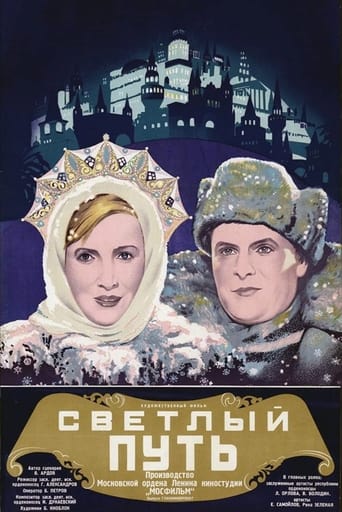
- The Bright Path (1940)
- Russian Cinderella (1947)
- Carnival Night (1956)
- The Irony of Fate (1975)
- Later Soviet musical comedies
Film restoration
The film has been well-preserved by the Russian State Film Archive (Gosfilmofond). Multiple high-quality prints exist, and the film has been digitally restored in recent years. The original negative is stored in climate-controlled facilities at the Gosfilmofond archive in Moscow. The restoration process included cleaning and repairing damage to the original film elements, as well as digitally enhancing the soundtrack to improve audio quality. The restored version has been released on DVD and Blu-ray by various distributors, ensuring the film's accessibility to modern audiences. Some color sequences from the original production have survived and have been incorporated into recent restorations, providing valuable insight into the film's original visual design.
Where to watch
- Available on DVD and Blu-ray from Russian Cinema Council (RUSCICO) with English subtitles
- Streaming on Kanopy (academic streaming service) with English subtitles
- Available on Amazon Prime Video in some regions
- Can be found on YouTube with subtitles (official uploads by film archives)
- Available in the Criterion Collection library
- Streaming on MUBI in selected countries
- Available for viewing at film archives and cinematheques specializing in classic cinema