



City Girl
"City bride, wheat farm"
Keys: Space play/pause · ←/→ 10s · F fullscreen · M mute · </> speed
About this film
Chicago waitress Kate marries Minnesota farmer Lem and struggles with harsh farm life and his domineering father in F.W. Murnau's 1930 Fox drama City Girl.
Cast & crew
More films like this

More Drama films
View all →







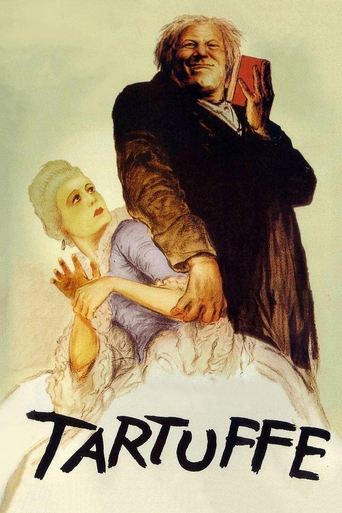
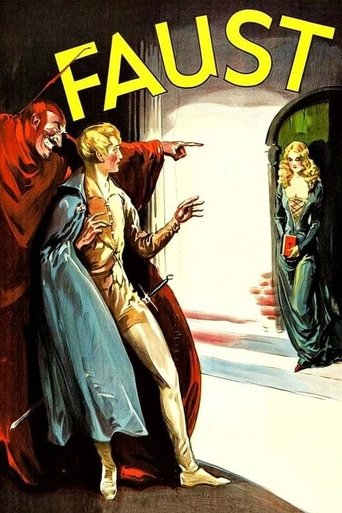
More from F. W. Murnau
View all →

More about this film
About the production
Release dateFebruary 16, 1930
BudgetEstimated at over $1,000,000 (significant for the era due to location shooting)
Box officeConsidered a box office failure upon its initial 1930 release
ProductionFox Film Corporation
Filmed inAthena, Oregon, Pendleton, Oregon, Thorn Hollow, Oregon, Portland, Oregon, Fox Studios, Los Angeles, California
The film had a notoriously difficult production. Originally titled 'Our Daily Bread,' Murnau envisioned it as a 'symphony of wheat.' During location scouting in Oregon, Murnau suffered an emergency appendectomy, delaying production. The film was caught in the industry's transition to sound; Fox executives, unhappy with Murnau's artistic direction and the 'German' feel of the characters, demanded talking sequences be added. Murnau refused to participate in the reshoots and eventually walked away from the project to film 'Tabu' in Tahiti. The studio then tasked assistant director A.F. Erickson with reshooting the second half of the film to include dialogue, resulting in two versions: a silent cut and a part-talkie cut.
Themes
Urban vs. Rural ConflictThe Sacredness of NatureGenerational ConflictThe Redemption of LoveEconomic Hardship
Themes & topics
wheat farmwaitressChicagoMinnesotadomineering fatherhailstormmarriageharvestersgold diggerreconciliation
Historical background
City Girl was conceived silent then released with sound; studio re-edited against Murnau's wishes.
Why this film matters
While ignored upon release, 'City Girl' is now recognized as a masterpiece of late silent cinema. It is celebrated for its naturalistic style, which departed from Murnau's earlier Expressionist works like 'Nosferatu.' Its influence is most visible in the 'pastoral' tradition of American filmmaking, emphasizing the relationship between man and the landscape. The film's rediscovery in the 1970s sparked a critical re-evaluation of Murnau's American career, proving that his talent remained potent even under studio pressure.
Making of
The making of 'City Girl' was a clash between the artistic purity of European Expressionism and the commercial demands of Hollywood. Murnau utilized 'unchained camera' techniques, moving the camera through wheat fields to create a sense of lyricism. However, the production was plagued by the 'talkie' revolution. Fox Film Corporation was undergoing a hostile takeover, and the new management had little patience for Murnau's expensive, silent 'art' films. The studio's intervention—cutting the film's length and adding awkward dialogue scenes—led to a permanent rift between Murnau and William Fox. This was Murnau's penultimate film; he died in a car accident in 1931, shortly before the premiere of his final film, 'Tabu.'
What critics said
Later critics admire poetic imagery and Charles Farrell–Mary Duncan performances despite studio damage.
Did you know?
- The film's original working title was 'Our Daily Bread,' but William Fox changed it to 'City Girl' to make it sound more commercial.
- Director F.W. Murnau was so dedicated to realism that he had an entire working farm built in Oregon specifically for the production.
- Lead actress Mary Duncan was crowned 'Round-Up Queen' of the 1928 Pendleton Round-Up rodeo while on location for the film.
- The part-talkie version of the film, which Murnau disowned, is now considered a lost film; only the silent version survives today.
- The film was rediscovered in the Fox vaults in 1969 by MoMA archivist Eileen Bowser after being forgotten for decades.
- Charles Farrell and Mary Duncan also starred together in Murnau's lost film '4 Devils' (1928).
- The film features a massive cast of 80 mules and authentic harvesting equipment provided by local Oregon farmers.
- Murnau's contract with Fox was terminated during the production of due to his refusal to compromise on the sound sequences.
- The film is often cited as a direct visual influence on Terrence Malick's 1978 masterpiece 'Days of Heaven.'
- The 1937 Fox vault fire destroyed the original negatives of the part-talkie version, making the silent print found in 1970 the only extant copy.
Visual style
Photographed by Ernest Palmer, the film is a masterclass in naturalistic lighting and camera movement. It features sweeping tracking shots through the wheat fields that were technically revolutionary for 1928. Murnau and Palmer used deep focus and forced perspective to give the farm an epic, monumental scale, while the city scenes in Chicago utilize harsh, mechanical shadows to contrast with the open, sun-drenched landscapes of Minnesota.
Innovations
The film is notable for its sophisticated use of the 'moving camera' in an outdoor, rural setting, a feat that was difficult with the bulky equipment of the time. It also utilized early Movietone sound-on-film technology for its synchronized score and the (now lost) dialogue sequences. The production's use of authentic, large-scale agricultural machinery for the harvesting scenes added a documentary-like realism that was rare for Hollywood dramas of the period.
Music
The original 1930 part-talkie version featured a synchronized Movietone score by Arthur Kay and a theme song titled 'In the Valley of My Dreams.' Modern restorations of the silent version often feature new scores, most notably by Christopher Caliendo or John F. Paul, who composed a 'Symphony of Wheat' to accompany the film's pastoral imagery.
Famous quotes
Kate: 'Oh, Lem, it's wonderful to have a home. and a mother and a father. And a man of my own.' (Intertitle during the wheat field scene)
Lem's Father: 'You brought a city woman here to eat our bread. a woman who doesn't know the meaning of work!' (Context: The father's initial rejection of Kate)
Kate: 'I'm not a 'city girl' anymore, Lem. I'm your wife.' (Context: Kate asserting her place on the farm)
Memorable scenes
- The Wheat Field Run: Lem and Kate arrive at the farm and run joyously through the waist-high wheat as the camera tracks alongside them in a single, fluid motion.
- The Chicago Diner: A frantic, rhythmic sequence showing the mechanical and soul-crushing nature of Kate's life as a waitress before meeting Lem.
- The Hailstorm: A tense, climactic sequence where the family and harvesters race against time to save the crop from a violent storm, mirroring the emotional turmoil of the characters.
- The Slap: A shocking moment where Lem's father strikes Kate, marking the low point of her reception at the farm and the catalyst for Lem's eventual rebellion.
What audiences thought
The film was a commercial failure in 1930. Audiences had rapidly lost interest in silent films or 'part-talkies,' preferring the novelty of full dialogue. In modern times, the film has found a dedicated audience through screenings at film festivals and high-quality home video releases, where it is appreciated for its emotional depth and stunning visuals.
Film connections
Influenced by
- The Mud Turtle (play by Elliott Lester)
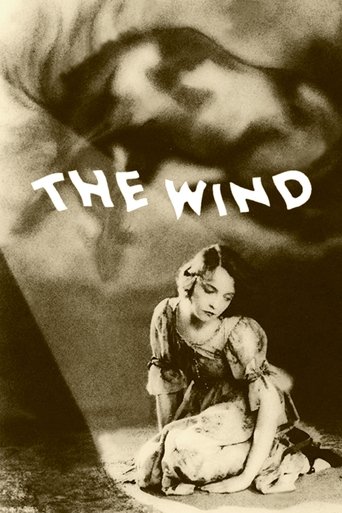
- The Wind (1928)
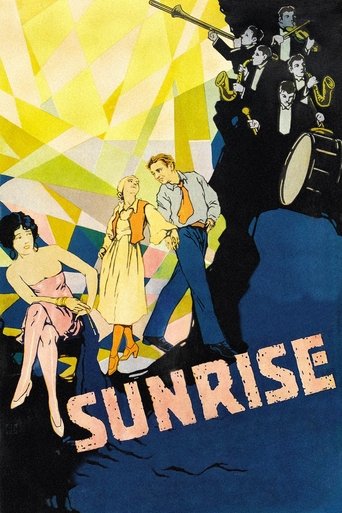
- Sunrise: A Song of Two Humans (1927)
This film influenced
- Days of Heaven (1978)
- Of Mice and Men (1939)
- The Tree of Life (2011)
Film restoration
The original 1930 part-talkie version is considered lost. However, the superior silent version was restored by the Museum of Modern Art (MoMA) in the 1970s and is fully preserved.
Where to watch
- The Criterion Channel
- BFI Player
- YouTube (Public Domain/Archive uploads)
- Blu-ray/DVD via Masters of Cinema (Eureka)