


College
"bookish college student dismissive of athletics is compelled"
Keys: Space play/pause · ←/→ 10s · F fullscreen · M mute · </> speed
About this film
A bookish college student dismissive of athletics is compelled to try out sports to win the affection of the girl he loves.
Cast & crew
More films like this
More Drama films
View all →







More from James W. Horne
View all →
More about this film
About the production
Release dateSeptember 10, 1927
Budget$254,000
Box office$743,000 (domestic)
ProductionBuster Keaton Productions
Filmed inUniversity of Southern California, Los Angeles, California, MGM Studios, Culver City, California
The picture was one of Keaton's most physically demanding productions, with the star performing numerous dangerous stunts including pole vaulting, baseball, and rowing sequences. The famous baseball scene required Keaton to actually play multiple positions while the camera rolled continuously. The university scenes were filmed at USC, where Keaton and his crew had to work around actual student schedules. The climactic rescue sequence involved complex rigging and timing to ensure Keaton's safety while maintaining the appearance of genuine danger.
Themes
Intellectual vs. Physical ProwessTransformation for LoveCollege CultureMasculinity in the 1920sAuthenticity vs. Pretense
Themes & topics
Historical background
Buster Keaton Productions's 1927 release of College fit contemporary United States programs that mixed fiction, news, and novelty subjects for repeat weekly attendance.
Why this film matters
Programmers and historians revisit College (1927) because its story—a bookish college student dismissive of athletics is compelled to try out sports to win the affection of the girl he loves—illustrates popular narrative habits and production norms of the period.
Making of
The production of 'College' was marked by Keaton's characteristic dedication to physical comedy and dangerous stunts. During the pole vaulting scene, Keaton insisted on performing the stunt himself despite the studio's concerns about safety. The resulting fall caused him to land on his head, leading to a genuine concussion that wasn't discovered until years later. The baseball sequence was particularly complex, requiring Keaton to appear as multiple players on the field simultaneously through strategic camera placement and editing. Director James W. Horne, known for his work with Laurel and Hardy, brought a more frantic comedic pace to compared to Keaton's previous work. The production team spent weeks coordinating with USC administration to film on campus, often shooting between classes to avoid disrupting student life. The climactic rescue scene involved elaborate rigging and precise timing, with Keaton hanging from a building facade while performing complex maneuvers.
What critics said
English-language trade reviews of College are limited for 1927. Where notices survive, they stress pacing and photographic clarity; later criticism values the title as archival evidence of studio style.
Did you know?
- The pole vaulting sequence required Buster Keaton to perform the stunt himself, resulting in a genuine injury when he landed awkwardly on his neck.
- The baseball scene was filmed in one continuous take, with Keaton playing every position on the field through clever editing and camera work.
- This was the last film Keaton made before he signed with MGM, marking the end of his independent production period.
- The rowing sequence used actual USC crew team members as extras, creating authentic background action.
- Keaton's character's transformation from bookworm to athlete was inspired by real college culture of the 1920s.
- the picture's original running time was 70 minutes, but several minutes were cut for theatrical release.
- Anne Cornwall was a former Mack Sennett bathing beauty before being cast as the female lead.
- The track and field sequences were filmed during an actual USC track meet, with real athletes serving as background.
- Keaton performed all his own stunts despite doctors' warnings after a previous injury.
- the picture's success led to Keaton's most profitable year as an independent filmmaker.
Awards & recognition
- No major awards were given to, as it was released during the early years of organized film awards
Visual style
The cinematography by Bert Haines and Devereaux Jennings the sophisticated visual language of late silent cinema. The camera work during athletic sequences uses wide shots to capture the full scope of Keaton's physical comedy, while intimate close-ups highlight his expressive deadpan reactions. The baseball sequence employs innovative camera placement to create the illusion of Keaton playing multiple positions simultaneously. the picture's visual style emphasizes the contrast between the orderly world of academics and the chaotic world of sports, using framing and composition to reinforce this thematic dichotomy.
Innovations
the picture remarkable technical innovations in stunt coordination and camera work. The pole vaulting sequence required precise timing between Keaton's performance and the camera movement to create the illusion of height and danger. The baseball scene's continuous take technique was groundbreaking for its time, demonstrating sophisticated understanding of spatial continuity. the picture's use of actual university locations and real athletes as extras created an unprecedented level of authenticity in sports sequences. The complex rigging for the climactic rescue scene demonstrated advanced understanding of safety and visual effects in the pre-special effects era.
Music
As a silent film, 'College' was originally accompanied by live musical performances in theaters. The typical score would have included popular songs of the 1920s, classical pieces, and original compositions tailored to the on-screen action. Modern releases feature newly composed scores by artists like Robert Israel, who created period-appropriate orchestrations that enhance the picture's comedic timing and emotional moments. The music typically incorporates jazz elements popular in the 1920s, reflecting the college setting and youthful energy of the story.
Famous quotes
Ronald's valedictorian speech: 'I say to you, athletics are a waste of time!'
Mary to Ronald: 'I like a man who's athletic - someone who can do things!'
Ronald's determination: 'If athletics are what she wants, then athletics are what she'll get!'
Memorable scenes
- The baseball sequence where Keaton plays every position on the field in a single continuous take, culminating in him being chased by the entire opposing team
- The pole vaulting attempt where Keaton repeatedly fails in increasingly spectacular ways
- The track and field montage showing Ronald's disastrous attempts at various events
- The climactic rescue sequence where Ronald uses his intelligence to save Mary from a dangerous situation
- The opening graduation scene where Ronald delivers his anti-athletics valedictorian speech
What audiences thought
the picture was a box office success in 1927, earning nearly three times its production cost. Audiences particularly loved Keaton's athletic attempts and the picture's romantic elements. The baseball and track sequences became so popular that they were often shown separately as short subjects in subsequent years. Modern audiences continue to embrace the picture through revival screenings and home video releases, with many considering it more accessible than some of Keaton's more complex feature films. the picture's themes of trying to change oneself for love remain relatable to contemporary viewers.
Film connections
Influenced by
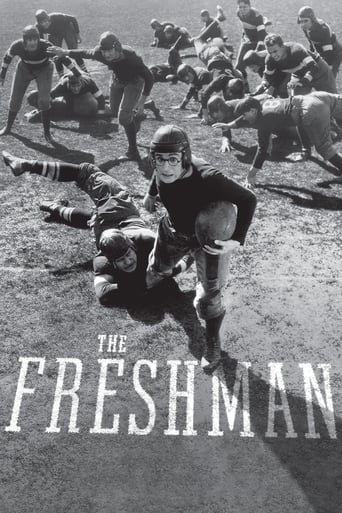
- The Freshman (1925)
- Seven Chances (1925)
- The General (1926)
- Harold Lloyd comedies
- Charlie Chaplin's sports-themed shorts
This film influenced
- Revenge of the Nerds (1984)
- The Waterboy (1998)
- Old School (2003)
- 21 Jump Street (2012)
- Numerous college comedy films
Film restoration
the picture is well-preserved and available in high-quality digital transfers. A complete 35mm print exists in the Library of Congress collection. the picture has been restored multiple times, most notably for The Criterion Collection release, which features a 4K digital restoration from original elements. No scenes are known to be lost, making it one of Keaton's most complete surviving features from his independent period.
Where to watch
- The Criterion Channel (streaming)
- Kino Lorber Blu-ray/DVD
- The Criterion Collection Blu-ray
- Amazon Prime Video (rental/purchase)
- YouTube (official uploads)
- TCM (Turner Classic Movies - periodic airings)
- Various public domain streaming platforms