Comata, the Sioux
"A Sioux brave warns of tragedy when his chief's daughter weds a cowboy."
Keys: Space play/pause · ←/→ 10s · F fullscreen · M mute · </> speed
About this film
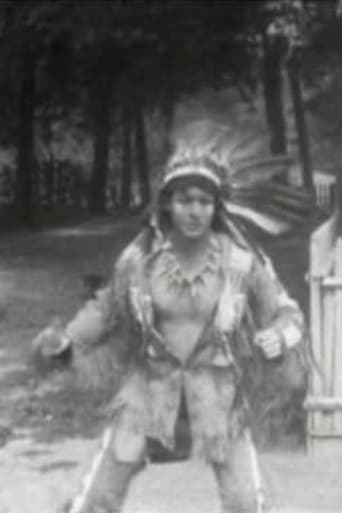
Sioux maiden Clear Eyes consistently tells of the unrequited love of a Sioux brave for his chief's daughter, and how he premonished the awful results of her ominous marriage with a white cowboy. Clear Eyes, the daughter of Chief Thunder Cloud, is beloved by Comata, a Sioux brave, but having met and listened to the persuasion of Bud Watkins, a cowboy, leaves her mountain home to become his squaw. Poor little confiding Clear Eyes lives only for Bud, and he at first seems devoted to her, but at the end of two years, a little papoose arriving meanwhile to bless their union, he tires of her, and co…
Cast & crew
More films like this

More Drama films
View all →







More from D.W. Griffith
View all →
More about this film
About the production
Release dateSeptember 27, 1909
ProductionAmerican Mutoscope and Biograph Company
Filmed inFort Lee, New Jersey, New York City
This film was produced during D.W. Griffith's prolific period at Biograph, where he directed dozens of short films annually. The production utilized Biograph's standard practice of shooting quickly with minimal budgets, typically completing films in just one or two days. The Native American costumes and settings were created in-house by Biograph's art department, reflecting the common practice of the era rather than authentic representation. The film was shot on Biograph's unique 68mm film stock before the company switched to the industry standard 35mm format.
Themes
Themes & topics
SiouxNative AmericanLove triangleBetrayalCowboyChief's daughterCultural conflictTragedyWesternInterracial marriage
Historical background
By 1909, distribution networks were widening, and Comata, the Sioux reached viewers through the same short-program bills that mixed comedy, news, and spectacle.
Why this film matters
Archivists and festival programmers revisit Comata, the Sioux (1909) because it documents performance styles and craft choices that later mainstream releases refined or replaced.
Making of
The production of 'Comata, the Sioux' took place during a crucial period in D.W. Griffith's career when he was rapidly developing his directorial voice and cinematic techniques. Working at Biograph's studios in Fort Lee, New Jersey, and New York City, Griffith was experimenting with narrative structure, cross-cutting, and character development that would later become hallmarks of his filmmaking. The casting process reflected the industry's limited approach to racial representation, with white actors donning makeup and costumes to portray Native American characters. The film was likely shot over just two days, as was typical for Biograph's efficient production schedule. Griffith worked closely with his regular cinematographers, possibly G.W. Bitzer or Arthur Marvin, to create the visual style. The minimal budget meant that sets and props had to be reused across multiple productions, with creative lighting and camera angles providing variety. The actors, many of whom were part of Griffith's regular stock company, would have had significant input into their performances given the limited scripts of the era.
What critics said
Trade papers near 1909 treated Comata, the Sioux as program material—noticed when exhibitors needed a reliable slot-filler, seldom debated as auteur cinema.
Did you know?
- This film was one of over 40 shorts that D.W. Griffith directed for Biograph in 1909 alone, demonstrating his incredible productivity during this period.
- The film was released just as Griffith was beginning to develop his signature cinematic techniques that would revolutionize filmmaking.
- James Kirkwood, who played Comata, later became a successful director himself, directing over 100 films during his career.
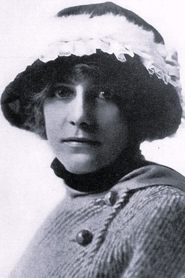
- Marion Leonard, portraying Clear Eyes, was one of Griffith's favorite actresses at Biograph and appeared in dozens of his films.
- Arthur V. Johnson, who plays the villainous Bud Watkins, was a regular collaborator with Griffith and often played leading roles in his Biograph films.
- The film's themes of interracial romance and cultural conflict were considered quite daring for 1909 audiences.
- Like many Biograph films of this era, it was likely released without copyright protection, contributing to its current scarcity.
- The film represents early Hollywood's problematic practice of casting white actors in Native American roles.
- The survival status of this film is uncertain, as many Biograph productions from 1909 have been lost to time and neglect.
- The film's running time of approximately 12 minutes was typical for dramatic shorts of the nickelodeon era.
Visual style
The cinematography of 'Comata, the Sioux' reflects the technical standards and artistic conventions of 1909. The film was likely shot by Biograph's regular cinematographers such as G.W. Bitzer or Arthur Marvin, who were pioneers in the field. The visual style would have been characterized by static camera positions mounted on tripods, as camera movement was still in its infancy. The film was probably shot on Biograph's proprietary 68mm film stock, which produced exceptionally clear images but was soon abandoned in favor of the more economical 35mm format. The lighting would have relied primarily on natural light for exterior scenes and artificial illumination for studio interiors, creating a high-contrast black and white aesthetic. Griffith was beginning to experiment with different shot sizes and camera angles during this period, though the film would still rely heavily on the medium shots and long shots that dominated early cinema.
Innovations
While 'Comata, the Sioux' does not represent a major technical breakthrough, it reflects the ongoing development of film technology and technique in 1909. The film was shot at approximately 16 frames per second, the standard speed for silent films of this era. The American Mutoscope and Biograph Company had been a pioneer in film technology, and their productions of this period benefited from years of technical refinement. The film likely employed continuity editing techniques that Griffith was helping to perfect, including the use of cross-cutting to build dramatic tension. The combination of location shooting with studio work demonstrated the increasing sophistication of film production methods. The film's survival, if it exists, is due in part to the relative durability of early film stocks, though many films from this period have been lost to nitrate decomposition.
Music
As a silent film, 'Comata, the Sioux' would have been accompanied by live musical performance during its theatrical exhibition. The specific musical selections would have varied by venue, with larger theaters employing orchestras and smaller nickelodeons using pianists or organists. Biograph sometimes provided musical cue sheets with their films, suggesting appropriate pieces for different scenes. The emotional nature of the story would have required dramatic musical accompaniment, particularly during scenes of romance, betrayal, and confrontation. The musical conventions for depicting Native American characters in 1909 typically included stereotypical motifs that reflected contemporary cultural attitudes rather than authentic indigenous music. Popular songs of the era, classical pieces, and original compositions might all have been part of the film's musical accompaniment.
Memorable scenes
- The pivotal moment when Comata discovers Bud's betrayal while secretly observing him with Nellie Howe
- Clear Eyes' emotional decision to leave her tribe and mountain home for Bud Watkins
- The dramatic confrontation where Comata reveals Bud's infidelity to the heartbroken Clear Eyes
- The opening scenes establishing Comata's deep love for Clear Eyes and his place in the Sioux tribe
What audiences thought
Audience reception in 1909 is challenging to reconstruct due to the lack of systematic audience research during the nickelodeon era. The film's dramatic themes of love, betrayal, and cultural conflict likely appealed to contemporary audiences who were drawn to emotional storytelling. The depiction of Native Americans, while stereotypical, would have resonated with the popular fascination with the 'vanishing West' that dominated American culture. The film's relatively short running time made it suitable for the varied programming of nickelodeons, where it would have been shown alongside comedies, travelogues, and other dramatic shorts. The tragic elements of the story would have appealed to the melodramatic tastes of early cinema audiences, who were accustomed to stories with clear moral divisions and emotional climaxes.
Film connections
Influenced by
- Contemporary dime novels about the American West
- Stage melodramas of the late 19th century
- Popular literature about Native Americans
- Earlier Biograph films with similar themes
- Paintings and illustrations of the American West
This film influenced
- Later D.W. Griffith films dealing with racial themes
- Subsequent silent Westerns with Native American characters
- Early Hollywood depictions of interracial relationships
- Biograph films with similar narrative structures
Film restoration
The preservation status of 'Comata, the Sioux' is uncertain, and the film is believed to be lost. Many Biograph films from 1909 have not survived, particularly those that were not copyright registered or preserved in major archives. The Library of Congress holds an extensive collection of Biograph films, but this particular title is not listed among their confirmed holdings. Film archives worldwide continue to search for lost films from this period, and it's possible that a copy exists in an unidentified collection or private archive. The film's survival would be of significant historical value for understanding early cinema, D.W. Griffith's development as a director, and the portrayal of Native Americans in early American film.
Where to watch
- Currently unavailable for viewing due to uncertain preservation status
- If surviving, potentially accessible through specialized film archives such as the Library of Congress or the Museum of Modern Art
- May be available through academic institutions with extensive early cinema collections
- Could potentially surface through film restoration projects or private collectors