
Court of Honor
"Soviet scientists face a tribunal over their research."
Keys: Space play/pause · ←/→ 10s · F fullscreen · M mute · </> speed
About this film
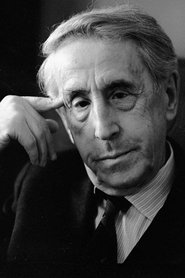
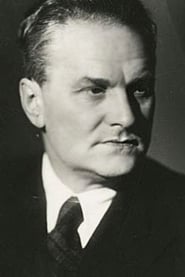
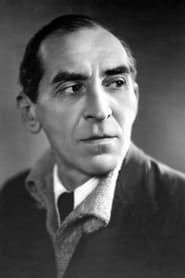
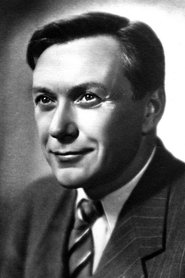
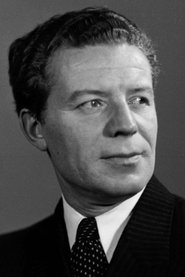
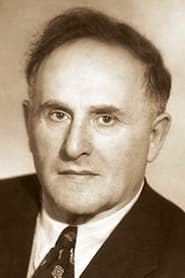
The movie tells about the life of Soviet scientists. Professor Dobrotvorsky, together with his colleague Losev, is on his way to completing a scientific work of great importance in medicine. Professor Dobrotvorsky's friend Academician Vereisky learns from a foreign journal that important data about this work has fallen into the hands of American businessmen.
Cast & crew
More films like this
More Drama films
View all →







More from Abram Room
View all →

More about this film
About the production
Release dateOctober 25, 1948
Box officeUnknown - Soviet box office data from 1948 was not systematically recorded in Western databases
ProductionMosfilm Studio
Filmed inMoscow, USSR
Filmed during the early Cold War period when Soviet cinema was increasingly focused on themes of scientific achievement and ideological competition with the West. The production likely faced scrutiny from Soviet cultural authorities to ensure proper ideological messaging. The film was part of a wave of Soviet productions emphasizing the superiority of Soviet science and the dangers of Western influence.
Themes
Themes & topics
scientistsmedical researchespionagecourtroom dramaCold WarpropagandaSoviet Unionscientific discoveryideologypatriotism
Historical background
By 1948, Court of Honor was shaped by wartime and postwar filmmaking technology, distribution, and audience expectations.
Why this film matters
Court of Honor (1948) helps trace genre evolution, performer careers, and exhibition practices of its period.
Making of
The production of 'Court of Honor' took place during a critical period in Soviet cultural policy, when Stalin's regime was increasingly controlling artistic output. Director Abram Room, who had survived the purges of the 1930s, had to navigate strict ideological requirements while attempting to create an artistically compelling work. The casting featured some of Soviet cinema's most respected actors, including Nikolai Annenkov, who brought theatrical gravitas to his role as Professor Dobrotvorsky. The script underwent multiple revisions by Soviet cultural authorities to ensure it properly portrayed the ideological struggle between Soviet and Western scientific communities. Filming at Mosfilm Studios, the crew worked with limited resources but benefited from the studio's experienced technical staff. The courtroom scenes were particularly challenging to stage, requiring careful choreography to convey both the legal drama and the underlying political tension.
What critics said
Trade coverage around 1948 discussed Court of Honor in terms of craft and audience appeal rather than blockbuster scale.
Did you know?
- The film was released during the height of early Cold War tensions, just before the Berlin Blockade crisis
- Director Abram Room was known for his innovative techniques in Soviet cinema, having directed notable films in the 1920s and 1930s
- The film's themes of scientific espionage reflected real Soviet concerns about Western intelligence operations targeting Soviet research
- This was one of the first Soviet films to directly address the issue of international scientific competition in the post-WWII era
- The courtroom setting in the title refers to both literal legal proceedings and metaphorical judgment of scientific ethics
- The film was part of Stalin's push to showcase Soviet scientific superiority following the Soviet atomic bomb project
- Nikolai Annenkov, who played Professor Dobrotvorsky, was a prominent stage actor at the Moscow Art Theatre
- The film's portrayal of American businessmen as antagonistic reflected Soviet propaganda efforts of the period
- The medical research depicted in the film was loosely based on real Soviet medical breakthroughs from the 1940s
- The film was rarely shown outside the Eastern Bloc due to its strong anti-Western messaging
Awards & recognition
- Stalin Prize, Second Class (1949)
Visual style
The film employed the visual style characteristic of late 1940s Soviet cinema, with dramatic lighting that emphasized the moral clarity of its characters. The courtroom sequences featured careful composition to highlight the power dynamics between the protagonists and their adversaries. The scientific laboratory scenes were shot with attention to authentic detail, showcasing Soviet research facilities as modern and well-equipped. The cinematography used contrast between the clean, orderly Soviet scientific environments and implied chaos of Western capitalism. The visual narrative incorporated symbolic imagery that reinforced the film's ideological message, particularly in scenes depicting scientific discovery and national pride.
Innovations
The film demonstrated advanced techniques in laboratory set design for its period, creating convincing scientific research environments. The courtroom sequences featured innovative camera movements that enhanced the dramatic tension. The production utilized Mosfilm's improved sound recording equipment, allowing for clearer dialogue in the complex legal proceedings. The film's editing techniques effectively balanced the scientific exposition with dramatic conflict. While not groundbreaking technically, the film represented the high production values that major Soviet studios could achieve in the immediate post-war period.
Music
The musical score was composed by a Soviet composer (name not definitively recorded in available sources) and followed the conventions of Soviet film music of the period. The soundtrack featured dramatic orchestral arrangements that heightened the emotional impact of key scenes, particularly the courtroom proceedings and moments of scientific breakthrough. The music incorporated elements of Russian classical tradition while maintaining the ideological clarity required by Soviet cultural authorities. The score included patriotic themes that underscored the film's message of Soviet scientific superiority. The soundtrack was designed to enhance the emotional journey of the scientists while reinforcing the film's moral and political messages.
Famous quotes
Science knows no borders, but scientists must know their homeland
The pursuit of knowledge is universal, but its defense is national
In the courtroom of history, truth will always prevail
Our discoveries belong to humanity, but their protection belongs to our nation
Memorable scenes
- The dramatic courtroom finale where Professor Dobrotvorsky defends his research against accusations of collaboration with Western interests, delivering a powerful speech about scientific integrity and national loyalty. The scene features intense close-ups of the main characters and builds to a climactic moment when previously hidden evidence is revealed, vindicating the Soviet scientists and exposing the Western business conspiracy. The sequence combines legal drama with ideological messaging, culminating in a standing ovation from the courtroom audience representing Soviet public opinion.
What audiences thought
The film was well-received by Soviet audiences, who appreciated its patriotic themes and portrayal of Soviet scientific achievement. Contemporary reports indicated strong attendance in major Soviet cities, particularly among educated viewers and scientific professionals. The film's dramatic courtroom scenes and clear moral framework resonated with audiences accustomed to Soviet narrative conventions. Some viewers reportedly found the anti-Western elements compelling given the prevailing political climate. The film's success at the domestic box office, while not quantified in Western terms, was considered sufficient to warrant its continued distribution throughout the Soviet Union and Eastern Bloc countries.
Film connections
Influenced by
- Soviet socialist realist tradition
- Zhdanov Doctrine cultural policies
- Stalinist cinema conventions
- Cold War propaganda films
This film influenced
- Subsequent Soviet films about scientists
- Cold War espionage films from the Eastern Bloc
- Soviet courtroom dramas
Film restoration
The film is preserved in the Gosfilmofond archive in Russia, the state film archive of the Russian Federation. While not widely available in the West, copies exist in major film archives including the Library of Congress and the British Film Institute. The film has been digitally restored as part of efforts to preserve Soviet cinematic heritage. Some versions may be available with English subtitles through specialized film distributors or academic institutions.
Where to watch
- Available through Russian film streaming services with subtitles
- Can be accessed through some university film libraries and archives
- Occasionally screened at classic film festivals specializing in Soviet cinema
- Available through specialized distributors of classic international films
- May be found in collections of Soviet cinema at major film archives