
Crazy Like a Fox
"Heirs in love plot to wreck their parents' match"
Keys: Space play/pause · ←/→ 10s · F fullscreen · M mute · </> speed
About this film
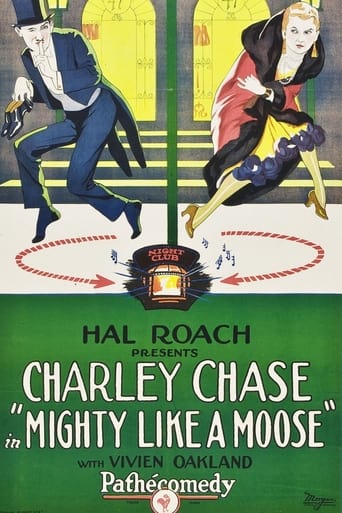
Two rich capitalists want to marry their children, but they don't like the idea at all. She tries to run away, and meets him at the station. They fall in love, unbeknownst to their real identities, and decide each on their own that they have to wreck their parents plan.
Cast & crew
More films like this

More Comedy films
View all →







More from Leo McCarey
View all →

More about this film
About the production
Release dateJune 20, 1926
ProductionHal Roach Studios
Filmed inLos Angeles, California
This was one of the early directorial efforts by Leo McCarey, who would later become one of Hollywood's most respected directors. The film was produced during the peak of the silent comedy era at Hal Roach Studios, known as 'The Lot of Fun.' McCarey utilized Charley Chase's unique comedic style, which relied more on situational comedy and character-driven humor rather than the slapstick gags common in the era. The production faced the typical challenges of silent filmmaking, including the need for exaggerated physical performances and clear visual storytelling without dialogue.
Themes
Arranged marriage vs. romantic loveYouth rebellion against parental authorityMistaken identity and misunderstandingsClass differences and wealthThe comedy of human nature
Themes & topics
arranged marriagetrain stationmistaken identityrunawayfalling in loveparentswealthy familycomedy of errorssilent comedyromantic comedy
Historical background
Made during the studio era of 1926, Crazy Like a Fox reached audiences through theatrical programs, fairground booths, or specialized distribution channels typical of its generation. Two rich capitalists want to marry their children, but they don't like the idea at all. She tries to run away, and. Historians now read such works for what they reveal about production methods, national taste, and the expanding vocabulary of screen narrative.
Why this film matters
Archivists and programmers still screen Crazy Like a Fox when tracing how popular entertainment evolved. Its subject—two rich capitalists want to marry their children, but they don't like the idea at all. she tries—gives later viewers tangible evidence of what drew crowds in the silent period. Home video, restorations, and festival sidebars keep the title circulating among students of film history.
Making of
Leo McCarey, who had previously worked as a writer and gag man for Hal Roach, was given the opportunity to direct this Charley Chase short as part of his development as a filmmaker. McCarey's approach to comedy was more sophisticated than many of his contemporaries, focusing on character development and realistic situations rather than pure slapstick. Charley Chase, whose real name was Charles Parrott, was deeply involved in the creative process of his films, often contributing to the screenplay and gags. The production utilized the efficient assembly-line system developed by Hal Roach, which allowed for the production of high-quality shorts on tight schedules. The film was shot on the Hal Roach studio lot, with the train station scenes likely filmed on a constructed set. The chemistry between Chase and Martha Sleeper was genuine, as both were experienced comedy performers who understood the timing and subtlety required for silent comedy. McCarey's direction showed early signs of the humanistic touch that would characterize his later, more celebrated works.
What critics said
Original trade coverage treated Crazy Like a Fox as routine program filler rather than a landmark production—typical of steady studio output. Later criticism emphasizes preservation, stylistic comparison with contemporaries, and whatever cast or crew names later gained prominence. Contemporary writing is mostly historical: assessing completeness, influence, and place in a director's or studio's catalog.
Did you know?
- This was one of the first films Leo McCarey directed, launching a screen career that would include classics like 'The Awful Truth' and 'Going My Way.'
- Charley Chase was especially popular comedy stars of the 1920s, though his fame has been somewhat overshadowed by contemporaries like Chaplin and Keaton.
- The film was part of the Charley Chase comedy series produced by Hal Roach, which consisted of dozens of short comedies released throughout the 1920s.
- Martha Sleeper, who plays the female lead, was a prominent actress in silent films who successfully transitioned to talkies but retired from acting in 1945.
- William V. Mong, who plays one of the fathers, appeared in over 300 films between 1910 and 1950, making him especially prolific character actors of his era.
- The title 'Crazy Like a Fox' became a popular idiom in American English, referring to someone who appears foolish but is actually quite clever.
- The film's premise of arranged marriage and parental opposition was a common theme in 1920s comedies, reflecting the changing social attitudes toward marriage and courtship.
- The Academy Film Archive preserved this film in 2012 as part of their efforts to save important works from the silent era.
- This short was released during the height of the Jazz Age, when comedy films often reflected the era's fascination with youth rebellion against traditional values.
- The train station setting was a popular location for silent comedies, providing opportunities for physical gags and dramatic entrances/exits.
Visual style
The cinematography of 'Crazy Like a Fox' was typical of Hal Roach Studios' productions of the mid-1920s, featuring clear, well-composed shots that effectively served the comedy without calling attention to themselves. The film likely utilized the standard cameras and film stock of the period, with careful attention to lighting to ensure clarity in the medium shots and close-ups that were crucial for silent comedy performance. The train station sequences demonstrate the cinematographer's ability to handle more complex set pieces, using depth and movement to enhance the physical comedy. The visual style prioritized clarity over artistic flourishes, as was common for comedy shorts of the era, ensuring that audiences could easily follow the gags and plot developments. The camera work supported Charley Chase's performance by allowing enough space for his physical comedy while also capturing the subtle facial expressions that were essential to his character-driven humor.
Innovations
While 'Crazy Like a Fox' was not a groundbreaking film in terms of technical innovation, it demonstrated the high level of craftsmanship that Hal Roach Studios had achieved by the mid-1920s. The film effectively utilized the technical limitations of the era to create a polished comedy short. The editing was particularly noteworthy for its rhythm and timing, essential elements for comedy that McCarey would perfect in his later career. The film's use of location-style sets, particularly the train station, showed the studio's ability to create convincing environments on a modest budget. The makeup and costume design effectively established character types and social status without dialogue. The film's preservation has allowed modern audiences to appreciate the technical quality of 1920s film stock and the clarity of images that could be achieved even in routine studio productions. While not revolutionary, the film represents the solid technical foundation that made American comedy shorts of this period so successful.
Music
As a silent film, 'Crazy Like a Fox' would have been accompanied by live musical performance during its original theatrical run. The typical accompaniment for a comedy short of this type would have been a piano or small ensemble, playing popular songs of the era along with specially composed or improvised music that matched the on-screen action. The score would have emphasized the comedic moments with playful, upbeat music and provided romantic themes during the love scenes. No original score or specific musical cues for this film survive, as was common with silent films where the music was created anew for each screening. Modern screenings of the film typically use period-appropriate compiled scores or newly composed music that captures the spirit of 1920s comedy accompaniment. The lack of recorded sound meant that the film's success depended entirely on its visual storytelling, which it accomplished effectively through the performances and McCarey's direction.
Famous quotes
(Silent film - no dialogue quotes available)
Memorable scenes
- The train station encounter where the two protagonists meet and fall in love without knowing each other's identities, featuring Charley Chase's trademark blend of physical comedy and subtle romantic gestures
- The scene where both characters independently decide to sabotage their parents' arranged marriage plans, creating dramatic irony as they work against their own interests
- The climactic revelation scene where the true identities are revealed, leading to the resolution of all misunderstandings
What audiences thought
Contemporary audiences in 1926 responded positively to 'Crazy Like a Fox,' as evidenced by its successful theatrical run and the continued popularity of Charley Chase shorts throughout the decade. Moviegoers of the era appreciated Chase's relatable 'everyman' character and the film's clever twist on the familiar arranged marriage trope. The film's 20-minute runtime was ideal for theater programs, providing a satisfying comedy experience without overstaying its welcome. Modern audiences who have discovered the film through archival screenings or home video releases have generally found it charming and entertaining, with many expressing surprise at the sophistication of the humor compared to their expectations of silent comedy. The film's clear visual storytelling and universal themes of romance and parental opposition have helped it remain accessible to contemporary viewers, despite being nearly a century old.
Film connections
Influenced by
- The tradition of Shakespearean comedy with mistaken identities
- Earlier silent comedy shorts by Harold Lloyd and Buster Keaton
- Stage comedy traditions of mistaken identity and romantic complications
- The romantic comedy formula being developed in Hollywood
- Vaudeville comedy traditions
This film influenced
- Later romantic comedies featuring mistaken identity
- Subsequent Charley Chase shorts directed by McCarey
- Early sound comedies that retained silent comedy techniques
- The screwball comedies of the 1930s that McCarey would later direct
Film restoration
Preserved by the Academy Film Archive in 2012. The film survives in good condition and is available for archival viewing and study. It represents one of the fortunate examples of silent comedy shorts that have survived the decades, as many films from this era have been lost due to the unstable nature of early film stock and neglect.
Where to watch
- Available through the Academy Film Archive for research purposes
- May be included in curated silent comedy collections or film festival screenings
- Potentially accessible through specialized silent film archives and museums
- May appear in retrospective programs of Charley Chase or Leo McCarey works