
Down Home
"Nancy Pelot secretly works to support her town-drunk father."
Keys: Space play/pause · ←/→ 10s · F fullscreen · M mute · </> speed
About this film
In rural New England, Nancy Pelot supports her town-drunk father while hiding her job in a nearby town. He was once a businessman who still owns a local farm she now helps keep afloat.
Cast & crew
More films like this
More Drama films
View all →







More from Irvin Willat
View all →
More about this film
About the production
Release dateOctober 24, 1920
ProductionIrvin V. Willat Productions, W.W. Hodkinson Corporation
Filmed inInceville Studios, Pacific Palisades, California, Various rural locations in Southern California (doubling for New England)
Director Irvin Willat, known for his meticulous attention to detail, produced this film independently after leaving Thomas H. Ince's studio. The film was noted for its high production values despite being an independent venture, utilizing sophisticated lighting and set designs to evoke a realistic New England atmosphere. Willat insisted on a naturalistic acting style that was somewhat ahead of its time, eschewing the more theatrical gestures common in early silent cinema. The production also utilized advanced tinting and toning processes in the original release prints to enhance the emotional mood of specific scenes.
Themes
Alcoholism and its social consequencesThe burden of family reputationFemale sacrifice and independenceSmall-town prejudice vs. urban anonymityRedemption and forgiveness
Themes & topics
Historical background
Made in 1920, in United States, under Irvin Willat, Down Home belongs to silent filmmaking amid the silent era's rapid stylistic experiments. Down Home is a 1920 American silent drama film written, directed, and produced by Irvin Willat and starring Leatrice Joy and James Barrows.
Why this film matters
Within silent history, Irvin Willat's name attaches to the work; surviving prints help researchers study silent-era craft; 1920 film by Irvin Willat.
Making of
Irvin Willat took a significant financial risk by producing 'Down Home' independently, aiming to prove that he could maintain the 'Ince' quality without Thomas Ince's oversight. The production was plagued by weather issues in California that delayed the filming of the 'New England' outdoor sequences, leading to a slightly inflated schedule. Willat was known to be a perfectionist, often demanding dozens of takes for simple emotional reactions to ensure the 'rural authenticity' felt genuine to the audience. The casting of James O. Barrows was a deliberate choice to bring a vaudevillian sensibility to the role of the drunkard, which Willat then toned down to create a more tragic figure.
What critics said
Contemporary reviews of Down Home are sparse in open sources; later catalog entries chiefly summarize plot and credits.
Did you know?
- This film was one of the early starring roles for Leatrice Joy, who would soon become one of the biggest stars of the 1920s under Cecil B. DeMille.
- Director Irvin Willat was the husband of actress Billie Dove at the time of production.
- The film is based on the popular novel 'The Old Home Town' by F.N. Westcott.
- The character of Joe Pelot, played by James O. Barrows, was considered among the leading realistic portrayals of alcoholism in silent cinema.
- The film features a 'film within a film' moment where characters attend a local nickelodeon.
- The set for the New England village was so detailed that it included fully functional interiors for many of the buildings, not just facades.
- Leatrice Joy actually performed her own singing scenes, though audiences of the time could only imagine her voice through the intertitles.
- The film was distributed by the W.W. Hodkinson Corporation, the man who originally founded Paramount Pictures.
Visual style
The cinematography by Ernest Haller (who would later win an Oscar for 'Gone with the Wind') is notable for its use of natural light and deep focus. Haller used innovative camera angles to emphasize the isolation of the Pelot house compared to the rest of the village. The film also utilized 'Rembrandt lighting' in the indoor tavern scenes to create a sense of grit and realism that was unusual for 1920.
Innovations
The film utilized advanced double-exposure techniques in a dream sequence where Joe Pelot envisions his past successes. It also featured some of the earliest uses of a 'moving camera' on a makeshift dolly to follow characters through the village streets, a technique that was still being refined in the early 1920s.
Music
As a silent film, there was no recorded soundtrack. However, the original cue sheets suggested a mix of traditional New England folk tunes and more somber, classical arrangements for the dramatic sequences involving Joe Pelot's alcoholism. The 'cabaret' scenes featured contemporary 1920s ragtime to contrast with the rural setting.
Famous quotes
Nancy Pelot: 'I don't care what they say in the village, Father. As long as we have each other, we have a home.'
Joe Pelot: 'I was a man of business once... before the bottle became my only partner.'
Memorable scenes
- The scene where Nancy is spotted entering the cabaret by a town gossip, captured in a tense series of close-ups.
- The emotional climax where Joe Pelot stands up to the town council to defend his daughter's honor.
- The atmospheric opening sequence showing the decay of the Pelot farmstead through visual metaphors.
What audiences thought
The film was a modest success with audiences, particularly in rural areas where the setting felt familiar. It was marketed as a 'wholesome' but 'gripping' drama, which appealed to the middle-class sensibilities of the time. Leatrice Joy received significant fan mail for her portrayal of Nancy, which helped launch her into the top tier of Hollywood stardom shortly thereafter.
Film connections
Influenced by
- The 'Rural Drama' stage plays of the late 19th century
- The works of Thomas Ince
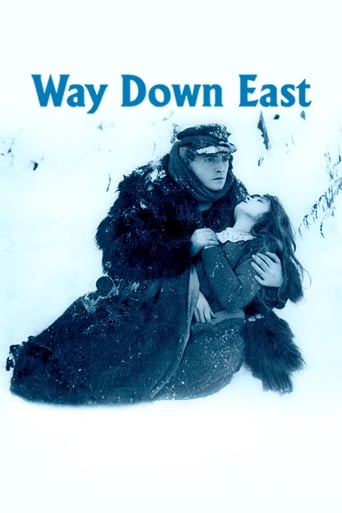
- D.W. Griffith's 'Way Down East' (released the same year)
This film influenced
- Tol'able David (1921)
- Sunrise: A Song of Two Humans (1927) - in its thematic contrast of city vs. country
- Our Daily Bread (1934)
Film restoration
The film is considered partially lost, though a significant portion is preserved in the George Eastman Museum archive. Some reels were lost to nitrate decomposition, but the existing footage has been stabilized and digitally scanned.
Where to watch
- Available for research viewing at the George Eastman Museum
- Occasional screenings at silent film festivals (e.g., Pordenone Silent Film Festival)
- Rarely found on specialty silent film streaming platforms like Milestone Films or Flicker Alley