Fanchon, the Cricket
"Suspected and witch"
Keys: Space play/pause · ←/→ 10s · F fullscreen · M mute · </> speed
About this film
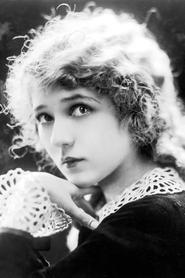
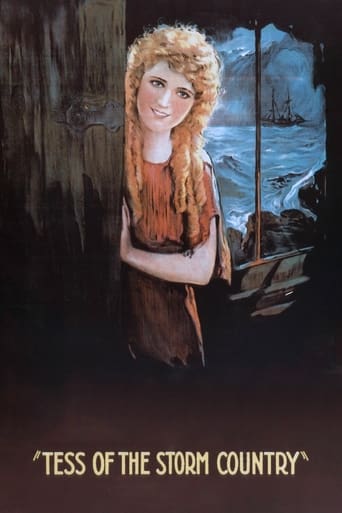
A young wild girl, Fanchon, lives in a forest with her eccentric grandmother who is suspected by the villagers of being a witch. The unkempt Fanchon suffers from her grandmother's sorceress reputation. One day the girl rescues a boy from drowning and they fall in love, but Fanchon won't agree to marry him unless his father asks her. A year later the boy has fallen very ill and it is only the presence of the enchanting Fanchon that helps to restore his health.
Cast & crew
More films like this

More Drama films
View all →







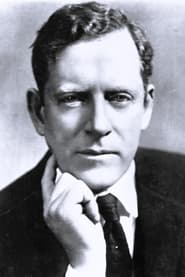
More from James Kirkwood
View all →

More about this film
About the production
Release dateMarch 15, 1915
Box officeSuccessful - Pickford films were consistently profitable, though exact figures are not documented
ProductionFamous Players Film Company
Filmed inCalifornia, USA - likely at the Fine Arts Studio in Hollywood
This was one of Mary Pickford's early productions under her new contract with Famous Players, filmed during the transitional period when the film industry was consolidating in Hollywood. The forest scenes were likely shot on location in the Santa Monica Mountains or nearby natural areas. The production faced the challenge of creating authentic forest settings while working within the technical limitations of 1915 cinematography equipment.
Themes
Prejudice and superstitionLove transcending social barriersNature vs. civilizationThe power of goodness to overcome evilFemale independence and strength
Themes & topics
Historical background
Contemporary records classify Fanchon, the Cricket (1915) as 1915 film by james kirkwood, placing it within the silent era before feature-length dominance.
Why this film matters
Fanchon, the Cricket (1915) helps trace genre evolution, performer careers, and the material conditions of silent exhibition.
Making of
The production of 'Fanchon, the Cricket' took place during a pivotal moment in Mary Pickford's career as she was transitioning from a popular actress to a powerful producer with creative control. James Kirkwood, the director, brought his experience as a D.W. Griffith protégé to the project, employing sophisticated techniques for the era including location shooting and natural lighting. The forest scenes required the cast and crew to transport heavy camera equipment to remote locations, a significant challenge in 1915. Mary Pickford was known for her intense preparation for roles, and for this film she studied the mannerisms of wild children and spent time observing nature to authentically portray Fanchon's connection to the forest. The production benefited from the resources of Famous Players Film Company, which was investing heavily in quality productions to compete with European imports. The film's success helped establish the formula of literary adaptations starring Pickford that would dominate her career throughout the 1910s.
What critics said
Where contemporary reviews survive, Fanchon, the Cricket is discussed in terms of audience appeal at release; later criticism often reframes it through archive restoration and festival programming.
Did you know?
- This film is based on George Sand's 1849 novel 'La Petite Fadette' (Little Fadette), though the character name was changed from Fadette to Fanchon for the American audience
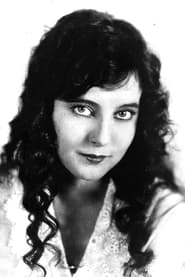
- Mary Pickford's sister Lottie Pickford appears in the film, showcasing the family's involvement in early cinema
- The film was released just as Mary Pickford was becoming known as 'America's Sweetheart,' though this role showed her range beyond purely sweet characters
- Director James Kirkwood was himself a prominent silent film actor before transitioning to directing, having appeared in numerous D.W. Griffith films
- The film's themes of prejudice and superstition were particularly relevant in 1915, as America was dealing with waves of immigration and accompanying xenophobia
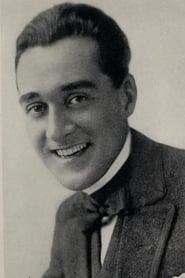
- Jack Standing, who played the male lead, was a British stage actor who transitioned to films, bringing theatrical gravitas to his performances
- The film was part of Pickford's strategy to produce quality literary adaptations to elevate the cultural status of cinema
- Contemporary advertisements emphasized the film's 'forest scenes' and 'natural settings' as major selling points
- The cricket in the title refers to Fanchon's nickname, suggesting her small size and chirpy, wild nature
- This was one of the last films Pickford made before her contract renegotiation that gave her unprecedented control over her productions
Visual style
The cinematography by Walter Stradling and Tony Gaudio employed natural lighting techniques that were innovative for 1915, particularly in the forest scenes where they utilized filtered sunlight to create ethereal effects. The film features remarkable location photography for its era, with the forest sequences demonstrating sophisticated use of depth and framing to create a sense of both isolation and natural beauty. The camera work shows the influence of D.W. Griffith's visual storytelling techniques, with careful composition of shots to emphasize character relationships and emotional states. The cinematographers used soft focus techniques to enhance the romantic scenes and create a dreamlike quality during Fanchon's interactions with her love interest. The film also demonstrates early examples of match cutting and continuity editing that help maintain narrative flow across the five reels.
Innovations
The film demonstrated technical sophistication for its era through its effective use of location shooting, which was still relatively uncommon in 1915. The production employed portable cameras and lighting equipment that allowed for filming in natural forest settings, creating a visual authenticity that studio-bound films of the period lacked. The film's makeup and costume design for Fanchon's 'wild' appearance represented an early example of using visual transformation to characterize psychological development. The editing techniques employed, including cross-cutting between the village and forest scenes, helped build dramatic tension and contrast different social worlds. The film also utilized special effects techniques of the period, including multiple exposure sequences during the more mystical elements of the story.
Music
As a silent film, 'Fanchon, the Cricket' would have been accompanied by live musical performance during its original theatrical run. The typical score would have been compiled from classical pieces and popular songs of the era, with theater organists or small orchestras providing accompaniment. The music would have been carefully synchronized to enhance emotional moments, with romantic themes during the love scenes, mysterious music for the grandmother's witchcraft reputation, and triumphant melodies when Fanchon proves her goodness. Some theaters may have used cue sheets provided by the studio, which suggested specific musical pieces for different scenes. The forest scenes would have been accompanied by pastoral or nature-themed music to enhance the natural setting. No original score survives, but modern screenings typically feature newly composed scores or carefully selected period-appropriate music.
Famous quotes
As a silent film, dialogue was conveyed through intertitles. Notable intertitle text included: 'She lived with the forest creatures and understood their language', 'Love knows no social barriers', 'The heart sees what eyes cannot perceive', 'Nature's child, yet purer than civilization's finest', 'In the forest of prejudice, love is the only light'
Memorable scenes
- The dramatic rescue sequence where Fanchon saves the drowning boy, showcasing her strength and compassion despite her wild appearance
- The tender forest scenes where Fanchon demonstrates her connection to nature, communicating with animals and plants
- The emotional bedside scene where Fanchon's presence miraculously heals her dying love interest, proving her goodness over superstition
- The climactic confrontation where the villagers' prejudice is challenged by witnessing Fanchon's true character
What audiences thought
The film was warmly received by audiences of 1915, who were drawn to Mary Pickford's growing star power and the film's blend of romance, drama, and moral themes. Contemporary theater reports indicated strong attendance, particularly among women and families who appreciated the wholesome yet emotionally complex story. Audience letters published in film magazines of the era expressed admiration for Pickford's portrayal of the wild but good-hearted Fanchon, with many finding the character relatable despite her unusual circumstances. The film's success at the box office helped cement Pickford's status as among the leading reliable box office draws of the era. Modern audiences who have seen the film through screenings at film archives or festivals have responded positively to its timeless themes and Pickford's charismatic performance, though some find the pacing slow by contemporary standards.
Film connections
Influenced by
- George Sand's 'La Petite Fadette' (1849)
- D.W. Griffith's narrative techniques
- European literary adaptation tradition
- Pastoral romance conventions
- Gothic elements of superstition and isolation
This film influenced
- Later Mary Pickford productions like 'Rebecca of Sunnybrook Farm' (1917)
- Other forest-themed romances of the silent era
- Films featuring 'wild child' characters like 'Tarzan of the Apes' (1918)
- Later adaptations of George Sand's works
Film restoration
The film survives in complete form and has been preserved by major film archives including the Library of Congress and the Museum of Modern Art. A restored version was created in the 1990s using the best available elements from various archives. The restoration has allowed for modern screenings and home video releases, ensuring the film's accessibility to contemporary audiences. The preservation quality is generally good, though some deterioration is evident in the original nitrate elements, particularly in the forest scenes where original lighting conditions made exposure challenging.
Where to watch
- The film is available on DVD from various classic film distributors
- Streaming on specialized classic film platforms like the Criterion Channel
- Available for viewing at film archive screenings and classic film festivals
- Some public domain versions may be found on internet archives
- Museum screenings often feature the film with live musical accompaniment