Fragment of an Empire
"1929 Soviet silent drama Fridrikh Ermler"
Keys: Space play/pause · ←/→ 10s · F fullscreen · M mute · </> speed
About this film
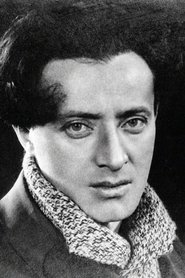
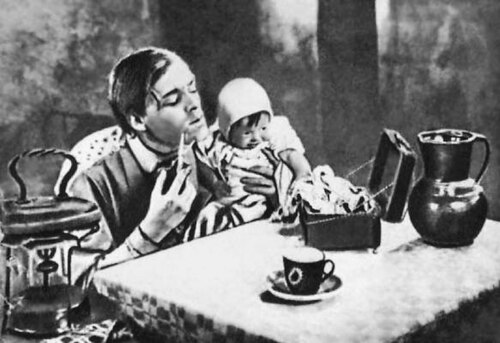
Director Frederick Ermler’s last silent feature and the last of four collaborations with actor Fiodor Nikitin. Nikitin plays an officer who spends a decade after the Great War as a shell-shocked amnesiac, until a glimpse of a woman through a train window sparks the return of his memory. He makes his way back to St. Petersburg, now Leningrad, a man out of time who struggles to make sense of the new society brought about by the revolution.
Cast & crew
More films like this
More Drama films
View all →







More from Fridrikh Ermler
View all →
More about this film
About the production
Release dateOctober 28, 1929
Box officeBox office figures not available for Soviet films of this period
ProductionSovkino
Filmed inLeningrad, USSR, St. Petersburg locations, Studio facilities in Leningrad
The film was shot on location in Leningrad, utilizing the city's actual architecture to contrast Imperial and Soviet periods. Ermler employed innovative techniques including flashbacks and subjective camera work to depict the protagonist's psychological state. The production faced challenges in recreating pre-revolutionary St. Petersburg while filming in the Soviet-transformed city. The film's title was initially 'The Man Who Lost His Memory' before being changed to 'Fragment of an Empire' to better reflect its broader themes about the collapse of Imperial Russia.
Themes
Memory and identitySocial transformationThe individual vs. societyLoss and adaptationThe psychological impact of revolution
Themes & topics
amnesiashell shockRussian RevolutionWorld War Itime travelsocial changememory lossidentity crisisSt. PetersburgSoviet Unionofficeraristocracyworking class
Historical background
Made in 1929, Fragment of an Empire reflects production norms of late silent cinema and the transition toward sound—shorter runtimes, regional audiences, and limited preservation infrastructure.
Why this film matters
Historians reference Fragment of an Empire (1929) when discussing 1929 Soviet silent drama film by Fridrikh Ermler.
Making of
Fridrikh Ermler and Fyodor Nikitin had already established a successful creative partnership through three previous films, and Fragment of an Empire represented the culmination of their collaboration. Ermler spent months researching the psychological effects of shell shock and amnesia to ensure authenticity in Nikitin's portrayal. The production faced significant challenges in obtaining permission to film certain locations in Leningrad, as authorities were concerned about the film's portrayal of the pre-revolutionary era. The train sequence, crucial to the plot, required complex coordination between the camera crew, actors, and railway authorities. Ermler experimented with innovative editing techniques, including rapid cross-cutting between past and present to convey the protagonist's disorientation. The film's restoration in the 1960s revealed that several scenes had been cut after the initial release, likely due to political concerns about their content.
What critics said
Modern write-ups on Fragment of an Empire (1929) tend to focus on preservation status, stylistic choices, and placement within director or studio filmographies.
Did you know?
- This was Fridrikh Ermler's final silent film before transitioning to sound cinema
- The film was banned in the Soviet Union shortly after its release for being too sympathetic to the old regime
- Fyodor Nikitin's performance was particularly praised for its psychological depth and subtlety
- The film was considered lost for decades before being rediscovered and restored in the 1960s
- Ermler used actual war veterans as extras to add authenticity to the battle scenes
- The train sequence where Filimonov regains his memory was shot using a specially constructed camera rig
- The film's themes of memory and identity were highly unusual for Soviet cinema of the late 1920s
- Contemporary critics noted the film's unusual blend of Soviet propaganda with humanist storytelling
- The production team had to recreate pre-revolutionary costumes and props from memory and photographs
- The film was one of the last major Soviet silent productions before the industry fully converted to sound
Awards & recognition
- Named one of the greatest Soviet films of all time by Soviet film critics in the 1920s
- Retrospective recognition at the 1975 Moscow International Film Festival
Visual style
The cinematography by Yevgeni Schneider employed innovative techniques to convey the protagonist's psychological state, including soft focus, unusual camera angles, and subjective point-of-view shots. The film made striking use of contrast between the opulent architecture of Imperial St. Petersburg and the functionalist aesthetic of Soviet Leningrad. Schneider's camera work during the train sequence was particularly noteworthy, using tracking shots and rapid editing to simulate the disorienting experience of memory returning. The battle scenes utilized handheld camera techniques unusual for the period to create a sense of chaos and confusion. The film's visual style evolved as the protagonist's memory returned, with the cinematography becoming more stable and conventional as he reoriented himself to reality.
Innovations
The film pioneered several technical innovations in Soviet cinema, particularly in depicting psychological states through visual means. Ermler and his team developed new techniques for showing memory flashbacks, using double exposure and rapid editing to convey the fragmented nature of recollection. The train sequence required the construction of a specialized camera mounting system that could move smoothly while capturing the protagonist's perspective through the window. The film's makeup effects, particularly those showing the passage of time on the protagonist's face, were considered advanced for the period. The production team also developed new methods for creating the visual contrast between past and present, using different film stocks and processing techniques for different time periods.
Music
As a silent film, Fragment of an Empire would have been accompanied by live musical performance during its original theatrical run. The score would have been compiled from existing classical pieces and popular songs of the era, tailored by local musicians to match the film's emotional arc. During the 1960s restoration, composer Vladimir Dashkevich created a new orchestral score specifically designed to complement the film's themes of memory and loss. Modern screenings often feature either Dashkevich's score or newly commissioned works by contemporary composers who specialize in silent film accompaniment. The original musical cues and suggestions for accompaniment, if they existed, have not survived in the archival record.
Famous quotes
I remember everything now... but nothing is the same.
This city is familiar, but it speaks a different language.
How can a man be a stranger in his own home?
The empire I served was just a fragment after all.
Memory is both a gift and a curse in times like these.
Memorable scenes
- The pivotal train sequence where Filimonov sees a woman through the window and his memories come flooding back, using rapid cuts and soft focus to convey the overwhelming return of consciousness
- Filimonov's first walk through Soviet Leningrad, where the camera follows his disoriented gaze as he struggles to recognize familiar landmarks transformed by revolutionary change
- The emotional reunion scene where Filimonov confronts his lost love, now married to a Soviet worker, highlighting the personal costs of political transformation
- The opening battle sequence that establishes Filimonov's shell shock through innovative camera work and editing techniques
What audiences thought
Initial Soviet audience reception was mixed, with some viewers moved by the protagonist's plight while others questioned the film's ideological purity. The film's limited release due to political concerns meant that relatively few Soviet citizens saw it during its original run. International audiences who had the opportunity to view the film at special screenings generally responded positively to its emotional power and technical sophistication. After its restoration, the film found new audiences among film enthusiasts and scholars, who appreciated its unique perspective on revolutionary history. Modern viewers often comment on the film's surprising emotional depth and its relevance to contemporary discussions about social change and personal identity.
Film connections
Influenced by
- German Expressionist cinema (particularly in psychological depiction)
- Soviet montage theory
- Friedrich Murnau's 'The Last Laugh' (for subjective camera work)
- Vsevolod Pudovkin's psychological films
This film influenced
- Andrei Tarkovsky's 'Mirror' (themes of memory and time)
- Sergei Parajanov's 'Shadows of Forgotten Ancestors' (visual poetry)
- Alexander Sokurov's 'Russian Ark' (historical reflection)
Film restoration
The film was considered lost for several decades before being rediscovered in the Soviet film archives in the 1960s. A restoration project was undertaken by Gosfilmofond, the Russian state film archive, which reconstructed the film from existing prints and negative fragments. The restored version premiered at the 1975 Moscow International Film Festival. The film is now preserved in the Gosfilmofond collection and has been made available in various digital formats for archival and educational purposes. Some scenes that were cut after the original release remain lost, but the restored version is considered largely complete.
Where to watch
- Available on DVD/Blu-ray from specialty distributors like Flicker Alley and Criterion Collection
- Streaming on MUBI and Kanopy (educational streaming service)
- Available for viewing at film archives including the Museum of Modern Art (MoMA) and the British Film Institute
- Occasionally screened at film festivals and cinematheques specializing in classic cinema
- Available on some streaming platforms specializing in classic and international cinema