


Framed
"pre-war intrigue and rose manning"
Keys: Space play/pause · ←/→ 10s · F fullscreen · M mute · </> speed
About this film
Hard-pressed, pre-war life, rose Manning swears revenge for the unjust slaying of her father by Inspector McArthur. Five years later, as a nightclub hostess, she is sought by Chuck Gaines, secretly a bootlegger, but she centers her attentions on young Jimmy Carter, who, she learns, is the son of McArthur.
Cast & crew
More films like this
More Adventure films
View all →

More from George Archainbaud
View all →
More about this film
About the production
Release dateMarch 16, 1930
BudgetEstimated $150,000 - $200,000 (Standard RKO 'B' feature budget for 1930)
ProductionRKO Radio Pictures
Filmed inRKO Studios, Hollywood, Los Angeles, California, USA
Produced during the early, formative years of RKO Radio Pictures, 'Framed' was one of the studio's efforts to capitalize on the public's fascination with the 'all-talking' crime melodrama. The film was shot in late 1929 under the working title 'Playing the Market' before being retitled for its March 1930 release. It utilized the RCA Photophone sound-on-film system, which was RKO's proprietary technology at the time. The production is notable for featuring 'William Holden,' a veteran character actor of the era who is frequently confused with the later Oscar-winning star of the same name. Director George Archainbaud was known for his efficiency, completing the film in a relatively short shooting schedule to meet the high demand for sound features.
Themes
Revenge and RetributionThe Conflict Between Love and LoyaltyProhibition-era CrimeIdentity and DeceptionThe Moral Ambiguity of the Law
Themes & topics
revengebootleggernightclub hostesspolice inspectormistaken identitypre-codeunderworldgangsterprohibition
Historical background
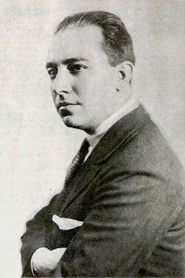
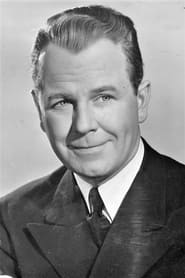
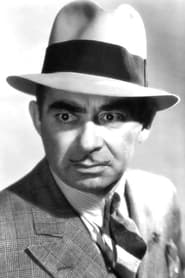
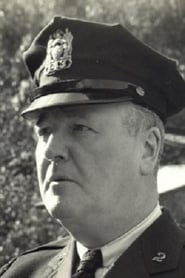
Made in 1930, Framed belongs to the pre-war and carries the visual and narrative habits of its time. It starred Evelyn Brent, William Holden (no relation to the Oscar-winning actor, William Holden), Regis Toomey, and Ralf Harolde.
Why this film matters
For collectors of early and classic cinema, Framed illustrates the range of subjects and styles that reached theaters in 1930.
Making of
Production on 'Framed' began in early December 1929. The transition to sound was still a logistical challenge for many studios, and RKO was heavily promoting its 'Radio Pictures' brand as the pinnacle of audio technology. Director George Archainbaud had to balance the static nature of early sound recording—which often required actors to speak toward hidden microphones in flower vases or furniture—with the fast-paced action expected of a crime thriller. Evelyn Brent, a veteran of the silent era, was one of the few actresses who successfully transitioned to sound with a voice that matched her tough, 'hard-boiled' screen persona. The nightclub sets were designed to look opulent yet dangerous, reflecting the dual nature of the Prohibition-era setting.
What critics said
Critics writing near 1930 focused on how Framed compared with rival titles in the same season.
Did you know?
- The actor credited as William Holden in this film is actually a character actor born in 1862; he has no relation to the famous William Holden of 'Sunset Boulevard' fame.
- The film was released during the 'Pre-Code' era, allowing for more suggestive dialogue and a more sympathetic portrayal of a criminal protagonist than would be allowed a few years later.
- An alternate working title during production was 'Playing the Market.'
- Evelyn Brent was at the height of her 'underworld queen' typecasting when she made this film, having recently starred in Josef von Sternberg's 'The Last Command' and 'Underworld.'
- The film features the RCA Photophone sound system, which was RKO's answer to Warner Bros.' Vitaphone and Fox's Movietone.
- The film's plot of a woman seeking revenge on a policeman's son was considered quite gritty for 1930 audiences.
- Regis Toomey, who plays Jimmy, became one of Hollywood's most prolific character actors, appearing in over 200 films across six decades.
- The film was released as a 'seven-reeler,' a standard length for feature-length 'talkies' of the period.
Visual style
The cinematography by Leo Tover is characteristic of the early sound period, featuring high-contrast lighting to emphasize the 'noir' elements of the nightclub and alleyway scenes. While the camera movement was somewhat restricted by the bulky sound-deadening 'blimps' used at the time, Tover utilized close-ups effectively to capture the emotional tension in Evelyn Brent's performance.
Innovations
The film's primary technical achievement was its successful integration of the RCA Photophone sound-on-film system, which provided clearer audio than the earlier disc-based systems. It also demonstrated RKO's ability to produce high-quality 'B' pictures that rivaled the 'A' features of larger studios in terms of technical polish.
Music
The film features a synchronized score and sound effects provided by the RCA Photophone system. The nightclub scenes include period-appropriate jazz music, though most of the film relies on diegetic sound and dialogue rather than a continuous orchestral score, which was common before the mid-1930s.
Famous quotes
Rose Manning: 'You killed the only thing I had in the world... now I'm going to take the only thing you've got.' (To Inspector McArthur)
Chuck Gaines: 'I don't like the way that kid hangs around here, Rose. He's too clean for a joint like this.'
Jimmy: 'I don't care who your father was or what happened five years ago. I only know I love you.'
Memorable scenes
- The opening interrogation scene where a young Rose Manning is grilled by Inspector McArthur and swears her revenge.
- The tense confrontation in Rose's apartment where she must hide Jimmy from the murderous Chuck Gaines.
- The final shootout where the truth about the 'framing' is revealed and Rose must choose between her past and her future.
What audiences thought
Audiences in 1930 were drawn to the film's 'all-talking' nature and its scandalous premise of a woman seducing a policeman's son for revenge. It performed well in urban markets where crime dramas were particularly popular. The chemistry between Brent and Toomey was a highlight for viewers of the era.
Film connections
Influenced by
- Underworld (1927)
- The Racket (1928)
- The Broadway Melody (1929)
This film influenced
- The Public Enemy (1931)
- Scarface (1932)
- Marked Woman (1937)
Film restoration
The film is preserved and currently exists in the RKO library (now owned by Warner Bros./Turner Entertainment). It has been made available for public viewing through various archival releases and is occasionally screened at classic film festivals.
Where to watch
- The film is available for free viewing and download at the Internet Archive
- Available on DVD through various 'Pre-Code' collection labels
- Occasionally broadcast on Turner Classic Movies (TCM)