
High and Dizzy
"A tipsy doctor encounters his patient sleepwalking on a building ledge"
Keys: Space play/pause · ←/→ 10s · F fullscreen · M mute · </> speed
About this film
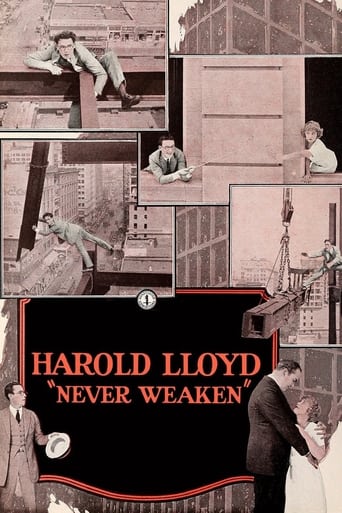
A tipsy doctor encounters his patient sleepwalking on a building ledge, high above the street.
Cast & crew
More films like this
More Comedy films
View all →







More from Hal Roach
View all →

More about this film
About the production
Release dateJune 27, 1920
ProductionHal Roach Studios
Filmed inLos Angeles, California
This film was one of Harold Lloyd's early 'thrill comedy' shorts that would later influence his more famous feature films like 'Safety Last!' The building ledge sequence was filmed on a specially constructed set with the use of glass matte paintings to create the illusion of height. Harold Lloyd performed many of his own stunts, though safety nets were used off-camera.
Themes
Man vs. circumstanceProfessional incompetenceUnderdog heroismUrban dangerAlcohol impairment
Themes & topics
Historical background
High and Dizzy (1920) circulated in the silent era. A tipsy doctor encounters his patient sleepwalking on a building ledge, high above the street Contemporary trade papers and later preservation notes document its place among nickelodeon and cinema-club programs.
Why this film matters
High and Dizzy remains accessible to researchers and viewers as a comedy short in museum, archive, and streaming collections. Programmers cite it when tracing regional production history and surviving early prints.
Making of
The production of 'High and Dizzy' marked a significant evolution in Harold Lloyd's comedy style, moving away from pure slapstick toward more suspenseful situations. The filming of the ledge sequences required careful planning and innovation. The crew built a partial facade of a building with the ledge portion extending over a studio floor covered with mattresses and safety nets. Glass paintings were used to extend the view and create the illusion of being many stories up. Lloyd, known for his dedication to performing his own stunts, insisted on doing most of the dangerous work himself, though the studio took increasing safety precautions as his star power grew. The collaboration between Lloyd and director Hal Roach was at its peak during this period, with both men contributing ideas for gags and situations. The film's success encouraged the team to push the boundaries even further in subsequent productions.
What critics said
Day-one reviews for High and Dizzy are sparse in digitized press archives; later criticism treats it as a reference point for 1920 cinema programming and preservation.
Did you know?
- This was one of the first films where Harold Lloyd experimented with the 'thrill comedy' format that would become his trademark
- The film was originally titled 'The Sleepwalker' before being changed to 'High and Dizzy'
- Mildred Davis, who plays the sleepwalking patient, would later become Harold Lloyd's wife in real life
- The building used for the ledge sequence was actually a partial set built on the Roach studio lot
- Director Hal Roach was known as 'The King of Comedy' during this period of silent film
- The film's success led to Lloyd developing more elaborate thrill sequences in subsequent shorts
- The sleepwalking theme was a popular comedic trope in silent films, used by many comedians of the era
- The film was distributed by Pathé Exchange, one of the major distributors of the silent era
- This was one of over 200 short films Harold Lloyd would make before transitioning to feature films
- The film's title is a play on words, referring both to being literally high on a building and being 'high' from alcohol
Visual style
The cinematography in 'High and Dizzy' was innovative for its time, particularly in the execution of the building ledge sequences. The cinematographer used clever camera angles and perspective tricks to enhance the illusion of height and danger. Wide shots were employed to establish the setting, while tighter shots on the actors' faces captured the comedy and tension of their performances. The use of matte paintings and glass shots was particularly effective in creating the urban environment. The camera work during the suspense sequences was carefully choreographed to maintain continuity while maximizing the comedic and dramatic effect. The film's visual style was typical of Hal Roach productions of the era - clean, well-composed shots that served the comedy without drawing attention to themselves.
Innovations
The film's most significant technical achievement was its innovative use of set construction and visual effects to create convincing height illusions. The partial set building technique used in 'High and Dizzy' would become standard practice for subsequent thrill comedies. The film also demonstrated early mastery of continuity editing in comedy, maintaining spatial relationships while cutting between different angles during the suspense sequences. The safety innovations developed for this production, including hidden nets and mattresses, influenced industry standards for stunt filming. The film's success in creating tension through visual means, without dialogue, showcased the power of pure cinema and influenced how filmmakers would approach suspense in the sound era.
Music
As a silent film, 'High and Dizzy' would have been accompanied by live musical performance during its original theatrical run. The typical score would have consisted of popular songs of the era, classical pieces, and specially composed mood music. For the tense sequences on the building ledge, theaters would often use dramatic, fast-paced music to enhance the suspense. Comedic moments would be accompanied by lighter, more whimsical selections. Some larger theaters might have had small orchestras, while smaller venues would use a piano or organ. Modern restorations of the film typically feature newly composed scores that attempt to recreate the silent era experience while being accessible to contemporary audiences.
Famous quotes
(Intertitle) 'A little drink to steady my nerves!'
(Intertitle) 'The patient is sleepwalking - on the ledge!'
(Intertitle) 'Doctor, you're our only hope!'
Memorable scenes
- The climactic sequence where the inebriated doctor attempts to rescue the sleepwalking woman from the building ledge, featuring Harold Lloyd's trademark combination of comedy and genuine danger
What audiences thought
Audiences of 1920 embraced 'High and Dizzy' enthusiastically, making it one of the more popular comedy shorts of its release year. The combination of relatable humor and thrilling suspense proved to be a winning formula with moviegoers. The film's success at the box office helped solidify Harold Lloyd's status as one of the top three comedy stars of the silent era, alongside Chaplin and Keaton. Contemporary audience reports from theaters across the country noted that the building ledge sequence generated both laughter and genuine gasps from viewers. The film's popularity contributed to Lloyd's growing fan base and helped establish his marketability for future feature-length productions.
Film connections
Influenced by
- The work of Charlie Chaplin
- Mack Sennett comedies
- Buster Keaton's stunt comedy
- Contemporary vaudeville routines
This film influenced
- Safety Last! (1923)
- The Freshman (1925)
- Speedy (1928)
- Various later comedy films with suspense elements
Film restoration
The film is preserved in the collection of the Museum of Modern Art and has been restored by various film archives. While not considered lost, some elements show wear typical of films from this era. Several restored versions exist with modern musical accompaniment.
Where to watch
- Available on DVD in Harold Lloyd collections
- Streaming on various classic film platforms
- Available through film archive websites
- Shown occasionally at silent film festivals and revival houses