
His Majesty, the American
"A European prince is raised in America without knowing his true identity; he…"
Keys: Space play/pause · ←/→ 10s · F fullscreen · M mute · </> speed
About this film
A European prince is raised in America without knowing his true identity; he spends his time thrill-seeking, but his country needs him when a revolt threatens the crown.
Cast & crew
More films like this
More Romance films
View all →




More from Joseph Henabery
View all →
More about this film
About the production
Release dateSeptember 14, 1919
ProductionDouglas Fairbanks Pictures Corporation, Artcraft Pictures Corporation
Filmed inLos Angeles, California, Hollywood, California
This was one of the first films produced by Douglas Fairbanks' own production company after he gained independence from major studios. Fairbanks, known for his athletic prowess and willingness to perform dangerous stunts himself, insisted on doing all his own stunt work, including elaborate acrobatic sequences and fight scenes. The film was shot during the summer of 1919 when Fairbanks was at the height of his popularity and creative control.
Themes
Identity and self-discoveryDuty versus personal freedomAmerican exceptionalismClass and social hierarchyThe burden of leadership
Themes & topics
PrinceSecret identityAdventureRomanceComedyRevolutionPalace intrigueStuntsAthletic heroEuropean settingAmerican valuesRoyal succession
Historical background
Released in 1919 during the silent era's formative years, His Majesty, the American reached audiences when exhibitors were still defining programming conventions. The narrative hook—A European prince is raised in America without knowing his true identity; he…—reflects what contemporary producers thought would draw viewers.
Why this film matters
His Majesty, the American remains discussed by archivists tracing how screen stories of its period represented work, desire, conflict, and social order. Its central situation—A European prince is raised in America without knowing his true identity; he…—still prompts questions about genre conventions and audience expectations.
Making of
The production of 'His Majesty, the American' marked a significant turning point in Douglas Fairbanks' career as it was the first film made after he formed his own production company. Fairbanks had unprecedented creative freedom and used it to develop the action-adventure formula that would make him famous. The filming process was rigorous, with Fairbanks insisting on performing all his own stunts despite the risks. During one particularly dangerous scene where his character had to leap from a balcony onto a moving carriage, Fairbanks misjudged the distance and suffered minor injuries, but insisted on continuing the shoot. Director Joseph Henabery, who had previously worked as an actor and assistant director for D.W. Griffith, brought a sophisticated visual style to the film, incorporating dynamic camera movements and elaborate set designs that were uncommon for comedies of the era. The palace sets were among the most expensive constructed in Hollywood up to that time, costing a significant portion of the film's budget.
What critics said
Trade and newspaper notices for His Majesty, the American generally emphasized casting, spectacle, and program fit rather than extended aesthetic argument. Retrospective screenings and archival notes continue to shape how viewers evaluate His Majesty, the American today.
Did you know?
- This was the first film produced under Fairbanks' own production company banner, giving him complete creative control for the first time in his career.
- Douglas Fairbanks performed all his own stunts, including a dangerous sequence where he swings from a chandelier during a palace ball scene.
- The film's success helped establish Fairbanks as one of the highest-paid and most popular stars of the silent era.
- Joseph Henabery, who directed the film, was also an actor who had appeared in D.W. Griffith's 'The Birth of a Nation' (1915).
- The fictional European kingdom of 'Bovinia' was a comedic nod to the small principalities that were disappearing after World War I.
- Fairbanks' character's athletic abilities were showcased in several scenes, including polo playing and fencing, all performed by the actor himself.
- The film was part of Fairbanks' series of adventure-comedies that established the swashbuckling genre in American cinema.
- Marjorie Daw, who played the princess, was one of Fairbanks' frequent co-stars during this period.
- The movie's poster art became iconic and was later reproduced in film history books as an example of silent film marketing.
- The film's original negative was believed lost for decades but a complete copy was discovered in the 1970s in a European archive.
Awards & recognition
- No major awards were given for this film as the Academy Awards were not established until 1929
Visual style
The cinematography by Victor Fleming and William C. McGann was considered quite advanced for its time, featuring dynamic camera movements and innovative angles that enhanced the action sequences. The film employed tracking shots during chase scenes and used crane shots to capture the scale of the palace sets. The lighting techniques, particularly in the ballroom scenes, created a romantic atmosphere while still allowing for clear visibility of Fairbanks' athletic movements. The cinematographers worked closely with Fairbanks to ensure that his stunts were captured in the most dramatic way possible, often using multiple cameras to cover complex action sequences from different angles. The visual style balanced the grandeur of European settings with the energy of American action, creating a distinctive look that would influence the visual language of adventure films for decades.
Innovations
The film featured several technical innovations for its time, particularly in its action sequences and set design. The palace sets were among the most elaborate constructed in Hollywood up to that point, featuring multiple levels and hidden mechanisms for Fairbanks' stunts. The film employed early forms of wire work for some of Fairbanks' more impossible athletic feats, though these were used sparingly to maintain the illusion of his natural abilities. The production also utilized innovative editing techniques to enhance the pacing of action scenes, using rapid cuts between different camera angles to create a sense of movement and excitement that was ahead of its time. The film's success in combining comedy, romance, and action in a seamless narrative demonstrated new possibilities for genre hybridization in cinema.
Music
As a silent film, 'His Majesty, the American' was accompanied by live musical performances during its theatrical run. The film was distributed with a suggested musical score compiled by the music department at Fairbanks' production company. The score included popular classical pieces adapted for the film's various moods, with lighter, comedic music for the American scenes and more dramatic, romantic compositions for the European palace sequences. Theaters with larger orchestras would often elaborate on the suggested score, while smaller venues might use a piano or organ accompaniment. The music was crucial to the film's emotional impact, particularly during the romantic scenes and action sequences where the tempo and intensity of the music would match the on-screen action.
Famous quotes
I may be a prince, but I'm still an American at heart!
A crown doesn't make a king - character does!
In America, we make our own destiny!
Some things are worth fighting for - freedom, honor, and a pretty girl!
Memorable scenes
- The opening sequence where Fairbanks' character demonstrates his athletic prowess through various sports and adventures, establishing his American energy and capability.
- The revelation scene where William learns he is actually a prince, featuring dramatic intertitles and emotional reactions.
- The palace ball sequence where Fairbanks swings from a chandelier to escape his enemies, showcasing his trademark stunt work.
- The final sword fight and confrontation with the villain, combining comedy, romance, and action in a climactic sequence that established the template for future swashbuckling films.
What audiences thought
The film was a major box office success upon its release in September 1919, playing to packed houses across the United States. Audiences were particularly enthusiastic about Fairbanks' stunt work and athletic performances, often applauding during the screening when he performed particularly daring feats. The movie's blend of comedy, romance, and action appealed to a broad demographic, from young audiences who loved the adventure elements to older viewers who appreciated the romantic storyline. Contemporary newspaper accounts reported that the film was 'drawing tremendous crowds' and 'setting new attendance records' in many cities. The success of 'His Majesty, the American' solidified Fairbanks' status as among the leading bankable stars in Hollywood and helped establish the audience's appetite for the swashbuckling adventures that would dominate his career throughout the 1920s.
Film connections
Influenced by
- Earlier Fairbanks comedies
- D.W. Griffith's visual storytelling techniques
- Literary traditions of the 'lost prince' narrative
- European adventure literature
- Contemporary post-war political events
This film influenced
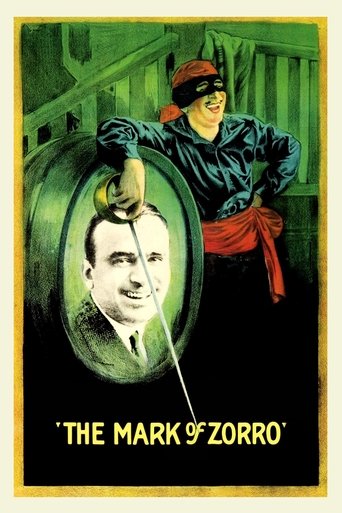
- The Mark of Zorro (1920)
- The Three Musketeers (1921)
- Robin Hood (1922)
- The Thief of Bagdad (1924)
- Later swashbuckling films starring Errol Flynn
- Modern superhero films featuring secret identities
Film restoration
The film was believed to be lost for many years, but a complete 35mm print was discovered in the 1970s in the Czechoslovakian Film Archive. This print has since been preserved and restored by film archives. The restored version is available through various film preservation organizations and has been shown at classic film festivals. While some deterioration is visible in certain scenes, the film is largely complete and viewable, making it one of the better-preserved Fairbanks features from this early period of his career.
Where to watch
- The Criterion Collection streaming service
- Kino Lorber's DVD/Blu-ray releases
- Film preservation society screenings
- Classic film festivals
- Some public library collections
- Archive.org (for non-commercial viewing)