



Holiday
"Caught between mary and young"
Keys: Space play/pause · ←/→ 10s · F fullscreen · M mute · </> speed
About this film
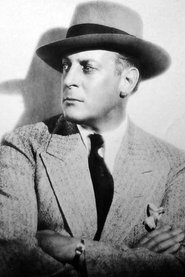
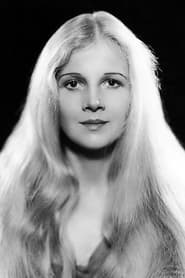
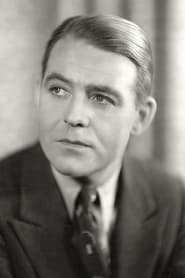
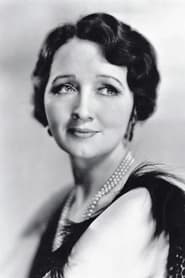
A young man is torn between his free-thinking lifestyle and the tradition of his wealthy fiancée's family. It stars Ann Harding, Mary Astor, Edward Everett Horton, Robert Ames and Hedda Hopper.
Cast & crew
More films like this
More Romance films
View all →




More from Edward H. Griffith
View all →More about this film
About the production
Release dateJuly 3, 1930
BudgetApproximately $400,000
Box officeEstimated $1.2 million (Domestic)
ProductionPathé Exchange
Filmed inPathé Studios, Culver City, California, Lake Placid, New York (exterior plates)
Produced during the transition from silent to sound cinema, the film was a prestige project for Pathé Exchange. Director Edward H. Griffith sought to maintain the sophisticated wit of Philip Barry's stage play while utilizing early cinematic innovations like process screens for vehicle scenes. The production was notable for its high-end art direction, intended to convey the immense wealth of the Seton family, which was a hallmark of 'drawing room' comedies of the era.
Themes
Class ConflictIndividualism vs. ConformityThe Burden of WealthFamily LoyaltyPersonal Freedom
Themes & topics
socialiterebellionengagementwealthy familyNew Year's Eveplay adaptationsistersself-made man
Historical background
Made in 1930, Holiday reflects production norms of the studio-system peak and early sound decades—shorter runtimes, regional audiences, and limited preservation infrastructure.
Why this film matters
Historians reference Holiday (1930) when discussing 1930 film.
Making of
The production was a significant challenge due to the limitations of early sound recording. Microphones were often hidden in flower vases or behind furniture, which restricted the actors' movements. To combat the 'static' feel of many early talkies, director Edward H. Griffith and cinematographer Norbert Brodine experimented with moving camera shots and process photography for scenes set in moving cars. The casting of Ann Harding was a major coup for Pathé, as she was a celebrated stage actress whose 'theatrical' style was perfectly suited for the sophisticated dialogue of Philip Barry. However, the production had to be carefully managed to ensure the dialogue-heavy script didn't alienate audiences used to the visual action of silent films.
What critics said
Retrospective notes on Holiday emphasize its value as a period production rather than blockbuster reception.
Did you know?
- Edward Everett Horton played the role of Nick Potter in both this 1930 version and the more famous 1938 remake starring Cary Grant.
- Ann Harding received an Academy Award nomination for Best Actress for her portrayal of Linda Seton.
- The film is based on the 1928 Broadway play by Philip Barry, which originally starred Hope Williams as Linda Seton.
- Hedda Hopper, who plays Susan Potter, later became one of Hollywood's most feared and influential gossip columnists.
- Robert Ames, who played Johnny Case, died tragically just a year after the film's release at the age of 42.
- The 1930 version is considered more naturalistic and dramatic compared to the 1938 version, which leaned into screwball comedy tropes.
- Mary Astor, who plays the 'conventional' sister Julia, was praised by critics as being more nuanced and effective than her counterpart in the remake.
- The film was one of the first 'talkies' to successfully adapt a sophisticated Broadway drawing-room comedy without feeling overly stage-bound.
- Donald Ogden Stewart, who co-wrote the 1938 remake, actually played the role of Nick Potter in the original Broadway stage production.
- The film features a rare early use of a crane shot during the party sequence to emphasize the scale of the Seton mansion.
Awards & recognition
- Photoplay Magazine Medal of Honor (Nominee)
Visual style
Norbert Brodine's cinematography is noted for its elegance and early experimentation. While many films of 1930 were visually stagnant, Brodine utilized subtle tracking shots and a modest crane shot to give the Seton mansion a sense of three-dimensional space. The lighting is high-key and glamorous, typical of the 'Pathé look' of the period, emphasizing the textures of the lavish costumes and sets.
Innovations
The film is notable for its early use of 'process cinematography' (rear projection) to simulate movement in car scenes, a technique that was still in its infancy. It also demonstrated a sophisticated approach to sound editing, allowing for overlapping dialogue and a more natural conversational flow than many of its contemporaries.
Music
The film features a minimal musical score by Josiah Zuro, as was common in early talkies where music was primarily used for opening and closing credits or justified by on-screen action (diegetic music). The 'soundscape' is dominated by the rhythmic, witty dialogue of Philip Barry, which was the film's primary selling point.
Famous quotes
Linda Seton: 'I'm going to marry that man, Julia.' Julia: 'Well, that's news. His name is Case.'
Johnny Case: 'I want to take a holiday and make sure that the thing I do for the rest of my life is what I want to do more than anything in the world.'
Ned Seton: 'You die and that's all right, too.'
Linda Seton: 'Money is our god here, Johnny.'
Nick Potter: 'I try to take Sundays off when I can.'
Memorable scenes
- The New Year's Eve party in the 'playroom' where the outsiders (Johnny, Linda, and the Potters) retreat from the stifling formality of the main party.
- The confrontation between Johnny and Edward Seton where Johnny refuses the banking position, choosing his 'holiday' over a guaranteed fortune.
- The final scene where Linda realizes she is free to follow Johnny and races to catch the ship, leaving her father's house forever.
- Ned's poignant and dark monologue about the effects of drinking, which provides a somber contrast to the film's comedic elements.
What audiences thought
The film was a significant box office success, proving that audiences were hungry for 'intelligent' talkies. It appealed particularly to urban audiences who were familiar with the Broadway play, but its universal themes of family conflict and the desire for freedom helped it perform well across the country. It solidified Ann Harding as one of the top stars of the early sound era.
Film connections
Influenced by
- The 1928 Broadway play 'Holiday' by Philip Barry
- The drawing-room comedies of Oscar Wilde
- The social satires of the 1920s
This film influenced
- Holiday (1938 remake)
- The Philadelphia Story (1940)
- Sabrina (1954)
- Metropolitan (1990)
Film restoration
The film is well-preserved and has been restored. It was famously included as a bonus feature on the Criterion Collection's Blu-ray release of the 1938 remake.
Where to watch
- The Criterion Channel
- Amazon Prime Video (Rent/Buy)
- YouTube (Public Domain/Classic Film channels)
- Plex
- Internet Archive