
How the Steel Was Tempered
"This literary adaptation was one of only two films made during World."
Keys: Space play/pause · ←/→ 10s · F fullscreen · M mute · </> speed
About this film
This literary adaptation was one of only two films made during World War II on the subject of the Civil War following the Bolshevik Revolution, as attention by filmmakers and viewers shifted away from past history and toward the current conflict.
Cast & crew
More films like this
More Drama films
View all →







More from Mark Donskoy
View all →
More about this film
About the production
Release dateDecember 27, 1942
BudgetNot publicly disclosed - typical Soviet state production
Box officeNot tracked in Soviet system - widely distributed throughout USSR
ProductionKiev Film Studio, Dovzhenko Film Studio
Filmed inKiev, Ukrainian SSR, Moscow, Russian SFSR
Filmed during the German invasion of the Soviet Union, making production extremely challenging. The film crew had to evacuate from Kiev to Moscow due to advancing German forces. Director Mark Donskoy was determined to complete this adaptation of the beloved Soviet novel despite wartime difficulties. The production utilized limited resources available during wartime, with many cast and crew members also serving in military units or civil defense.
Themes
Revolutionary sacrificeThe transformation of individual consciousnessPhysical suffering transcended by ideological commitmentThe heroism of ordinary peopleThe Civil War as foundation of Soviet identity
Themes & topics
Russian Civil WarBolshevik RevolutionRed ArmyDisabilityBlindnessParalysisRevolutionary heroSelf-sacrificeIdeological commitmentWartime propagandaSocialist realismWorking class heroPolitical awakeningPhysical sufferingLiterary adaptation
Historical background
Viewers in 1942 encountered How the Steel Was Tempered alongside competing releases that were collectively teaching new cinematic grammar.
Why this film matters
Surviving prints of How the Steel Was Tempered document how 1942-era filmmakers solved story problems with limited means.
Making of
The production of 'How the Steel Was Tempered' faced extraordinary challenges due to its timing during World War II. Director Mark Donskoy began filming at Kiev Film Studio but had to relocate the entire production to Moscow as German forces advanced toward Kiev. Many of the cast and crew were simultaneously involved in civil defense duties or military service. The film's composer worked on the score between air raid warnings. Despite these difficulties, Soviet cultural authorities considered the adaptation so ideologically important that they allocated scarce resources to ensure its completion. The casting process was particularly rigorous, as finding an actor who could convincingly portray Pavel's physical deterioration while maintaining revolutionary fervor was crucial. Viktor Perest-Petrenko underwent extensive preparation, studying the novel and consulting with people who had known the real Pavel Korchagin.
What critics said
Audience data from 1942 is sparse; reception for How the Steel Was Tempered is inferred from reissue and archival interest.
Did you know?
- The film is based on Nikolai Ostrovsky's autobiographical novel of the same name, which itself was considered a classic of socialist realism literature
- Ostrovsky wrote the novel while paralyzed and blind, making the story particularly personal and authentic
- This was one of only two films produced during World War II that focused on the Civil War period, as most wartime cinema focused on current events
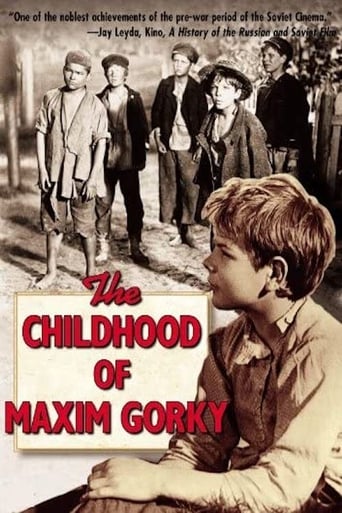
- Director Mark Donskoy had previously directed 'The Childhood of Maxim Gorky' (1938), establishing his reputation for literary adaptations
- The novel had been required reading in Soviet schools for years, making this adaptation highly anticipated
- Despite being made during wartime, the film was granted priority status by Soviet cultural authorities due to its ideological importance
- The film's production coincided with the Battle of Stalingrad, adding symbolic weight to its themes of sacrifice and resilience
- Viktor Perest-Petrenko, who played Pavel Korchagin, was relatively unknown before this role but became widely recognized afterward
- The film was used extensively in political education and youth organizations throughout the Soviet Union
- Original film elements were nearly destroyed during the war but were preserved through heroic efforts by studio archivists
Awards & recognition
- Stalin Prize, Second Class (1943)
- Order of the Red Banner of Labor awarded to director Mark Donskoy (1943)
Visual style
The cinematography, led by Yuri Yekelchik, employed the dramatic lighting and composition typical of Soviet socialist realism, with strong contrasts between light and shadow to symbolize the moral clarity of the revolutionary struggle. The battle sequences were filmed with dynamic camera movement and close-ups to emphasize the personal nature of the conflict. As Pavel's health deteriorates, the cinematography becomes increasingly constrained, using tighter framing and more static compositions to visually represent his physical limitations. The film makes effective use of Ukrainian landscape photography in the early scenes, establishing Pavel's connection to his homeland before the revolution transforms his world. The visual style evolved from the naturalistic photography of Donskoy's earlier works to a more expressionistic approach suitable for the film's heroic themes.
Innovations
The film demonstrated remarkable technical achievements given its wartime production conditions. The makeup effects used to show Pavel's physical deterioration were particularly advanced for their time, realistically depicting the progression of his illness without appearing grotesque. The battle sequences employed innovative camera techniques and editing to create compelling action sequences despite limited resources. The sound recording overcame wartime limitations to deliver clear dialogue and powerful music. The film's preservation through the war years was itself a technical achievement, as archivists risked their lives to save the film elements from destruction. The production also pioneered techniques for filming in multiple locations under difficult circumstances, establishing protocols that would be used in subsequent Soviet wartime productions.
Music
The musical score was composed by Dmitri Kabalevsky, one of Soviet Russia's most prominent composers, who created a powerful orchestral soundtrack that reinforced the film's emotional and ideological content. The main theme, associated with Pavel's revolutionary dedication, became recognizable throughout the Soviet Union. Kabalevsky incorporated elements of Ukrainian folk music in the early scenes to establish Pavel's cultural background, then transitioned to more martial and heroic themes as the story progressed. The score makes effective use of leitmotifs, with specific musical themes representing Pavel's determination, the revolutionary cause, and the sacrifices required. The soundtrack was recorded under difficult wartime conditions, but the quality remained high enough to be considered among Kabalevsky's finest film work.
Famous quotes
Man's dearest possession is life, and it is given to him to live but once. He must live so as to feel no torturing regrets for years without purpose, never know the burning shame of a mean and petty past; so live that, dying, he might say: all my life, all my strength were given to the finest cause in all the world—the fight for the liberation of mankind.
The strongest steel is tempered in the hottest fire.
Even when I cannot see with my eyes, I will see with my heart and write with my soul for the revolution.
My body may fail, but my spirit belongs to the party forever.
Every wound I received was a medal for our cause.
Memorable scenes
- The opening sequence showing young Pavel's poverty and early awakening to class consciousness in his Ukrainian village
- The battle scene where Pavel is severely injured but continues fighting, demonstrating his revolutionary commitment
- The hospital sequence where Pavel learns he is going blind and must choose despair or continued service to the cause
- The powerful scene where Pavel, now blind and paralyzed, begins writing his memoirs using a special typewriter
- The final montage showing how Pavel's written words continue to inspire new generations of Soviet youth
What audiences thought
The film was enormously popular with Soviet audiences during and after World War II, who saw Pavel Korchagin's struggle as parallel to their own wartime sacrifices. Many soldiers wrote letters from the front expressing how the film inspired them to continue fighting. The character became so ingrained in Soviet popular culture that 'to be like Pavel Korchagin' became a common expression for idealistic self-sacrifice. The film was regularly re-released and shown on television for decades, ensuring that multiple generations of Soviet citizens grew up with its message. Audience members often reported being moved to tears by Pavel's perseverance despite his physical deterioration. The film's popularity extended beyond the USSR to other Eastern Bloc countries, where it was similarly received as an inspirational tale of revolutionary heroism.
Film connections
Influenced by
- Nikolai Ostrovsky's autobiographical novel
- Sergei Eisenstein's revolutionary epics
- Vsevolod Pudovkin's 'The End of St. Petersburg'
- Alexander Dovzhenko's 'Arsenal'
- Lenin's writings on revolutionary cinema
- Stalinist cultural doctrine on socialist realism
This film influenced
- The Young Guard (1948)
- The Communist (1957)
- The Beginning of the End (1970)
- Lenin in Paris (1981)
- Cold Summer of 1953 (1988)
- The Burning Hell (1977)
Film restoration
The film has been preserved in the Russian State Film Archive (Gosfilmofond) and has undergone digital restoration. Original nitrate elements were successfully saved despite wartime dangers. A restored version was released on DVD by Russian cinema archives in 2005, and further digital restoration was completed in 2018 for the film's 75th anniversary. The film remains accessible through Russian state archives and has been shown at international classic film festivals.
Where to watch
- Available on Russian streaming platforms like Kinopoisk
- Included in Mosfilm's official YouTube channel with English subtitles
- Available on DVD through Russian cinema specialty distributors
- Screened periodically at film festivals specializing in classic Soviet cinema
- Accessible through some university film studies programs and archives
- Available in the collection of the Museum of Modern Art's film department