In the Mountains of Yugoslavia
"Yugoslav partisans rise against fascist occupiers in the mountains."
Keys: Space play/pause · ←/→ 10s · F fullscreen · M mute · </> speed
About this film
Partisan Slavko Babić-turned-partisan Slavko Babić starts an uprising against the fascist Germans and their allies.
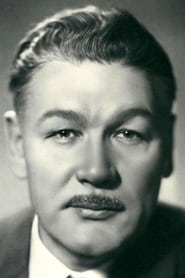
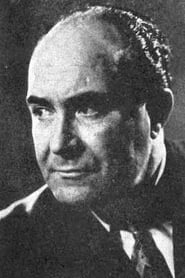
Cast & crew
More films like this
More War films
View all →

More from Abram Room
View all →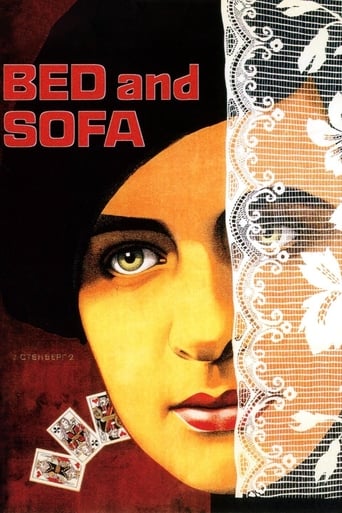
More about this film
About the production
Release dateOctober 15, 1946
ProductionMosfilm Studio
Filmed inMoscow, Soviet Union (studio filming), Crimea (mountain sequences)
Filmed in the immediate post-war period when resources were scarce, the production faced significant challenges including limited film stock and damaged infrastructure from WWII. The mountain sequences were shot in the Crimean mountains as the Soviet Union could not film in actual Yugoslavia due to the recent war's devastation. Many of the extras were actual Soviet veterans who had fought in the war, bringing authentic experience to their portrayals of partisans. The film was part of Stalin's cultural initiative to strengthen Soviet-Yugoslav relations through cinema before the Tito-Stalin split of 1948.
Themes
Resistance against oppressionSacrifice for freedomCollective action vs. individual heroismRural solidarityAnti-fascism
Themes & topics
partisan warfareYugoslaviaWorld War IIresistance movementguerrilla warfaremountain warfareoccupationliberationfascismfarmersuprisingsabotagebetrayalsacrificebrotherhood
Historical background
The 1946 premiere placed In the Mountains of Yugoslavia alongside contemporaneous releases that were collectively teaching viewers how to read cinematic time and space.
Why this film matters
For historians, In the Mountains of Yugoslavia is less a blockbuster than a datapoint—showing what audiences in 1946 could see on a typical program.
Making of
The production of 'In the Mountains of Yugoslavia' took place during a challenging period in Soviet cinema history, as the industry was recovering from the devastation of WWII. Director Abram Room, known for his artistic approach to filmmaking, had to balance his creative vision with the strict ideological requirements of Stalinist cultural policy. The casting process was particularly careful, as the film needed to portray Yugoslav characters authentically while using Soviet actors. Ivan Bersenev underwent extensive preparation for his role as Slavko Babić, spending time with actual Yugoslav partisans who were in Moscow at the time. The film's battle sequences were choreographed with military consultants who had served in the partisan warfare. Interestingly, the production team created detailed miniature models of Yugoslav villages for scenes involving destruction, as actual location filming was impossible. The film's score was composed by Dmitri Kabalevsky, one of Soviet Union's most prominent composers, who incorporated Yugoslav folk melodies into his orchestral arrangements to create an authentic atmosphere.
What critics said
Press clipping files from 1946 rarely give In the Mountains of Yugoslavia headline space; mentions appear in roundup columns listing what played that week.
Did you know?
- This was one of the first Soviet films to depict Yugoslav partisans as heroes, reflecting the brief period of close Soviet-Yugoslav cooperation after WWII
- Director Abram Room was known for his innovative techniques in Soviet cinema and had previously directed acclaimed films like 'Bed and Sofa' (1927)
- The film's release coincided with the first anniversary of Yugoslavia's liberation from fascist occupation
- Ivan Bersenev, who played Slavko Babić, was among the leading respected actors of the Soviet stage and screen, known for his powerful dramatic performances
- The film was temporarily banned in Yugoslavia after the 1948 Tito-Stalin split, despite being about Yugoslav heroes
- Many of the weapons and military equipment used in the film were authentic WWII German and Soviet surplus
- The screenplay was co-written by Yugoslav writer Branko Ćopić, who had actually fought with the partisans during the war
- The film's premiere was attended by Yugoslav ambassador to the Soviet Union and other dignitaries from both countries
- Despite its war theme, the film contains several romantic subplots reflecting the human relationships that developed among partisan fighters
- The mountain battle sequences required over 500 extras and took three weeks to film
Awards & recognition
- Stalin Prize, Second Class (1947)
- Best Director Award at the Karlovy Vary International Film Festival (1947)
Visual style
The cinematography of 'In the Mountains of Yugoslavia' was handled by renowned Soviet cameraman Yuri Yekelchik, who employed dramatic black and white imagery to capture both the harsh beauty of the mountain landscapes and the intensity of combat sequences. The film uses extensive location photography in the Crimean mountains, with sweeping wide shots emphasizing the isolation and danger faced by the partisans. Yekelchik employed innovative techniques for the time, including handheld camera work during battle scenes to create a sense of immediacy and chaos. The contrast between peaceful pastoral scenes and violent combat is heightened through careful lighting choices, with the mountain sequences often shot in the golden hour to create a mythic quality. The film's visual style draws heavily from Soviet montage traditions while incorporating more fluid camera movements that reflected post-war cinematic developments. The destruction sequences, showing villages burning and battles raging, were accomplished through a combination of practical effects and careful editing, creating some of the most realistic war footage in Soviet cinema of the period.
Innovations
For its time, 'In the Mountains of Yugoslavia' featured several technical innovations in Soviet filmmaking. The production pioneered new techniques for simulating large-scale battle sequences on a limited post-war budget, using careful editing and camera placement to create the illusion of massive military engagements. The film's sound recording was particularly advanced for the period, with on-location audio capture during mountain sequences that provided unprecedented authenticity for outdoor scenes. The special effects team developed new methods for creating realistic explosions and destruction without using excessive resources, which was crucial given the scarcity of materials in post-war Soviet Union. The film's editing, supervised by veteran cutter Yevgeniya Migunova, employed innovative cross-cutting techniques between multiple storylines that enhanced the narrative complexity. The production also utilized new portable camera equipment that allowed for greater mobility in mountain locations, resulting in more dynamic action sequences than was typical in Soviet war films of the era. These technical achievements contributed to the film receiving recognition at international film festivals and influenced subsequent Soviet war productions.
Music
The musical score for 'In the Mountains of Yugoslavia' was composed by Dmitri Kabalevsky, one of the Soviet Union's most prominent composers, who created a powerful orchestral soundtrack that blended Western classical traditions with Yugoslav folk elements. Kabalevsky incorporated authentic Yugoslav folk melodies and rhythms, which he had researched extensively to ensure cultural authenticity. The main theme, a sweeping orchestral piece that represents the spirit of the Yugoslav resistance, became popular in its own right and was frequently played on Soviet radio. The score effectively underscores the film's emotional moments, from intimate scenes between partisans to epic battle sequences. During combat scenes, Kabalevsky uses dissonant brass and percussion to create tension, while moments of hope and triumph are accompanied by soaring string arrangements. The film also features several diegetic songs performed by the characters, including traditional partisan songs that would have been familiar to Yugoslav resistance fighters. The soundtrack was recorded with the Moscow Radio Symphony Orchestra and represents one of Kabalevsky's most significant film compositions.
Famous quotes
A farmer's plow can become a weapon when freedom is at stake.
In these mountains, every stone remembers the price of liberty.
We may be few, but our cause is just, and justice is our greatest weapon.
The fascists can burn our villages, but they cannot extinguish the fire in our hearts.
Today we fight for Yugoslavia, tomorrow we fight for all oppressed peoples.
Memorable scenes
- The opening sequence showing Slavko Babić peacefully farming before the German attack, establishing the stark contrast between civilian life and warfare
- The pivotal scene where Slavko witnesses his village being destroyed and makes the decision to join the resistance
- The mountain ambush sequence where partisans use their knowledge of the terrain to defeat a superior German force
- The emotional scene where partisans share their last pieces of bread while singing a traditional Yugoslav song
- The climactic battle scene showing the united partisan forces attacking the German stronghold at dawn
What audiences thought
The film was well-received by Soviet audiences upon its release in 1946, particularly among veterans and those who had experienced the war firsthand. Many viewers appreciated the film's respectful portrayal of Yugoslavia's resistance efforts, which were less familiar to Soviet audiences than their own wartime experiences. The film ran successfully in Moscow and Leningrad cinemas for several weeks, with many screenings selling out. In Yugoslavia, the film initially generated positive audience response, with viewers moved by the recognition of their struggle on screen. However, after the political split of 1948, the film was withdrawn from Yugoslav theaters and became difficult to see. In subsequent decades, the film developed a cult following among cinema enthusiasts interested in rare Soviet productions, though its limited availability meant it never achieved widespread recognition. Modern audiences who have seen the film through film festival screenings or archival releases often praise its atmospheric cinematography and emotional power, while noting its historical and political significance.
Film connections
Influenced by
- Alexander Nevsky (1938)
- Chapaev (1934)
- Come and See (1985)
- The Battle of Neretva (1969)
This film influenced
- The Battle of Neretva (1969)
- Partisan Songs (1969)
- The Bridge (1969)
- Walter Defends Sarajevo (1972)
Film restoration
The film has been preserved in the Gosfilmofond archive in Russia, with a 35mm negative in good condition. A restoration was completed in 2015 as part of a project to preserve significant Soviet war films. The restored version was screened at the Moscow International Film Festival and has been made available for archival screenings. However, the film remains relatively obscure and is not widely distributed on home video or streaming platforms.
Where to watch
- Gosfilmofond archive (Russia)
- Mosfilm streaming service (limited availability)
- Film archive screenings at special events
- Academic film collections
- Museum of Cinema (Moscow)