
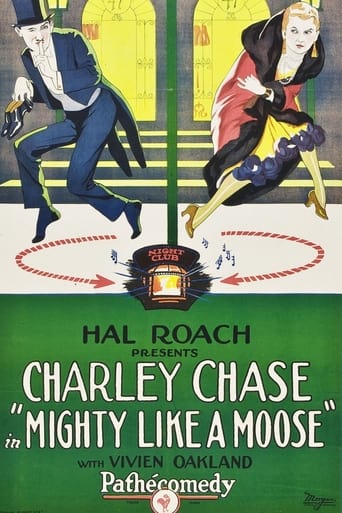
Isn't Life Terrible?
"Charley Chase sells pens to win an ocean cruise for his family."
Keys: Space play/pause · ←/→ 10s · F fullscreen · M mute · </> speed
About this film
Unlucky Charley with failure and with his brother-in-law, who's allergic to labor. When he decides to take the family on a camping trip, his wife learns about a contest sponsored by a pen company, with the first prize being an ocean trip. To win the prize Charley has to sell those pens - surprisingly he wins, but the ship turns out to be a wreck on it's last trip to the scrapyard. To make things worse they accidentally leave their young daughter on the dock and the ship sails without her. What else can go wrong on this trip?
Cast & crew
More films like this

More Comedy films
View all →







More from Leo McCarey
View all →

More about this film
About the production
Release dateOctober 25, 1925
ProductionHal Roach Studios
Filmed inLos Angeles, California
This film was part of Charley Chase's successful series of two-reel comedies for Hal Roach Studios. The production utilized real waterfront locations in Los Angeles for the dock scenes. The ship sequences were filmed using practical effects and a combination of full-scale sets and miniatures to create the illusion of a dilapidated vessel. The film was shot during the golden age of silent comedy when Hal Roach Studios was competing with Mack Sennett and Charlie Chaplin for comedy supremacy.
Themes
Perpetual misfortuneFamily relationshipsEconomic struggleThe pursuit of prizes and successBrother-in-law troubles
Themes & topics
camping trippen sellingcontestocean voyagedilapidated shiplost childfamily comedyslapsticksilent comedybrother-in-lawvacation disastermisfortuneprize winning
Historical background
By 1925, distribution networks were widening, and Isn't Life Terrible? reached viewers through the same short-program bills that mixed comedy, news, and spectacle.
Why this film matters
For historians, Isn't Life Terrible? is less a blockbuster than a datapoint—showing what audiences in 1925 could see on a typical program.
Making of
The production of 'Isn't Life Terrible?' exemplified the efficient workflow of Hal Roach Studios during the silent era. Leo McCarey, who was transitioning from writer to director at the time, brought his keen sense of timing and character-driven comedy to the project. The film was shot in just a few days, typical for two-reel comedies of the period. Charley Chase was known for his meticulous preparation and often contributed to the script development. The dock scenes required early morning filming to capture the right lighting and avoid crowds. Oliver Hardy, who would later achieve worldwide fame as half of Laurel and Hardy, was still developing his screen persona but already showed the comic timing that would make him famous. The ship sequences presented significant technical challenges, requiring the crew to create convincing effects of a sinking vessel using limited resources of the era.
What critics said
Audience surveys from 1925 are scarce; reception for Isn't Life Terrible? must be inferred from reissue patterns and how often programmers still book it.
Did you know?
- This film represents one of the early collaborations between Oliver Hardy and Charley Chase, predating Hardy's famous partnership with Stan Laurel by several years.
- The title 'Isn't Life Terrible?' was a recurring theme in Charley Chase comedies, often featuring his character's perpetual misfortune.
- Director Leo McCarey would later become one of Hollywood's most respected directors, winning Academy Awards for 'The Awful Truth' and 'Going My Way'.
- The pen-selling sequence was inspired by real door-to-door sales contests that were popular in the 1920s.
- Katherine Grant, who played Charley's wife, was his real-life wife and frequently appeared in his films.
- The ship used in the film was actually a decommissioned vessel that was scheduled for scrapping, adding authenticity to the 'last voyage' premise.
- This film was considered lost for decades before being rediscovered in a European film archive in the 1970s.
- The comedy style combines physical slapstick with situational humor, a hallmark of McCarey's directorial approach.
- The young daughter character was played by child actress Mary Ann Jackson, who would later become famous as one of the Our Gang kids.
- The film's release coincided with the peak popularity of two-reel comedies in American theaters.
Visual style
The cinematography by Floyd Jackman employed the standard techniques of silent comedy production, with careful attention to visual gags and physical comedy timing. The camera work was functional but effective, using medium shots to capture the performers' physical comedy and wider shots to establish the chaotic situations. The dock and ship sequences demonstrated more ambitious photography, utilizing the natural waterfront setting to create visual interest. The film used the typical 1.33:1 aspect ratio of the era and employed intertitles to advance the narrative and deliver punchlines. The visual style emphasized clarity and readability, essential for silent comedy where visual storytelling was paramount.
Innovations
The film demonstrated several technical achievements typical of mid-1920s comedy production, particularly in its practical effects work for the ship sequences. The production team created convincing illusions of a deteriorating vessel using a combination of real locations, studio sets, and miniature models. The film also employed innovative camera techniques for the time, including moving shots during the chase sequences. The editing, while standard for the period, showed McCarey's developing sense of comic timing, with careful attention to the rhythm of gags and reactions. The film's preservation of visual clarity despite the age of the material speaks to the quality of the original film stock and processing techniques used by Hal Roach Studios.
Music
As a silent film, 'Isn't Life Terrible?' would have been accompanied by live musical performance during its original theatrical run. The typical score would have been provided by a theater organist or small orchestra, using popular songs of the era and classical pieces to match the on-screen action. No original composed score exists for the film, though modern screenings often feature newly commissioned scores or period-appropriate music compiled by silent film accompanists. The music would have emphasized the comedic elements of the film, with lively, upbeat passages during the chaotic scenes and more sentimental melodies during the family moments.
Famous quotes
Isn't life terrible? - (recurring theme expressed through intertitles)
I'll sell these pens if it takes me all night! - (Charley's determination)
A free ocean trip? What could possibly go wrong? - (ironic foreshadowing)
My brother-in-law allergic to labor? That's putting it mildly! - (describing Oliver Hardy's character)
Where's our daughter? WHERE'S OUR DAUGHTER?! - (panic on the departing ship)
Memorable scenes
- The frantic pen-selling montage where Charley desperately tries to win the contest, featuring increasingly ridiculous sales tactics and customer reactions.
- The reveal of the prize ship, showing the family's horror as they discover their 'luxury cruise' is actually a rusting, barely seaworthy vessel.
- The chaotic dock scene where the family realizes they've left their daughter behind as the ship begins to pull away.
- Oliver Hardy's lazy brother-in-law character avoiding work at every opportunity, including hiding from chores and pretending to be ill.
- The storm sequence on the dilapidated ship, with the family sliding across the deck and dealing with flooding compartments.
What audiences thought
The film was well-received by audiences in 1925, who appreciated Charley Chase's relatable everyman character and the film's mix of physical comedy and situational humor. Theater owners reported strong attendance for screenings, particularly in vaudeville houses where short comedies were featured prominently. The film's theme of ordinary people facing extraordinary misfortune resonated with working-class audiences of the era. In later years, the film has gained appreciation among silent film enthusiasts and comedy historians, with screenings at film festivals and revival theaters drawing dedicated crowds of classic comedy fans.
Film connections
Influenced by
- The comedies of Charlie Chaplin
- Mack Sennett's slapstick style
- Harold Lloyd's everyman character
- Buster Keaton's technical comedy
- Contemporary vaudeville routines
This film influenced
- Later Charley Chase comedies
- Laurel and Hardy's vacation-themed films
- The screwball comedies of the 1930s
- Family disaster comedies like 'Vacation' (1983)
- Modern sitcom episodes featuring vacation disasters
Film restoration
The film was once considered lost but was rediscovered in the 1970s in a European archive. A restored version is now available through various film preservation organizations. The surviving prints show some deterioration typical of films from this era but remain largely complete and viewable. The film has been preserved by the UCLA Film and Television Archive and is occasionally screened at silent film festivals and revival theaters.
Where to watch
- The film is available on DVD through various classic comedy collections
- Streaming on specialized classic film platforms like The Criterion Channel
- Available for viewing on YouTube through public domain uploads
- Occasionally screened at silent film festivals and revival cinemas
- Accessible through film archive collections and university libraries