


Lights of Old Broadway
"Twin sisters separated at birth meet as strangers on Broadway."
Keys: Space play/pause · ←/→ 10s · F fullscreen · M mute · </> speed
About this film
Adapted from the play The Merry Wives of Gotham, twin sisters are separated at birth - one of them becomes a society girl in New York, the other lives in the Irish slums.
Cast & crew
More films like this
More Romance films
View all →




More from Monta Bell
View all →
More about this film
About the production
Release dateMarch 16, 1925
ProductionCosmopolitan Productions, Metro-Goldwyn-Mayer (MGM)
Filmed inMGM Studios, Culver City, California
This was one of Marion Davies' most successful dramatic roles, produced by William Randolph Hearst's Cosmopolitan Productions as part of his efforts to establish Davies as a serious actress. The film featured elaborate sets recreating both upscale New York society and the tenements of the Irish slums. Davies played dual roles, requiring complex double-exposure photography that was technically advanced for the time.
Themes
Class divisionsIdentity and dual natureSocial mobilityImmigration and assimilationLove transcending social barriers
Themes & topics
Historical background
Lights of Old Broadway (1925) survives in catalogs and archives as a record of late silent cinema.
Why this film matters
Scholars and collectors reference Lights of Old Broadway when discussing how late silent cinema filmmakers addressed popular themes.
Making of
The production of 'Lights of Old Broadway' was a major undertaking for Cosmopolitan Productions, with William Randolph Hearst investing heavily to showcase Marion Davies' dramatic range. The dual role required Davies to work with pioneering double-exposure techniques, often requiring her to perform scenes twice with different costumes and mannerisms. The set design was particularly ambitious, with MGM's art department creating detailed reproductions of both Fifth Avenue mansions and Lower East Side tenements. Director Monta Bell, known for his meticulous attention to detail, spent weeks researching New York's social divisions to ensure authenticity. The film's Technicolor sequences, though brief, represented a significant technical achievement and additional expense. Hearst personally supervised many aspects of production and even suggested script changes to better highlight Davies' talents.
What critics said
Where contemporary reviews survive, Lights of Old Broadway is read against the tastes of 1925; revival screenings keep it in circulation.
Did you know?
- Marion Davies played both twin sisters, a dual role that was technically challenging in the silent era requiring careful camera work and editing
- The film was based on the Broadway play 'The Merry Wives of Gotham' by Laurence Eyre, which had a brief run in 1924
- William Randolph Hearst, Davies' powerful partner and producer, was deeply involved in the production to ensure it showcased her dramatic abilities
- The film was one of the first to use Technicolor for certain sequences, though most of it was shot in black and white
- Director Monta Bell was a former journalist who had worked as an assistant to Charlie Chaplin before becoming a director
- The Irish slum sets were so realistic that some Irish-American organizations protested their depiction, though the film was generally praised for its sympathetic portrayal
- Conrad Nagel was one of the few actors from the original Broadway cast to appear in the film adaptation
- The film's success helped establish Marion Davies as more than just a comedienne, proving her dramatic capabilities
- Some of the location footage was actually shot in New York City, unusual for a Hollywood production of the time
- The fire sequence at the charity ball was among the leading elaborate and dangerous stunts performed in a silent film up to that point
Awards & recognition
- Photoplay Medal of Honor - 1925
Visual style
The cinematography by Ira H. Morgan was pioneering for its time, particularly in the execution of Marion Davies' dual role. Morgan employed sophisticated double-exposure techniques and careful matte work to create convincing scenes featuring both characters simultaneously. The film's visual style contrasted the warm, soft lighting of the society scenes with the harsh, high-contrast lighting of the slum sequences. The Technicolor segments, though brief, showcased early color photography with careful attention to costume and set design. The fire sequence utilized innovative camera angles and editing techniques to create suspense and danger. Morgan's work on this film was considered among the most technically accomplished of 1925.
Innovations
The film's most significant technical achievement was the execution of Marion Davies' dual role, requiring innovative use of double exposure and split-screen photography that was advanced for 1925. The production also pioneered the integration of Technicolor sequences within a predominantly black-and-white film. The fire effects and miniature work used in the climactic sequence were considered state-of-the-art for the time. The film's sound design, while not recorded, included detailed musical cue sheets that synchronized with the action in ways that foreshadowed later sound synchronization techniques. The set design incorporated moving elements and forced perspective to create the illusion of expansive New York locations on studio backlots.
Music
As a silent film, 'Lights of Old Broadway' would have been accompanied by live musical performance in theaters. The original score was composed by William Axt, one of MGM's staff composers, with arrangements that reflected the film's dual settings - sophisticated classical pieces for the society scenes and traditional Irish melodies for the slum sequences. The score included adaptations of popular songs of the era as well as original compositions. In larger theaters, the accompaniment might have included a full orchestra, while smaller venues used piano or organ. The musical direction emphasized the emotional contrasts between the two worlds depicted in the film, using leitmotifs for the twin characters.
Famous quotes
In this city of millions, two sisters lived in different worlds, never knowing the other existed.
Love knows no boundaries - neither of class nor of circumstance.
Sometimes the greatest distance between people is not miles, but the streets of the same city.
Memorable scenes
- The dramatic fire sequence at the charity ball where Lizzie saves Anne's life, featuring elaborate special effects and stunt work that was groundbreaking for 1925
- The first scene showing both twins simultaneously, using innovative double-exposure photography that amazed contemporary audiences
- The emotional revelation scene where the sisters discover their true relationship, featuring Marion Davies' powerful dual performance
What audiences thought
The film was a commercial success upon its release, particularly popular in urban areas where audiences could relate to its depiction of city life. Marion Davies' dual role was a major draw, with theaters advertising the technical marvel of seeing her play both parts. The film's themes of social mobility and romance resonated strongly with 1920s audiences, many of whom were first or second-generation immigrants themselves. Audience reaction cards from the period show overwhelming positive response, with particular praise for the emotional climax and the fire sequence. The film's success helped cement Davies' popularity and proved that audiences would accept her in serious dramatic roles.
Film connections
Influenced by
- The Merry Wives of Gotham (Broadway play)
- Shakespeare's 'Twelfth Night' (twin confusion theme)
- Contemporary social realist dramas
- Victorian melodrama traditions
This film influenced
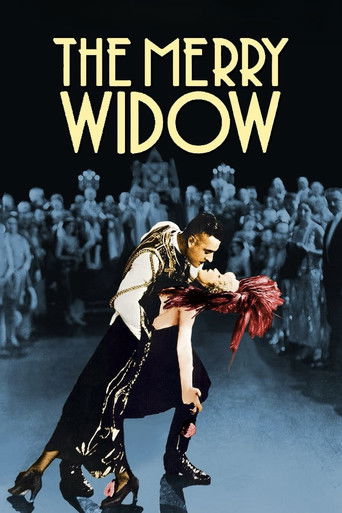
- The Merry Widow (1925)
- The Merry Go Round (1923)
- Later films about separated twins
- Social dramas of the late 1920s
Film restoration
The film is partially preserved with some sequences missing. The complete film exists in 16mm copies, though the original 35mm nitrate version has partially deteriorated. The Technicolor sequences are particularly rare, with only fragments surviving. The film has been partially restored by film archives, including the Museum of Modern Art and the Library of Congress, but a complete restoration has not been possible due to missing elements. Some scenes exist only in still photographs or production stills.
Where to watch
- The film is occasionally screened at silent film festivals and special cinema events
- Some archives have viewing copies available for researchers
- Public domain versions may be available on certain streaming platforms, though quality varies
- Film archives including the Museum of Modern Art and UCLA Film & Television Archive hold copies