

Little Angel
"Engelein is a comedy of deliberately mistaken identity"
Keys: Space play/pause · ←/→ 10s · F fullscreen · M mute · </> speed
About this film
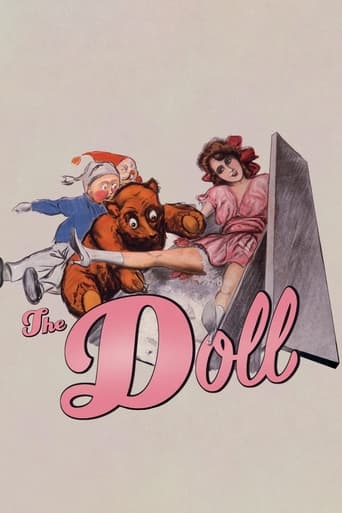
Engelein is a comedy of deliberately mistaken identity. If Jesta, a 17-year-old, can play the part of a 12-year-old, her family will gain a large inheritance from a rich uncle from Chicago. Her unruly “play-acting” for the uncle is preceded by an earlier incident in the film tha.
Cast & crew
More films like this
More from Urban Gad
View all →

More about this film
About the production
Release dateDecember 1914
ProductionProjektions-AG Union (PAGU)
Filmed inBerlin, Germany
The film was shot during the peak of Asta Nielsen's stardom in Germany, with Urban Gad, her husband and frequent collaborator, directing. The famous rooftop kissing scene was considered quite daring for its time, requiring careful choreography to achieve the desired effect while satisfying censorship concerns. The production utilized the sophisticated studio facilities available in Berlin at the time, allowing for controlled lighting and set construction that enhanced the film's visual quality.
Themes
Deception and identityComing of ageSocial class and inheritanceGender roles and female sexualityFamily dynamics
Themes & topics
mistaken identityinheritanceschool expulsiondeceptioncomedykissing scenerooftop scenefall from ladderage deceptionfamily schemeboarding schoolwealthy unclecoming of agerebellionsocial climbing
Historical background
Silent-era production in 1914 relied on intertitles, live accompaniment, and studio systems that were rapidly consolidating into national industries.
Why this film matters
Early works like Little Angel help map how filmmakers, exhibitors, and viewers developed the visual language of cinema during the medium's first decades. Later revivals, archive screenings, and digitization have kept such titles accessible to researchers and dedicated viewers long after their first commercial runs.
Making of
The production of 'Engelein' took place during a golden age of German cinema before World War I. Urban Gad, who was married to Asta Nielsen, had a unique understanding of her screen presence and often tailored roles specifically to showcase her talents. The famous ladder scene required extensive rehearsals to achieve the perfect balance of comedy and suggestion without crossing the line of acceptability for censors. The film was produced by Projektions-AG Union (PAGU), one of Germany's leading film companies of the era. The production team built elaborate sets including the school exterior and interior spaces to create a believable environment for Jesta's adventures. Nielsen's performance was revolutionary for its time, combining childlike innocence with adult sensuality in a way that challenged conventional notions of female propriety in cinema. The film's success led to increased production values for subsequent Nielsen-Gad collaborations.
What critics said
Trade and newspaper reviews from the silent period for Little Angel survive only in fragments, making precise reception history difficult to reconstruct. Modern assessment tends to emphasize historical value, craft, and cultural context rather than box-office performance.
Did you know?
- The film was so successful that it spawned a sequel, 'Engeleins Hochzeit' (Little Angel's Wedding) in 1916, also directed by Urban Gad and starring Asta Nielsen.
- Asta Nielsen was actually 32 years old when she played the 17-year-old Jesta pretending to be 12, demonstrating her remarkable range as an actress.
- The English title 'Little Angel' comes from the German title 'Engelein,' which is a diminutive form meaning 'little angel.'
- The film was among the leading commercially successful German productions of 1914, helping establish Asta Nielsen as one of Europe's biggest film stars.
- Director Urban Gad and Asta Nielsen were married in real life and collaborated on numerous films together, with Gad often writing and directing specifically for Nielsen's talents.
- The scene where Jesta falls from the ladder revealing her leg was considered quite scandalous and contributed to the film's notoriety and popularity.
- The film was distributed internationally, helping establish Asta Nielsen's reputation beyond Germany and Scandinavia.
- The wealthy uncle from Chicago represents the common European fascination with American wealth and opportunity during this period.
- The film's success came just as World War I was beginning, making it one of the last major international hits from German cinema before the war disrupted film distribution.
- The school expulsion scene was filmed on a specially constructed set that allowed for the dramatic ladder and wall sequence.
Visual style
The cinematography of Engelein, while without on-screen billing in surviving records, demonstrates the sophisticated visual style emerging in German cinema before World War I. The film makes effective use of medium shots to capture Nielsen's expressive performance, particularly in scenes requiring her to switch between childish and adult behavior. The famous ladder sequence employs careful camera placement to maximize the comic and suggestive elements of Jesta's fall. Interior scenes utilize naturalistic lighting that creates depth and dimensionality in the sets. The cinematography balances the need for clear storytelling with artistic composition, using framing to emphasize character relationships and social dynamics. The visual style reflects the influence of Danish cinema, where both Gad and Nielsen began their careers, while incorporating the technical advances available in German studios.
Innovations
Engelein demonstrated several technical advances in German cinema of 1914. The film's feature length required sophisticated narrative construction and pacing techniques that were still being developed in cinema. The production used elaborate set construction, particularly for the school sequences, that allowed for dynamic camera movement and staging. The film's editing shows advanced understanding of continuity and comic timing, particularly in the sequence involving Jesta's fall from the ladder. The lighting techniques employed in interior scenes demonstrate the growing sophistication of German studio cinematography. The film's success in international distribution also required the production of multiple negatives and careful attention to technical standards for export, representing advances in film preservation and distribution technology of the era.
Music
As a silent film, Engelein would have been accompanied by live musical performance during its original theatrical run. The typical accompaniment would have consisted of a piano or small ensemble playing popular songs and classical pieces appropriate to the film's moods. For the comedic scenes, lively ragtime or popular tunes of the era would have been used, while more romantic moments might have featured waltzes or sentimental ballads. The ladder scene would likely have been accompanied by dramatic, playful music to enhance the comic effect. No original score survives, but modern screenings of restored versions often use contemporary music or newly composed scores that reflect the film's early 20th-century setting and German origins.
Famous quotes
I may be small, but I'm not that small! - Jesta (when confronted about her age deception)
Rules are made to be broken, especially silly school rules! - Jesta
Sometimes you have to be a little devil to get what you want. - Jesta
Innocence is just another form of acting. - Jesta
Memorable scenes
- The iconic ladder scene where Jesta falls while trying to kiss her boyfriend, revealing her stockinged leg in a moment that was considered scandalously suggestive for 1914.
- Jesta's transformation from a rebellious teenager into a convincing '12-year-old' for her uncle, complete with childish mannerisms and voice.
- The school expulsion scene where the headmistress discovers Jesta's rooftop rendezvous and delivers a stern lecture about proper feminine behavior.
- The final revelation scene where Jesta's true age is exposed, leading to comedic chaos and eventual resolution.
- Jesta's various attempts to maintain her childish disguise while dealing with increasingly adult situations and complications.
What audiences thought
Engelein was enormously popular with audiences across Europe, becoming one of the biggest box office hits of 1914. Audiences were particularly drawn to Asta Nielsen's charismatic performance and the film's mix of comedy and mild scandal. The ladder scene became a talking point among moviegoers and contributed to the film's notoriety and appeal. The film's success led to long lines at theaters and repeat viewings by many audience members. International audiences embraced the film despite language barriers, demonstrating the growing universal appeal of cinema. The character of Jesta resonated with viewers, particularly young women who saw in her a rebellious spirit challenging social conventions. The film's popularity helped establish Nielsen as one of the first truly international film stars, with audiences across Europe and America eagerly anticipating her next release.
Film connections
Influenced by
- Danish cinema traditions
- Comédie française
- German theatrical traditions
- Victorian literature themes
- Early American comedy films
This film influenced
- Engeleins Hochzeit (1916)
- Other Asta Nielsen vehicles
- German comedy features of the 1920s
- Early Hollywood comedies featuring plucky heroines
Film restoration
Engelein is partially preserved with fragments and portions of the film surviving in various film archives, including the Bundesarchiv-Filmarchiv in Berlin and the Danish Film Institute. While not completely intact, enough of the film survives to provide a clear understanding of its story and significance. Restoration efforts have been undertaken to preserve the existing footage, and the film has been included in retrospectives of early German cinema and Asta Nielsen's work. Some scenes may be missing or exist only in poor condition, reflecting the challenges of film preservation for works from this early period.
Where to watch
- Available on DVD from European film specialty distributors
- Screenings at film archives and museums specializing in early cinema
- Included in some streaming services specializing in classic and silent films
- Available through educational film libraries and university collections
- Occasionally screened at film festivals focusing on silent cinema or German film history