


Little Old New York
"Irish girl disguised as her brother"
Keys: Space play/pause · ←/→ 10s · F fullscreen · M mute · </> speed
About this film
Irish immigrant Mary disguises herself as her late brother to claim an American inheritance. Marion Davies stars in the 1923 costume romance.
Cast & crew
More films like this
More Comedy films
View all →







More from Sidney Olcott
View all →
More about this film
About the production
Release dateSeptember 23, 1923
Box officeThe film was a commercial success, particularly popular with Marion Davies' fanbase, though exact box office figures are not documented in surviving records.
ProductionCosmopolitan Productions, Paramount Pictures
Filmed inNew York City, New York, Cosmopolitan Studios, New York
The film was produced by William Randolph Hearst's Cosmopolitan Productions specifically as a vehicle for Marion Davies, his companion. The production utilized authentic New York locations to recreate the 1850s setting, including several historic buildings that still stood at the time of filming. The costume design for Davies' male disguise was particularly elaborate, requiring multiple fittings and special tailoring to maintain the illusion while allowing for the period's restrictive women's undergarments beneath the masculine exterior.
Themes
Gender identity and disguiseFemale empowermentImmigration and the American DreamClass mobilityDeception and revelation
Themes & topics
disguiseinheritancegender bendingNew York CityIrish immigrant1850sfortune huntingromantic deception
Historical background
Little Old New York (1923) reached audiences during the silent feature period, when exhibitors mixed shorts and features on the same program.
Why this film matters
Historians retain Little Old New York as a record of how filmmakers in 1923 addressed popular genres.
Making of
The production of 'Little Old New York' was marked by William Randolph Hearst's intense involvement in every aspect of the film, as was customary for Marion Davies' vehicles. Sidney Olcott, though an experienced director, often had to defer to Hearst's creative decisions. The film's location shooting in New York City was ambitious for its time, requiring the cast and crew to work around the bustling city streets. Marion Davies' transformation into her male character was a major production challenge, involving extensive makeup and costume work that had to be convincing enough to fool both the characters in the film and the audience. The production employed several Irish actors as extras to add authenticity to the opening scenes set in Ireland. Despite the film's comedy elements, the cast took their roles seriously, with Davies reportedly studying male mannerisms and movements for weeks before filming began.
What critics said
Trade coverage from 1923 treated Little Old New York as program material; later writers evaluate it through preservation and genre context.
Did you know?
- This was Marion Davies' first film under her new contract with Paramount Pictures after leaving First National.
- The film was based on a popular 1920 Broadway play by Rida Johnson Young that had starred Mary Boland.
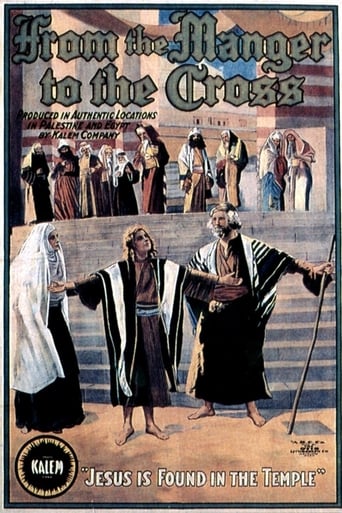
- Sidney Olcott, the director, was one of the pioneering filmmakers of early cinema and had previously directed the controversial 1912 film 'From the Manger to the Cross'.
- The film's success led to Marion Davies being cast in more dramatic roles, moving away from the pure comedies she had been known for.
- Harrison Ford (not to be confused with the later actor of the same name) was a popular leading man of the silent era who appeared in over 200 films between 1915 and 1932.
- The film's theme of a woman disguising herself as a man was a popular trope in silent cinema, appearing in numerous films of the era.
- William Randolph Hearst reportedly oversaw every aspect of production, as was typical for films starring Davies.
- The film was one of the first to extensively use actual New York City locations rather than studio sets for a period piece.
- Marion Davies performed many of her own stunts in the film, including several scenes requiring physical agility while in her male disguise.
- The original Broadway play had been a major hit, running for 240 performances at the Gaiety Theatre.
Visual style
The cinematography by Charles Rosher employed both the intimacy of studio work and the grandeur of location shooting in New York City. Rosher, who would later win Academy Awards for his work, utilized innovative camera techniques for the film's numerous disguise sequences, carefully framing Davies to maintain the illusion of her male character. The contrast between the rural Irish scenes and the bustling New York streets was highlighted through distinct visual styles, with the New York sequences featuring more dynamic camera movement to capture the energy of the city. Period-appropriate lighting techniques were used to recreate the 1850s atmosphere, particularly in the interior scenes.
Innovations
The film was noted for its extensive use of location shooting in New York City, which was relatively uncommon for period films of the era. The production employed sophisticated makeup techniques to create Marion Davies' male disguise, which was considered convincing by contemporary standards. The film also utilized complex editing techniques to maintain the continuity of the disguise sequences and to create smooth transitions between the various settings. The costume department created historically accurate 1850s period costumes that had to be specially designed to accommodate Davies' transformation scenes.
Music
As a silent film, 'Little Old New York' would have been accompanied by live musical performances during its theatrical run. The original score was composed by William Axt, a prolific composer of silent film music who created themes for different characters and dramatic situations. The music likely incorporated popular Irish melodies for the opening sequences and more sophisticated orchestral pieces for the New York scenes. The score would have been distributed to theater orchestras along with cue sheets indicating when specific musical themes should be played.
Famous quotes
I've come to claim what's rightfully mine, even if I have to pretend to be someone else to get it.
In this city of dreams, sometimes you have to wear a mask to show your true face.
Fortune favors the bold, and sometimes the disguised.
New York may be old, but opportunity is forever young.
Memorable scenes
- The opening sequence in Ireland where Nora learns of her inheritance and decides to disguise herself as her brother
- Nora's arrival in New York Harbor, seeing the city for the first time while maintaining her male disguise
- The ballroom scene where Nora, disguised as Patrick, must dance with women while trying to avoid revealing her identity
- The climactic courtroom scene where Nora must choose between revealing her true identity and losing her fortune
What audiences thought
The film was well-received by audiences upon its release, particularly by Davies' loyal fanbase. The combination of comedy, romance, and the novelty of seeing a major star in gender-bending disguise proved to be a winning formula at the box office. Contemporary audience reactions reported in trade publications emphasized the entertainment value and Davies' charm in the lead role. The film's success helped solidify Davies' status as one of the era's major stars and demonstrated her ability to carry more substantial dramatic material.
Film connections
Influenced by
- Based on the 1920 Broadway play by Rida Johnson Young
- Influenced by earlier gender-disguise comedies such as 'Yankee Doodle Dandy' (1917)
- Part of the tradition of Shakespearean-inspired comedies of mistaken identity
This film influenced
- Similar gender-disguise films of the 1920s including 'The Iron Mule' (1925)
- Later films featuring women in male disguise such as 'Victor/Victoria' (1982)
Film restoration
The film is considered to be partially preserved, with some sequences surviving in various film archives. While not completely lost, the film is not available in its complete original form. Surviving elements are held by the Library of Congress and the Museum of Modern Art. Several restoration efforts have been undertaken over the years, but a complete version has not been reconstructed.
Where to watch
- The film is not currently available on major streaming platforms
- Surviving fragments can sometimes be viewed at film archives and special screenings
- Bootleg copies of varying quality circulate among silent film collectors
- Occasionally screened at silent film festivals and classic cinema events