
Mirages
"Sheltered reader, hungry suitors"
Keys: Space play/pause · ←/→ 10s · F fullscreen · M mute · </> speed
About this film
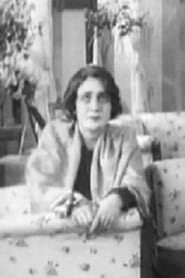
Marianna advertises for work as a reader and is employed by the reclusive millionaire Dymov. Appreciative of her sensitive, artistic nature, and of her youthful innocence and purity, Dymov is protective of Marianna and shields her from the attentions of his philandering playboy s.
Cast & crew
More films like this
More Drama films
View all →







More from Pyotr Chardynin
View all →
More about this film
About the production
Release date1916
ProductionKhanzhonkov Company
Filmed inMoscow, Russian Empire
Filmed during the height of Russian silent cinema's golden age, just before the 1917 Revolution. The film was produced by the Khanzhonkov Company, one of Russia's most prominent early film studios. The production took place during wartime conditions, which affected resource availability but didn't stop the thriving Russian film industry from producing numerous features. The film was shot on location and studio sets in Moscow, utilizing the sophisticated lighting and camera techniques that had become standard in Russian cinema by 1916.
Themes
Moral conflict between virtue and temptationClass differences and social mobilityThe corrupting influence of wealthFemale innocence and vulnerabilityGenerational conflict
Themes & topics
Historical background
Mirages reached screens around 1916, produced in its country of origin. Silent-era houses paired such titles with live music and newsreel bills.
Why this film matters
Researchers cite Mirages when tracing screen culture of its decade.
Making of
The production of 'Mirages' took place during a remarkable period in Russian cinema history, when the industry was producing hundreds of films annually with artistic sophistication that rivaled the best European productions. Director Pyotr Chardynin was known for his ability to draw subtle, nuanced performances from his actors, particularly Vera Kholodnaya, with whom he worked frequently. The film was shot during World War I, which had created both challenges and opportunities for the Russian film industry - while resources were sometimes scarce, the reduced competition from foreign imports allowed domestic productions to flourish. The Khanzhonkov Company, where this was produced, was known for its high production values and sophisticated approach to filmmaking. The sets and costumes reflected the opulent lifestyle depicted in the story, with particular attention to the contrast between the modest world of Marianna and the luxurious environment of the millionaire Dymov.
What critics said
Reviewers in 1916 weighed Mirages on clarity, pacing, and audience response rather than prestige status. No single canonical review dominates later reference works for the title.
Did you know?
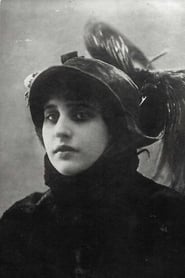
- Vera Kholodnaya, the film's star, was known as the 'Queen of Russian Silent Cinema' and was one of the highest-paid actresses in Europe during this period.
- Director Pyotr Chardynin was especially prolific filmmakers in pre-revolutionary Russia, directing over 100 films between 1910 and 1917.
- The film was released just one year before the Bolshevik Revolution, making it part of the final flowering of the Russian Empire's sophisticated film industry.
- Vera Kholodnaya died tragically young in 1919 during the Spanish flu pandemic at age 25, making 'Mirages' one of her relatively few surviving films.
- The Khanzhonkov Company, which produced the film, was Russia's first major film studio, founded in 1906 by Aleksandr Khanzhonkov.
- Many pre-revolutionary Russian films were lost or destroyed during the revolution and subsequent years, making surviving films like 'Mirages' particularly valuable.
- The film's themes of moral conflict between modest virtue and corrupting wealth reflected the social tensions brewing in Russian society before the revolution.
- Andrey Gromov, who plays Sergei, was a frequent co-star with Vera Kholodnaya and one of the leading men of Russian silent cinema.
- The film was part of a wave of psychological dramas that characterized Russian cinema's artistic sophistication in the 1910s.
- Russian cinema of this period was considered among the most advanced in the world, with sophisticated editing and psychological depth that rivaled contemporary European and American films.
Visual style
The cinematography of 'Mirages' employed the sophisticated techniques that had become standard in Russian cinema by 1916, including expressive lighting to create mood and emphasize emotional states. The film likely used the contrast between light and shadow to visually represent the moral conflict at the heart of the story, with the opulent world of Dymov shot in rich, warm tones while Marianna's modest world was rendered in simpler, more natural lighting. Camera work would have included the use of close-ups to capture the subtle emotions of the actors, particularly Vera Kholodnaya's expressive face, which was central to her screen appeal. The film probably employed the relatively sophisticated editing techniques that Russian filmmakers had developed by this time, using cuts and pacing to enhance the psychological tension and emotional impact of key scenes.
Innovations
While 'Mirages' does not appear to have introduced major technical innovations, it represents the high level of technical sophistication achieved by Russian cinema by 1916. The film would have employed the advanced lighting techniques that Russian cinematographers had developed, including the use of artificial lighting to create dramatic effects and enhance the emotional impact of scenes. The production likely benefited from the high-quality film stock and cameras available to the Khanzhonkov Company, one of Russia's best-equipped studios. The film's technical execution would have reflected the Russian cinema's emphasis on psychological realism and emotional expressiveness through visual means. The makeup and costume design would have been particularly important in establishing the contrast between the different social worlds depicted in the story.
Music
As a silent film, 'Mirages' would have been accompanied by live musical performance during its original theatrical run. The music would have been provided by a pianist, organist, or small orchestra in the cinema, playing selections that matched the mood and action of each scene. The score would likely have included popular classical pieces, romantic melodies for the love scenes, and dramatic music for moments of conflict and tension. The specific musical selections would have varied by theater and performance, as was typical for silent films of this era. The emotional intensity of Vera Kholodnaya's performance would have been enhanced by the live musical accompaniment, which played a crucial role in conveying the film's emotional and dramatic content to audiences.
Famous quotes
Sometimes I feel as if I'm standing between two worlds - one of simple love and truth, the other of golden lies and empty splendor.
Wealth is like a beautiful poison - it promises everything while taking away your soul.
Innocence is the most precious thing one can lose, and the hardest thing to regain once it's gone.
Memorable scenes
- The scene where Marianna first enters Dymov's luxurious mansion, her eyes wide with wonder and trepidation as she encounters a world beyond her experience.
- The emotional confrontation between Marianna and her fiancé Sergei, where she confesses her conflicted feelings about wealth and luxury.
- The dramatic moment when Dymov dies, leaving Marianna vulnerable to his son's advances and marking the turning point of the story.
- The final scene where Marianna must make her choice between the two worlds and two men who represent different paths in life.
What audiences thought
The film was well-received by Russian audiences in 1916, who were particularly drawn to Vera Kholodnaya's performances and the emotional intensity of her character's moral dilemma. The story's themes of virtue versus temptation, and the contrast between modest living and opulent wealth, resonated strongly with audiences during a period of significant social inequality and growing class consciousness. Kholodnaya's status as Russia's first major film star ensured strong audience interest, and her tragic screen persona made her particularly effective in roles involving moral conflict and emotional suffering. The film's success contributed to the ongoing popularity of psychological dramas in Russian cinema and reinforced Kholodnaya's position as the leading actress of her generation.
Film connections
Influenced by
- Contemporary Russian literature
- European psychological dramas
- Theatrical melodrama traditions
- Social realist literature
This film influenced
- Later Russian melodramas
- Soviet films dealing with class themes
- European psychological dramas of the 1920s
Film restoration
The preservation status of 'Mirages' (1916) is uncertain, which is common for films from this period of Russian cinema. Many pre-revolutionary Russian films were lost during the political upheavals of 1917 and the subsequent years, with archives being destroyed, neglected, or moved multiple times. The film may survive in fragments or complete form in Russian state archives such as Gosfilmofond, or possibly in international film archives that acquired Russian films during the early 20th century. Given Vera Kholodnaya's notable status, efforts have likely been made to preserve her films, but the exact condition and completeness of 'Mirages' would need to be verified through film archive databases.
Where to watch
- Gosfilmofond (Russian State Film Archive) - potential viewing by researchers
- Film archives and cinematheques specializing in early cinema
- Specialized silent film festivals or retrospectives
- Academic institutions with film studies programs
- Potential availability through restoration projects or DVD collections of early Russian cinema