
Money Mad
"A miser, his cellar, and hungry thieves"
Keys: Space play/pause · ←/→ 10s · F fullscreen · M mute · </> speed
About this film
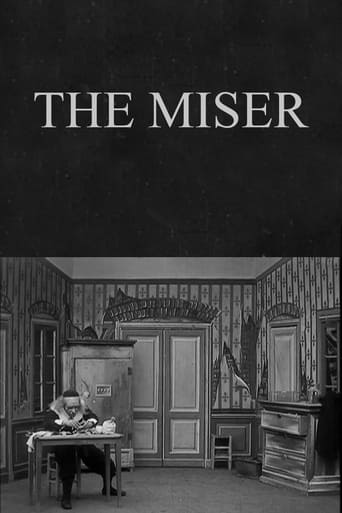
The central figure is an old miser, a Harpagon of sorts, who, like Frosine, stashes his ill-gotten money in a secret cellar. While the miser is at the bank, exchanging stolen notes for gold coin, a couple of thugs witness the transaction and see their opportunity-- It seems avari.
Cast & crew
More films like this
More Crime films
View all →

More from D.W. Griffith
View all →
More about this film
About the production
Release dateMarch 1908
ProductionAmerican Biograph Company
Filmed inNew York City, New York, Fort Lee, New Jersey
Money Mad was produced during D.W. Griffith's early period at American Biograph, when he was rapidly developing his directorial style and techniques. The film was shot in a single day, as was typical for Biograph productions of this era, with Griffith already beginning to experiment with camera placement and narrative structure that would later define his more famous works. The production utilized the company's standard indoor sets and outdoor locations around New York and New Jersey, where Biograph had established their production facilities. The film showcases Griffith's early interest in moral themes and character studies, particularly his fascination with greed and its corrupting influence on human behavior.
Themes
Greed and avariceMoral corruptionThe corrupting influence of wealthCrime and punishmentHuman nature and temptation
Themes & topics
miserstolen moneysecret cellarbank robberygreedthievesgold coinsmoral talecrimeretributionstrugglehidden treasureopportunismviolencejustice
Historical background
Fairground exhibitors screened Money Mad around 1908, when projected images still traveled as curiosity entertainment.
Why this film matters
Money Mad belongs to early staged screen fiction, when producers tested camera placement and trick cuts.
Making of
The making of Money Mad occurred during a pivotal period in D.W. Griffith's career, as he was transitioning from actor to director at American Biograph. Griffith had only begun directing in 1908, and Money Mad was among his earliest directorial efforts. The film was shot quickly, as were all Biograph productions of this era, typically completed in a single day with minimal rehearsal. Charles Inslee, who portrays the miser, was a seasoned stage actor who brought theatrical techniques to his screen performance, which was common in this transitional period between stage and screen acting styles. The production team used natural lighting for outdoor scenes and rudimentary artificial lighting for interior shots, as the technology for film lighting was still in its infancy. The film's editing was straightforward, with long takes and minimal cutting, reflecting the technical limitations and aesthetic preferences of early cinema. Griffith was already beginning to develop his signature techniques of cross-cutting and parallel action, though these would become more sophisticated in his later works.
What critics said
Press notices for Money Mad (1908) are sparse in digitized sources; interest today rests on preserved prints and comparison with related titles.
Did you know?
- Money Mad was one of over 40 short films that D.W. Griffith directed in 1908 alone, demonstrating his incredible productivity during his early years at Biograph.
- The film's theme of greed and miserliness was a recurring motif in Griffith's early work, appearing in several of his other 1908 productions.
- Charles Inslee, who plays the miser, was one of Biograph's most reliable character actors and appeared in numerous Griffith films during this period.
- The film was shot on 35mm film at a standard frame rate of 16 frames per second, typical for silent era productions.
- Money Mad represents Griffith's early experimentation with narrative structure, moving away from the simple tableaux format common in earlier cinema.
- The film's title was part of Biograph's marketing strategy to create dramatic, attention-grabbing names for their one-reel productions.
- Arthur V. Johnson, who appears in the film, would later become one of Griffith's most frequent collaborators before moving on to direct his own films.
- The film's emphasis on moral themes reflected Griffith's own conservative values and his belief in cinema's potential to teach moral lessons.
- Money Mad was distributed by Biograph as part of their regular program of weekly releases to theaters across the United States.
- The film's production coincided with Griffith's rapid development as a director, as he was learning the craft while making multiple films per week.
Visual style
The cinematography of Money Mad reflects the technical limitations and aesthetic preferences of 1908 filmmaking. The film was likely shot by Biograph's regular cinematographers, including G.W. Bitzer or Arthur Marvin, using hand-cranked 35mm cameras. The camera work is relatively static, with fixed positions and minimal movement, which was standard for the period. The film employs basic lighting techniques, utilizing natural light for exterior scenes and rudimentary artificial lighting for interior sequences. The composition follows theatrical conventions, with characters often positioned centrally and the camera maintaining a medium distance that captures full bodies rather than close-ups. Despite these technical constraints, Griffith was already beginning to experiment with camera angles and positioning to create dramatic emphasis, techniques that would become more sophisticated in his later works. The black and white cinematography creates stark contrasts that enhance the film's moral themes, particularly in scenes involving the hidden gold and the dark cellar where the miser stores his treasure.
Innovations
While Money Mad does not feature major technical innovations, it represents the refinement of existing techniques that were advancing the art of cinema in 1908. The film demonstrates improved narrative continuity compared to earlier works, with Griffith beginning to develop more sophisticated editing techniques to maintain story flow. The use of location shooting combined with studio sets shows the increasing mobility of film production and the growing ability to create more varied visual environments. The film's pacing and structure reflect an understanding of audience attention spans and the need to maintain engagement throughout the one-reel format. Griffith's direction shows early experimentation with cross-cutting between different story elements, a technique that would become more refined and influential in his later works. The film also demonstrates the improving quality of film stock and camera equipment, allowing for clearer images and more reliable shooting conditions than were possible just a few years earlier.
Music
As a silent film from 1908, Money Mad was originally presented without synchronized sound or recorded music. Theatrical screenings would have been accompanied by live musical performance, typically a pianist or small ensemble playing popular songs of the era or classical pieces appropriate to the film's mood. The choice of music was left to individual theater musicians, though Biograph sometimes provided suggestions for appropriate musical accompaniment. For scenes involving the miser's greed, musicians might have played dramatic, tension-building pieces, while action sequences would have called for more exciting, fast-paced music. The moral resolution of the story would have been underscored with uplifting or triumphant music. Modern screenings of the film often feature newly composed scores or carefully selected period-appropriate music that enhances the viewing experience while respecting the film's historical context.
Famous quotes
The film contains no recorded dialogue as it is a silent production
Intertitles would have conveyed key plot points and character thoughts
The moral message was conveyed visually through action and expression
Memorable scenes
- The miser's secret counting of his stolen gold in the dark cellar, lit only by candlelight, creating an atmosphere of secrecy and guilt
- The tense bank scene where the miser exchanges his stolen notes for gold, with the two thieves observing from a distance, their eyes gleaming with opportunity
- The dramatic confrontation in the cellar where the thieves attempt to steal the gold, resulting in a violent struggle that demonstrates the destructive power of greed
- The final moral resolution where justice is served, reinforcing the film's message about the consequences of avarice
What audiences thought
Contemporary audiences in 1908 generally responded positively to Money Mad, as it provided clear entertainment with a satisfying moral resolution. The film's straightforward narrative about greed and its consequences resonated with nickelodeon audiences, many of whom were working-class individuals familiar with stories of economic struggle and moral temptation. The dramatic confrontation between the miser and the thieves provided the kind of excitement that early cinema audiences sought, while the moral ending reinforced prevailing social values about the dangers of greed. Audience reactions were typically expressed through applause and attendance figures rather than written reviews, and Money Mad appears to have performed adequately in Biograph's distribution circuit. Modern audiences viewing the film through archives and film festivals often appreciate it as a historical artifact that provides insight into early 20th-century values and cinematic techniques, though its pacing and acting style may seem dated to contemporary viewers.
Film connections
Influenced by
- Molière's 'The Miser' (L'Avare)
- Victorian melodrama
- Stage plays about greed and morality
- Biblical parables about wealth
- 19th century literature on human greed
- Earlier Biograph crime films
- Theatrical traditions of moral storytelling
This film influenced
- Later D.W. Griffith films exploring moral themes
- Early crime dramas of the 1910s
- Biograph's subsequent films about greed
- Silent era films with moral lessons
- Early gangster films depicting criminal psychology
Film restoration
Money Mad is preserved in film archives, including the Museum of Modern Art's film collection and the Library of Congress. The film survives in 35mm format and has been digitized for preservation purposes. While not as widely available as some of Griffith's more famous works, prints exist in several major film archives around the world. The film has been included in various DVD collections of early Griffith works and is occasionally screened at film festivals and museum retrospectives focusing on early cinema. The preservation status is considered good for a film of its age, though like many films from this period, it may show signs of deterioration in the original elements.
Where to watch
- Museum of Modern Art film collection (viewable by appointment)
- Library of Congress digital archives
- Various DVD collections of early D.W. Griffith films
- Film festival screenings focusing on early cinema
- University film studies programs and archives
- Online streaming platforms specializing in classic cinema
- The Criterion Channel (occasionally featured in early cinema collections)
- Kino Lorber's early cinema DVD releases