
Only Saps Work
"Pockets deeper than conscience"
Keys: Space play/pause · ←/→ 10s · F fullscreen · M mute · </> speed
About this film
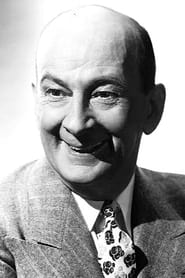
Rubber-legged comedian Leon Errol made his talkie starring bow in Paramount's Only Saps Work. Based on a play by Owen Davis Sr., the film casts Errol as James Wilson, a kleptomaniac who starts with picking pockets and ends up robbing a bank.
Cast & crew
More Comedy films
View all →






More from Cyril Gardner
View all →
More about this film
About the production
Release dateDecember 6, 1930
Box officeGenerally reported as a modest success for Paramount, though specific figures are unrecorded.
ProductionParamount Publix Corporation, Paramount Famous Lasky Corp.
Filmed inParamount Studios, Hollywood, California, Paramount Ranch, Agoura Hills, California (location shooting)
The film was adapted from the 1925 Broadway play 'Easy Come, Easy Go' by Owen Davis. Paramount had previously filmed the story as a silent in 1928 under the original play title. This 1930 version was specifically tailored to showcase the vaudeville talents of Leon Errol, particularly his famous 'rubber legs' routine. Reports from the time suggest much of the comedy was improvised 'from the cuff' during filming, with director Cyril Gardner allowing Errol to extemporize while the cameras rolled. Joseph L. Mankiewicz, who would later become a director, provided much of the snappy dialogue for the screenplay.
Themes
Kleptomania and Compulsive BehaviorMistaken IdentityThe Cynicism of the Great DepressionClass and the 'Health Resort' CultureLoyalty and Friendship among Thieves
Themes & topics
kleptomaniacbank robberyprivate investigator impersonationhealth resortcar chaserubber legspickpocketbellboywrongly accusedpre-code
Historical background
Only Saps Work reached screens around 1930, produced in its country of origin. Postwar distribution and sound standards shaped how it was marketed.
Why this film matters
Researchers cite Only Saps Work when tracing screen culture of its decade.
Making of
The production was characterized by a loose, improvisational atmosphere. According to contemporary accounts in Time Magazine, the cast and crew often held conferences on location after each sequence to decide what to do next, as the script was frequently treated as a mere outline. This allowed Leon Errol to bring his years of stage experience into the film, particularly in the health resort scenes where he 'teaches' Stuart Erwin how to be a detective. The technical transition to sound was still relatively new, and the film utilized the Western Electric Sound System. The production also made use of the Paramount Ranch for the climactic automobile chase, a location that would later become iconic in Western film history.
What critics said
Reviewers in 1930 weighed Only Saps Work on clarity, pacing, and audience response rather than prestige status. No single canonical review dominates later reference works for the title.
Did you know?
- This film marked the first starring 'talkie' feature for the famous vaudeville comedian Leon Errol.
- Leon Errol was world-renowned for his 'rubber legs' or 'folding legs' act, which he incorporates into his character's physical comedy in this film.
- The screenplay features early work by Joseph L. Mankiewicz, who later won Academy Awards for 'All About Eve' and 'A Letter to Three Wives.'
- The film was edited by Edward Dmytryk, who later became a prominent director and one of the 'Hollywood Ten' during the blacklist era.
- The title 'Only Saps Work' was purchased by Paramount from writer Courtenay Terrett simply because they liked the name, regardless of the original script it was attached to.
- Despite his fame for playing 'drunk' characters with wobbly legs, Leon Errol was a lifelong teetotaler in real life.
- The film is a remake of the 1928 silent film 'Easy Come, Easy Go,' which starred Richard Dix.
- Stuart Erwin, who plays the bumbling bellboy Oscar, became a frequent comedic foil in Paramount films of the early 1930s.
- The film features a notable early sound-era car chase sequence which was considered technically ambitious for 1930.
- Leon Errol's character, James Wilson, uses the alias 'The Great Japa' during his detective impersonation scenes.
Visual style
The cinematography by Rex Wimpy is typical of early 1930s Paramount productions, featuring high-key lighting and relatively static camera placements necessitated by the bulky early sound equipment. However, the film breaks away from the 'filmed play' aesthetic during the outdoor chase sequences, which utilize more dynamic tracking shots and location photography at the Paramount Ranch.
Innovations
The film is an early example of successful sound editing by Edward Dmytryk, who had to synchronize Errol's fast-paced physical comedy with the dialogue. The integration of location-based sound during the car chase was also a notable technical hurdle for the period's recording technology.
Music
The film features a standard orchestral score for the era, but it is most notable for its use of diegetic sound and Errol's vocal performance. There are several comedic 'patter' routines and a scene where characters sing 'I Love Those Irish Songs' and other snippets of popular tunes, reflecting the vaudeville influence on early talkies.
Famous quotes
James Wilson: 'I'm not a crook, I'm a kleptomaniac. There's a social difference!'
James Wilson (to Oscar): 'The first rule of being a detective, son, is to never let the left hand know what the right hand is stealing.'
Oscar: 'But Mr. Wilson, you just took that gentleman's watch!' James Wilson: 'I'm just keeping it warm for him. It's a cold day.'
James Wilson: 'Only saps work. The rest of us just use our wits!'
Memorable scenes
- The Pullman car sequence where James Wilson systematically picks the pockets of his fellow passengers while the train passes through a dark tunnel.
- The 'Detective Lesson' scene where Wilson uses his rubber-legged physical comedy to demonstrate to the bellboy how to 'sneak up' on a suspect.
- The climactic automobile chase through the hills, featuring Errol's frantic reactions as he tries to evade the police with a bag of stolen bank money.
- The 'Japalappa Prunes' monologue where Errol's character improvises a nonsensical story about the origin of prunes to distract a group of resort guests.
What audiences thought
Audiences in 1930 responded well to the film, primarily drawn by Leon Errol's established fame from the Ziegfeld Follies. It performed with 'Fair' to 'Good' business in major metropolitan areas like Minneapolis and New York. The physical comedy and the novelty of hearing a famous stage comic speak were the primary draws for the public during its initial run.
Film connections
Influenced by
- The stage play 'Easy Come, Easy Go' by Owen Davis
- Ziegfeld Follies (Leon Errol's stage background)
- Silent slapstick traditions of Charlie Chaplin and Buster Keaton
This film influenced
- The 'Mexican Spitfire' series (starring Leon Errol)
- The Gay Falcon (1941)
- A Slight Case of Murder (1938)
Film restoration
The film is preserved and survives in its entirety. It has been archived by various film preservation groups and is available in the public domain. A digital copy is maintained at the Internet Archive, though the quality is reflective of its age.
Where to watch
- Internet Archive (Streaming)
- YouTube (Classic Cinema Channels)
- Turner Classic Movies (Occasional television broadcasts)