
Passion Flower
"Society matron loves her chauffeur"
Keys: Space play/pause · ←/→ 10s · F fullscreen · M mute · </> speed
About this film
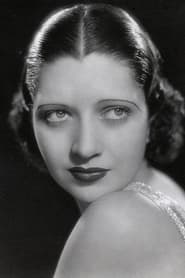
Wealthy wife falls for her chauffeur in a scandalous 1930 pre-Code drama starring Kay Francis.
Cast & crew
More films like this
More Drama films
View all →







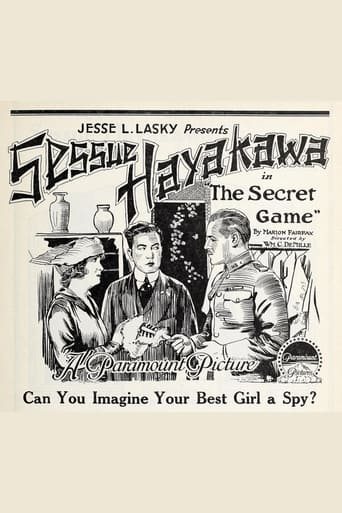
More from William C. deMille
View all →

More about this film
About the production
Release dateDecember 6, 1930
Budget$259,000
Box office$642,000
ProductionMetro-Goldwyn-Mayer (MGM)
Filmed inCulver City, California (MGM Studios)
The film was a prestige production for MGM, based on the popular 1930 novel by Kathleen Norris which had previously been serialized in Delineator magazine. Director William C. deMille, the older brother of Cecil B. DeMille, was known for a more literate and subtle style than his sibling, though the release leaned heavily into the popular 'women's picture' melodrama of the era. Kay Francis was notably loaned out from Paramount to MGM for this production, a move that helped solidify her status as a top-tier dramatic actress. The production featured lavish sets by Cedric Gibbons and high-fashion gowns by Adrian, typical of the high production values associated with Irving Thalberg's tenure at MGM.
Themes
Class ConflictMarital InfidelitySacrifice and RedemptionThe Burden of PrideFemale Friendship and Betrayal
Themes & topics
Historical background
Archival records place Passion Flower in 1930, a year when the early sound era shaped what theaters booked.
Why this film matters
Retrospectives include Passion Flower when mapping craft and subject matter from the early sound era.
Making of
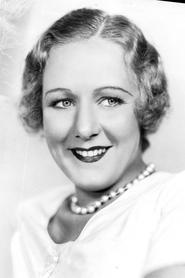
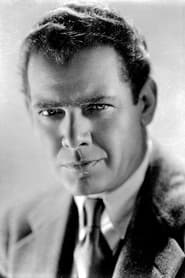
The production was managed under the watchful eye of Irving Thalberg, who saw the potential in Kathleen Norris's melodrama to appeal to female audiences. Director William C. deMille focused on the psychological tension between the two female leads rather than the spectacle his brother Cecil might have favored. Behind the scenes, Charles Bickford's temperament caused friction; he was a stage-trained actor who loathed the 'formulaic' nature of Hollywood scripts. Meanwhile, the costume department, led by Adrian, worked to contrast the 'rarefied boredom' of Kay Francis's wealthy character with the 'grit and determination' of Kay Johnson’s impoverished wife through their respective wardrobes.
What critics said
Critics revisiting Passion Flower emphasize performative and technical choices visible in surviving prints.
Did you know?
- the release marks the American screen debut of future Academy Award winner Ray Milland, who appears uncredited as a party guest.
- Charles Bickford was notoriously unhappy with the film, calling it 'melodramatic claptrap' in his autobiography; he had wanted to be loaned to RKO for 'Cimarron' instead.
- Kay Johnson and Kay Francis had a personal history; Johnson had reportedly once confessed to Francis that she was the love of her life, making their on-screen rivalry somewhat awkward.
- The film was one of the few collaborations between the two deMille brothers' respective 'types' of actors, as Bickford and Johnson had just starred in Cecil B. DeMille's 'Dynamite'.
- Child star Dickie Moore, who plays Tommy, was only four years old during filming and became especially beloved child actors of the 1930s.
- The film is a 'Pre-Code' drama, allowing for a franker depiction of adultery and marital dysfunction than would be permitted after 1934.
- Kay Francis's performance was so well-received that it encouraged Paramount to elevate her to solo stardom shortly thereafter.
- Despite being a 'second-rate' feature in terms of studio priority, it turned a significant profit of $138,000.
Visual style
Shot by the Harold Rosson, the film features the soft-focus glamour lighting that became an MGM hallmark. Rosson used lighting to distinguish between the cold, stark reality of the city attic and the warm, lush environment of the Morado estate. The camera work is more fluid than many early talkies, avoiding the 'static' feel common in 1929-1930 productions.
Innovations
The film is noted for its early sound integration, moving away from the 'canned' sound of the first talkies. It also features the high-water mark of MGM's art direction and costume design integration, where the visual 'look' of a character was used as a primary storytelling device to indicate social standing and emotional state.
Music
The film features a synchronized orchestral score typical of early MGM sound features, though it does not have a standalone famous theme song. The sound design focuses heavily on the clarity of the 'literate' dialogue and the use of ambient sound to emphasize the contrast between the bustling city and the quiet ranch.
Famous quotes
Dulce: 'No family? No money? What has he got that makes him such a prize?' Cassy: 'Dulce, he has everything!'
Dulce: 'I like Tony—he's square, upright—' Dan: 'And grand! That makes him three kinds of pianos!'
Cassy: 'If you ever want to come back to us, there is nothing I can't forgive and forget.'
Dulce: 'I'm glad I'm wearing good-looking underclothes... in case I'd fallen off that cliff!'
Memorable scenes
- The confrontation scene where Cassy sees Dan and Dulce kissing through a glass door, leading to the collapse of her marriage.
- The poignant moment where young Tommy (Dickie Moore) consoles his crying mother, saying, 'I didn't think you ever cried.'
- The raucous party scene at Dulce's house where a letter from the suffering Cassy arrives, highlighting the moral vacuum of the socialite lifestyle.
What audiences thought
The film was a commercial success, particularly with female audiences who were the primary demographic for Kathleen Norris's novels. It earned a respectable profit and was a 'palace' attraction in major cities, proving that the 'romantic triangle' formula remained a potent draw for 1930s moviegoers.
Film connections
Influenced by
- The novels of Kathleen Norris
- Cecil B. DeMille's 'Dynamite' (1929)
This film influenced
- Back Street (1932)
- Transgression (1931)
Film restoration
The film is preserved and was released on DVD by the Warner Archive Collection in 2019.
Where to watch
- Warner Archive DVD
- Turner Classic Movies (TCM) broadcast
- Digital rental/purchase on select platforms