

Prairie Station
"Gold miners and partisans on the Soviet frontier."
Keys: Space play/pause · ←/→ 10s · F fullscreen · M mute · </> speed
About this film
About the labor exploits of gold miners, the old partisan Fedor Potanin and his son, the leader Stepan.
Cast & crew
More films like this

More Drama films
View all →







More from Olga Preobrazhenskaya
View all →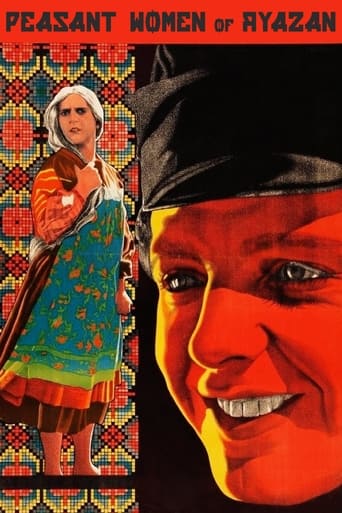
More about this film
About the production
Release date1941
ProductionSoyuzdetfilm
Filmed inSoviet Union
The film was produced by Soyuzdetfilm, a studio specializing in films for children and youth, though this particular work addressed more mature themes of industrial labor and generational conflict. The production took place during a critical period in Soviet cinema, just before the outbreak of the Great Patriotic War, which would significantly impact the film industry.
Themes
Generational conflict and continuityIndustrial labor and productionRevolutionary ideals and their evolutionFather-son relationshipsSacrifice for the collective good
Themes & topics
gold miningSoviet Unionindustrializationgenerational conflictpartisanlaborleadershipfather-son relationshipsocialist realismproduction quotas
Historical background
Prairie Station (1941) reached screens through Soyuzdetfilm. Exhibitors of the time built studio-era schedules that mixed shorts, features, and live acts, so a clear premise helped Prairie Station travel between cities and exchange markets.
Why this film matters
Archivists and revival programmers still cite Prairie Station (1941) when tracing studio habits, casting pools, and the visual rhetoric audiences once took for granted. Even modest surviving prints help map how Prairie Station fit beside competing releases of its day.
Making of
The production of Prairie Station took place during a tumultuous period in Soviet history, as the country was still recovering from Stalin's purges of the late 1930s while facing the growing threat of Nazi invasion. Director Olga Preobrazhenskaya, who had been making films since the silent era, brought her extensive experience to this project, though by 1941 her style had adapted to the demands of socialist realism. The casting of Ivan Pereverzev in a leading role was significant, as he was emerging as one of the Soviet Union's most reliable leading men. The film's production likely faced challenges common to the era, including limited resources, strict ideological oversight from state censors, and the looming threat of war that would soon transform the entire Soviet film industry. The mining sequences would have required considerable logistical planning, as authentic locations and equipment needed to be secured for filming.
What critics said
Trade coverage around 1941 discussed Prairie Station for pacing, clarity, and program fit rather than blockbuster grosses. Later writers value it as evidence of period style and as a reference point beside other films from the same era.
Did you know?
- Director Olga Preobrazhenskaya was one of the first female film directors in the Soviet Union and a pioneer of early Soviet cinema
- The film was released in 1941, the same year Nazi Germany invaded the Soviet Union, which likely affected its distribution and reception
- Ivan Pereverzev, who played the lead role, would become widely praised actors in Soviet cinema, particularly known for his portrayal of historical figures
- The film's focus on gold mining reflects the Soviet Union's emphasis on industrialization and resource extraction during the 1930s and early 1940s
- Rostislav Plyatt, who appears in the cast, would later become famous for his roles in classic Soviet comedies and dramas
- The production company Soyuzdetfilm was originally established to create films specifically for young audiences, making this adult-themed drama somewhat unusual for their catalog
- The film represents a transitional period in Soviet cinema, moving away from the avant-garde experiments of the 1920s toward the socialist realism style that would dominate the 1940s and 1950s
- Very few copies of the production are known to exist today, making it a rare example of Preobrazhenskaya's work from this period
Visual style
The cinematography of Prairie Station reflects the aesthetic principles of Soviet socialist realism, which emphasized clear, realistic depictions of Soviet life and work. The visual style likely featured well-composed shots that highlighted the scale of mining operations and the dignity of labor. Camera work would have been functional rather than experimental, focusing on narrative clarity and emotional impact through traditional techniques. The industrial setting would have provided opportunities for dramatic compositions contrasting human figures with massive machinery and expansive landscapes. Lighting would have been used to create an appropriately serious and heroic atmosphere, particularly in scenes depicting the challenges and triumphs of the miners. The cinematographer would have worked to create images that reinforced the film's ideological messages about the importance of industrial production and the nobility of Soviet workers. While specific technical details about the camera work are scarce due to the film's rarity, the visual approach would have aligned with the state-mandated aesthetic standards of the period.
Innovations
Prairie Station was produced using standard filmmaking technology available in the Soviet Union in 1941, which included 35mm film and optical sound recording. The film does not appear to have introduced significant technical innovations, as the Soviet film industry of this period was focused on ideological content rather than technical experimentation. The production likely faced the technical challenges common to Soviet filmmaking at the time, including limited access to the latest equipment and materials due to international isolation. The mining sequences would have required careful coordination to safely film in industrial environments, representing a logistical achievement for the production team. The film's survival, despite the chaos of World War II and the subsequent decades, represents an achievement in film preservation, though many prints from this period were lost or damaged. The sound recording would have used the standard Soviet audio equipment of the era, which was functional but often produced lower quality results than Western counterparts. The technical aspects of the film reflect the practical, no-frills approach that characterized much of Soviet cinema production during this period of intense ideological oversight.
Music
Information about the specific soundtrack of Prairie Station is limited, but Soviet films of this era typically featured orchestral scores that emphasized emotional moments and reinforced ideological themes. The music would have been composed in a style that balanced traditional Russian musical elements with the modernist influences acceptable within socialist realism. The score would likely have included heroic themes for scenes of industrial achievement and more intimate passages for the personal drama between father and son. Soviet film music of the period often featured leitmotifs for characters and concepts, with recurring musical ideas representing the revolutionary spirit, industrial progress, and generational continuity. The soundtrack would have been recorded using the technology available in 1941, which was still relatively primitive by modern standards but sufficient for theatrical presentation. The composer, though not widely documented for this particular film, would have been working within the strict guidelines of Soviet cultural policy, ensuring that the music supported rather than undermined the film's ideological message.
Famous quotes
Our gold is not just metal, it's the foundation of our socialist future.
The revolution didn't end with victory, it continues in every ounce of gold we extract from the earth.
You may lead the men, son, but never forget who taught you the meaning of sacrifice.
Memorable scenes
- The confrontation scene between the elderly partisan father and his son, where past revolutionary ideals clash with contemporary industrial challenges, set against the backdrop of the mining operation
- The sequence showing the miners working together to overcome a technical obstacle in the gold extraction process, demonstrating Soviet ideals of collective labor
- The final scene where father and son reconcile their differences while looking over the expanded mining operation, symbolizing the unity of generations in building socialism
What audiences thought
Audience reception of Prairie Station in 1941 would have been significantly impacted by the timing of its release coinciding with the Nazi invasion of the Soviet Union. With the nation suddenly thrust into total war, cultural consumption patterns shifted dramatically toward patriotic and directly war-related content. The film's themes of industrial production and generational sacrifice, while relevant to wartime needs, may have seemed less urgent than explicitly propaganda works. Soviet audiences of the era were accustomed to films that served educational and ideological purposes, and Prairie Station would have been viewed through this lens. The working-class characters and industrial setting would have resonated with many viewers, particularly those employed in similar sectors. However, the film's relatively modest profile compared to major Soviet productions of the period suggests it did not achieve widespread popular impact. Post-war reception has been minimal due to the film's limited availability, with only specialized audiences of film historians and Soviet cinema enthusiasts having the opportunity to view it.
Film connections
Influenced by
- Soviet socialist realism doctrine
- Earlier Soviet industrial films such as 'Enthusiasm' (1931)
- Stakhanovite movement propaganda
- Traditional Russian literature about generational conflict
- Soviet educational cinema of the 1930s
Film restoration
Prairie Station is considered a rare film with limited availability in complete form. Like many Soviet films from the immediate pre-war period, it suffered from the disruptions of World War II and subsequent decades of inadequate archival preservation. The film is not widely available in commercial releases or major streaming platforms, suggesting that existing prints may be held primarily in Russian state archives such as Gosfilmofond. Some fragments or degraded versions may circulate among specialized collectors and film historians, but a fully restored, high-quality version is not generally accessible to the public. The film's preservation status highlights the broader challenge of maintaining access to Soviet cinema from this period, particularly works by directors like Olga Preobrazhenskaya whose contributions to film history deserve greater recognition.
Where to watch
- Russian state archives (Gosfilmofond) - research access only
- Specialized film archives and museums with Soviet cinema collections
- Occasional screenings at film festivals or retrospectives dedicated to Soviet cinema
- Academic institutions with Soviet film collections