River's End
"Double on the tundra"
Keys: Space play/pause · ←/→ 10s · F fullscreen · M mute · </> speed
About this film
Mountie Conniston hunts murderer Keith until a sled crash lets the fugitive impersonate the sergeant. Sgt. Conniston and his alcoholic guide O'Toole are on the trail of an escaped murderer named Keith. When they catch up with him in the farthest reaches of Northern Canada, Keith turns out to be a dead ringer for Conniston.
Cast & crew
More films like this
More Western films
View all →

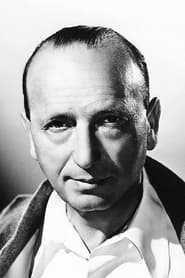
More from Michael Curtiz
View all →

More about this film
About the production
Release dateNovember 1, 1930
BudgetApproximately $250,000 (estimated studio allocation)
ProductionWarner Bros. Pictures, The Vitaphone Corporation
Filmed inSacramento, California, USA, Auburn, California, USA, Bear Valley, California, USA
The film was one of Warner Bros.' major 'Silver Jubilee' productions, celebrating the studio's 25th anniversary. Director Michael Curtiz, still relatively new to Hollywood after arriving from Hungary, was tasked with mastering the American Western genre. The production utilized a special train to transport over 125 actors, technicians, and staff members to the rugged foothills of Northern California to simulate the Canadian Rockies. Despite the remote locations, the film was a 'talkie' using the Vitaphone sound-on-disc system, which presented significant logistical challenges in recording clear audio outdoors.
Themes
Themes & topics
Royal Canadian Mounted PoliceDoppelgangerMistaken IdentityFugitiveCanadian RockiesMurder AccusationSnowstormIdentity Swap
Historical background
1930 placed River's End within United States cinema as Warner Bros. Pictures navigated wartime markets, immigration audiences, and the shift from intertitles to sound.
Why this film matters
Archivists revisit River's End (1930) for Michael Curtiz style, genre norms at Warner Bros. Pictures, and the exhibition context of 75 programming.
Making of
The production was marked by the intense friction between Michael Curtiz and Charles Bickford. Bickford, known for his 'tough guy' persona both on and off-screen, resented Curtiz's demanding and often dictatorial directing style. Curtiz, who was still perfecting his English, frequently had misunderstandings with the cast, leading to a tense atmosphere. To achieve the dual-role effects, the crew had to use a stationary camera and double-expose the film, requiring Bickford to act against a stand-in or thin air while maintaining perfect continuity in his movements. The logistics of filming a 'talkie' in the snowy foothills required the use of heavy sound-deadening blankets and specialized equipment to protect the sensitive Vitaphone recording gear from the elements.
What critics said
Retrospective writing on River's End stresses craft by Michael Curtiz, print survival, and repertory value rather than opening-week gross alone.
Did you know?
- This is the second of three film adaptations of James Oliver Curwood's 1919 novel; the others were released in 1920 (silent) and 1940.
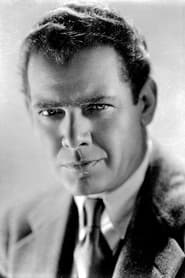
- Charles Bickford played a dual role as both the protagonist and the antagonist, appearing on screen with himself through advanced double-exposure techniques.
- The film features a very young Frank Coghlan Jr. (later known as Junior Coghlan), who would go on to play Billy Batson in the 'Adventures of Captain Marvel' serial.
- Director Michael Curtiz and star Charles Bickford famously clashed on set due to their equally stubborn and autocratic personalities.
- The film is a 'Pre-Code' production, allowing for a more morally ambiguous ending than would have been permitted a few years later under the Hays Code.
- Cinematographer Robert Kurrle used 'trick' shots to allow Bickford to interact with himself, a process that required precise camera positioning and masking.
- The story was originally serialized in Good Housekeeping magazine before becoming a bestselling novel.
- Despite the Canadian setting, the entire film was shot in the California wilderness near Sacramento and Auburn.
Visual style
Cinematographer Robert Kurrle utilized deep-focus shots and expansive wide angles to capture the rugged beauty of the California foothills. The most notable achievement was the seamless use of split-screen and double-exposure to allow Charles Bickford's two characters to occupy the same frame, a technique that was highly sophisticated for 1930. The lighting often leaned into the 'expressionist' style Curtiz favored, using high-contrast shadows to heighten the drama of the cabin scenes.
Innovations
The film is recognized for its early mastery of the double-exposure process in a sound film, allowing for convincing interaction between an actor and his double. It also successfully navigated the technical hurdles of recording synchronized sound on location, a feat that many studios avoided in the early 1930s due to the bulkiness of the recording equipment.
Music
The film features a synchronized score by Erno Rapee, a prominent composer of the era known for his work on 'Sunrise.' The music is used to underscore the tension of the chase and the isolation of the Arctic setting. Being a Vitaphone production, the sound includes synchronized dialogue and ambient environmental noises, which were considered cutting-edge for an outdoor-heavy film at the time.
Famous quotes
Conniston: 'You're my double, Keith. You can go back as me. You can live my life... and clear your own name.'
O'Toole: 'I've never lost a man yet, dead or alive, and I'm not starting with you!'
Memorable scenes
- The 'Mirror' Scene: The first moment Sergeant Conniston and John Keith come face-to-face, where the camera lingers on their identical features to emphasize the uncanny resemblance.
- The Sled Accident: A high-tension sequence where the sled overturns in a blizzard, forcing Keith to choose between his freedom and the lives of his captors.
- The Deathbed Confession: A poignant scene in the emergency cabin where the dying Conniston coaches Keith on how to mimic his mannerisms and voice to successfully pull off the impersonation.
What audiences thought
Audiences in 1930 were captivated by the 'trick' photography that allowed one actor to play two roles simultaneously. The film was a moderate success, appealing to fans of James Oliver Curwood's adventure novels and those seeking the novelty of a 'talking' Western. Its blend of romance and survival drama made it a popular choice for general audiences during the early years of the Great Depression.
Film connections
Influenced by
- The River's End (1920 novel by James Oliver Curwood)
- The River's End (1920 silent film adaptation)
This film influenced
- River's End (1940 remake)
- The Prisoner of Zenda (1937)
- North West Mounted Police (1940)
Film restoration
The film is preserved. A copy is held in the collection of the Library of Congress, and it has been aired on Turner Classic Movies (TCM).
Where to watch
- Turner Classic Movies (TCM) occasional broadcasts
- Warner Archive Collection (DVD)
- Library of Congress (Archival viewing)