

Second Chorus
"Rival trumpeters compete for their college band's new manager."
Keys: Space play/pause · ←/→ 10s · F fullscreen · M mute · </> speed
About this film
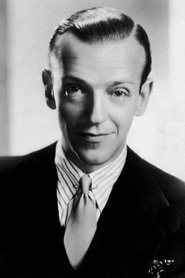
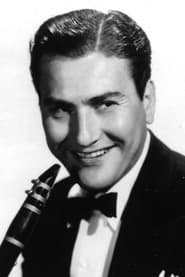
Danny O'Neill and Hank Taylor are rival trumpeters with the Perennials, a college band, and both men are still attending college by failing their exams seven years in a row. The midst of a performance, Danny spies Ellen Miller who ends up being made band manager. Second Chorus (1940) Hollywood musical comedy film starring Paulette Goddard and Fred Astaire and featuring Artie Shaw, Burgess Meredith and Charles Butterworth, with music by Artie Shaw, Bernie Hanighen and Hal Borne, and lyrics by Johnny Mercer.
Cast & crew
More Music films
View all →
More about this film
About the production
Release dateNovember 29, 1940
Budget$725,000
Box office$1,200,000 (domestic)
ProductionParamount Pictures, Artie Shaw Music Corporation
Filmed inParamount Studios, Hollywood, California, Los Angeles, California
The film was Fred Astaire's first after leaving his long-term contract with RKO Pictures. Artie Shaw, one of the era's most popular big band leaders, made his feature film debut and was paid $25,000 for his appearance. The production faced delays due to Shaw's touring schedule, requiring the filming schedule to be built around his concert commitments. Several musical numbers were filmed in long takes to showcase Astaire's dancing abilities and Shaw's orchestra performances.
Themes
Rivalry and competitionRomantic love trianglesThe pursuit of artistic successCollege life and extended adolescenceThe power of music
Themes & topics
trumpet playerscollege bandlove trianglebig band musicmusical romancerival musiciansartie shawswing eracomedydance numbers
Historical background
Released in 1940 during World War II and its aftermath, Second Chorus reached audiences when exhibitors were still defining programming conventions. The narrative hook—Danny O'Neill and Hank Taylor are rival trumpeters with the Perennials, a…—reflects what contemporary producers thought would draw viewers.
Why this film matters
Second Chorus remains discussed by archivists tracing how screen stories of its period represented work, desire, conflict, and social order. Its central situation—Danny O'Neill and Hank Taylor are rival trumpeters with the Perennials, a…—still prompts questions about genre conventions and audience expectations.
Making of
The production of 'Second Chorus' was marked by tension between Fred Astaire and director H.C. Potter, as Astaire was accustomed to having significant creative control over his films at RKO. Artie Shaw, known for his difficult personality, frequently clashed with studio executives and other cast members during filming. Paulette Goddard, recently divorced from Charlie Chaplin, was at the height of her career and brought star power to the production. The musical numbers required extensive rehearsal, with Astaire insisting on multiple takes to perfect his choreography. Shaw's orchestra members were actual professional musicians, not actors, which added authenticity to the musical performances but required special handling on set. The film's modest budget meant several planned production numbers had to be scaled back, and some location shooting was replaced by studio work.
What critics said
Trade and newspaper notices for Second Chorus generally emphasized casting, spectacle, and program fit rather than extended aesthetic argument. Retrospective screenings and archival notes continue to shape how viewers evaluate Second Chorus today.
Did you know?
- Fred Astaire received his first and only Academy Award nomination for Best Original Song for 'Would You Like to Be the Love of My Life' from this film
- Artie Shaw was one of the highest-paid bandleaders of the era, earning $60,000 per week at his peak, but was paid only $25,000 for his film appearance
- The film was originally titled 'College Rhythm' but was changed to 'Second Chorus' to emphasize the musical theme
- Paulette Goddard was paid $100,000 for her role, making her one of the highest-paid actresses of 1940
- The trumpet playing for both Fred Astaire and Burgess Meredith was actually performed by professional musicians
- This was the only film pairing Fred Astaire and Paulette Goddard, despite their excellent on-screen chemistry
- Artie Shaw's orchestra performs five numbers in the film, including his famous hit 'Frenesi'
- The college scenes were filmed at the University of Southern California campus
- Fred Astaire's character was originally written for James Stewart, who turned it down
- The film's copyright was not renewed, placing it in the public domain in the United States
Awards & recognition
- Academy Award nomination for Best Original Song - 'Would You Like to Be the Love of My Life'
Visual style
The cinematography by Charles Lang was characterized by elegant camera movements that complemented Fred Astaire's dance sequences. Lang employed long takes during musical numbers to showcase the performers' talents without interruption. The film used sophisticated lighting techniques to create atmosphere in both the college and nightclub settings. The black and white photography emphasized the glamour of the period while maintaining clarity during complex dance sequences. Lang's experience with musicals allowed him to balance the needs of both the dramatic and musical elements, creating a visually cohesive film that served both the story and the performances.
Innovations
The film pioneered the integration of authentic big band performances into a Hollywood musical narrative, using actual musicians rather than actors miming to recordings. The recording techniques employed for the musical numbers were advanced for their time, capturing the full sound of Shaw's orchestra with clarity. The choreography by Fred Astaire incorporated elements of swing dancing, creating a fusion of his signature style with contemporary dance trends. The film's production design successfully created convincing college and nightclub environments within studio constraints. The seamless integration of live performance and narrative elements set a standard for subsequent musical films featuring real musicians.
Music
The film's soundtrack featured Artie Shaw and his orchestra performing several of their hits, including 'Frenesi,' 'Would You Like to Be the Love of My Life,' and 'I Ain't Got Nobody.' The musical numbers were arranged by Shaw himself, maintaining the authentic swing sound that made his orchestra famous. The score was nominated for an Academy Award, with 'Would You Like to Be the Love of My Life' receiving particular acclaim. The soundtrack successfully blended popular swing music with traditional Hollywood musical elements, creating a bridge between commercial jazz and film music. The recordings made for the film became popular releases on 78 RPM records, extending the film's musical impact beyond the cinema.
Famous quotes
Danny O'Neill: 'I've been failing exams for seven years just to stay in this band!'
Ellen Miller: 'You two act like children fighting over the same toy!'
Hank Taylor: 'Music isn't just notes on a page, it's what happens between the notes.'
Danny O'Neill: 'When I play my trumpet, I'm telling the world how I feel about you.'
Artie Shaw: 'In this business, you're only as good as your last performance.'
Memorable scenes
- The opening number where the Perennials perform at the college dance, introducing the rivalry between Danny and Hank
- The scene where Artie Shaw's orchestra performs 'Frenesi' with elaborate choreography and staging
- The comedic sequence where Danny and Hank attempt to sabotage each other during rehearsal
- The romantic moonlit scene where Danny plays his trumpet to serenade Ellen
- The final performance number where all three leads come together for a spectacular musical finale
What audiences thought
Audiences in 1940 responded positively to 'Second Chorus,' particularly enjoying the combination of Fred Astaire's dancing and Artie Shaw's music. The film performed respectably at the box office, though it didn't match the success of Astaire's earlier RKO productions. Modern audiences often discover the film through its public domain status and appreciate it as a time capsule of the swing era. Musical enthusiasts particularly value the film for its authentic performances by Artie Shaw and his orchestra. While not considered among the greatest musicals of the era, the film has maintained a steady following among classic film fans and big band aficionados who appreciate its historical significance and entertaining performances.
Film connections
Influenced by
- Top Hat (1935) - for Astaire's musical comedy formula
- College Swing (1938) - for college musical setting
- The Big Broadcast series - for big band integration
- Stage Door (1937) - for romantic rivalry elements
This film influenced
- Ball of Fire (1941) - for musician romance themes
- Rhythm on the River (1940) - for music industry setting
- Syncopation (1942) - for jazz documentary elements
- The Glenn Miller Story (1954) - for bandleader biographical elements
Film restoration
The film is preserved in the Library of Congress collection and has been restored by various archives. Due to its public domain status in the United States, multiple versions of varying quality exist. The original negative is maintained by Paramount Pictures archives, and the film has been released on DVD by several public domain distributors. A high-quality restoration was completed in 2015 as part of a Paramount classic film preservation initiative.
Where to watch
- Available on YouTube (public domain uploads)
- Amazon Prime Video (multiple public domain versions)
- DVD releases from various public domain companies
- Tubi (free streaming)
- Pluto TV (occasional rotation)
- The Film Detective (restored version)
- Classic movie streaming services specializing in public domain films