

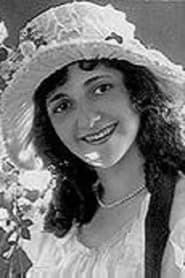
Shoes
"A shopgirl’s shoes outpace her wages"
Keys: Space play/pause · ←/→ 10s · F fullscreen · M mute · </> speed
About this film
A young working girl, struggling to support her family on her meager salary, desperately wishes for a new pair of shoes.
Cast & crew
More films like this
More Drama films
View all →







More from Lois Weber
View all →
More about this film
About the production
Release dateAugust 21, 1916
Box officeUnknown - but reported to be commercially successful for Universal
ProductionUniversal Film Manufacturing Company, Lois Weber Productions
Filmed inUniversal City Studios, Universal City, California
Lois Weber wrote, directed, produced, and edited this film, demonstrating her remarkable control over the creative process. The film was shot in approximately two weeks, which was typical for Universal productions of this era. Weber insisted on using natural lighting for many scenes to enhance the realism of the story. The production was part of Weber's exclusive contract with Universal, where she had her own production unit and complete creative autonomy.
Themes
Poverty and economic inequalitySexual morality and temptationFamily responsibility and sacrificeThe price of survivalGender and economic opportunity
Themes & topics
povertyworking classmoral dilemmatemptationfamily responsibilityeconomic hardshipsocial reformsilent filmfeminist filmurban life
Historical background
Shoes appeared in 1916, when the silent era before Hollywood consolidated into a studio system shaped how movies were financed, distributed, and discussed. Audiences of the day encountered the work amid shifting tastes in acting, pacing, and spectacle. Its focus on a young working girl, struggling to support her family on her meager salary, desperately wishes for a new pair of shoes mirrors themes circulating in popular culture of that moment.
Why this film matters
Shoes (1916) belongs to the wider archive of world cinema, documenting a young working girl, struggling to support her. Archivists and historians value such titles for what they reveal about craft, genre, and audience expectations. Restorations and festival screenings keep the work visible to viewers far beyond its first run.
Making of
Lois Weber approached Shoes with her characteristic methodical preparation and social consciousness. Before filming, she spent weeks researching the living conditions of working-class families in Los Angeles, interviewing shop girls and visiting tenement buildings. Weber insisted that Mary MacLaren actually walk around in worn-out shoes for several days before filming began to authentically portray Eva's discomfort and shame. The famous scene where Eva's shoe sole falls apart was achieved by having the prop department weaken the shoe's construction just enough for it to separate naturally during filming. Weber worked closely with cinematographer Allen G. Siegler to create a visual contrast between the bright, artificial world of the department store and the dark, cramped reality of Eva's home. The controversial 'temptation scene' with the well-dressed man was carefully choreographed to suggest sexual danger without being explicit, using subtle camera angles and lighting changes to convey the threat. Weber's attention to detail extended to the film's intertitles, which she personally wrote to ensure they conveyed the appropriate emotional tone without being preachy.
What critics said
Press coverage from 1916 is fragmentary for many titles of this vintage; surviving notices for Shoes tend to stress novelty, star power, or topical appeal. Later writing places the picture within its national and generic context, weighing both period conventions and moments that still land for modern viewers. Streaming and disc releases have revived discussion among classic-film audiences.
Did you know?
- Lois Weber was one of the first women to direct a full-length feature film in America and was the highest-paid director of her time, earning $5,000 per week in 1916.
- The film was considered quite controversial for its time due to its frank depiction of poverty, sexuality, and moral compromise.
- Mary MacLaren, who played Eva, was discovered by Weber and became one of her regular actresses, starring in several of her socially conscious films.
- The film was based on a story by Stella Wynne Herron, adapted for the screen by Weber herself.
- Shoes was one of the first films to be selected for preservation in the National Film Registry in 2014, recognizing its cultural, historical, and aesthetic significance.
- The film's theme of a woman's relationship with her shoes was considered highly symbolic, representing both her economic status and her sexual morality.
- Weber often used her films as vehicles for social reform, and Shoes was part of her series of 'social problem' films that addressed issues like poverty, drug addiction, and birth control.
- The original title was to be 'The Price of Shoes,' but Weber shortened it to simply 'Shoes' for greater impact.
- The film was shot during a heatwave in California, making the exterior scenes particularly challenging for the cast and crew.
- Weber used actual shop girls from Los Angeles department stores as extras to add authenticity to the department store scenes.
Awards & recognition
- Selected for National Film Registry (2014)
- Preserved by Library of Congress
Visual style
The cinematography by Allen G. Siegler employs innovative techniques that were ahead of their time. Weber and Siegler used contrasting lighting schemes to differentiate between Eva's harsh reality and her fantasies of a better life. The department store scenes are shot with bright, even lighting to create an artificial paradise, while the home scenes use natural light and shadows to emphasize the family's poverty. The film features several point-of-view shots, including a memorable sequence from Eva's perspective looking down at her worn shoes. Siegler employed soft focus techniques during Eva's moments of despair, creating a dreamlike quality that emphasized her psychological state. The street scenes use actual Los Angeles locations, giving the film a documentary-like authenticity that was unusual for fictional features of the period.
Innovations
Shoes demonstrated several technical innovations that were groundbreaking for 1916. Weber pioneered the use of subjective camera angles to convey Eva's psychological state, including innovative low-angle shots that emphasized her vulnerability. The film features sophisticated cross-cutting between Eva's workplace and home, creating parallel action that heightens dramatic tension. Weber employed natural lighting for interior scenes, which was unusual for studio productions of the era that typically relied entirely on artificial lighting. The film's editing rhythm, particularly in the climactic temptation scene, uses rapid cuts to convey Eva's internal conflict. Weber also experimented with focus pulling to direct audience attention, particularly in scenes where Eva's worn shoes are emphasized against the background.
Music
As a silent film, Shoes was originally accompanied by live musical performance. The original score was composed by Joseph Carl Breil, one of the era's most prominent film composers who also scored D.W. Griffith's The Birth of a Nation. The score featured popular songs of the period interspersed with original compositions that emphasized the film's emotional moments. Modern restorations have been accompanied by newly commissioned scores, including a 2010 version by composer Stephen Horne that incorporates period-appropriate instruments and styles. The musical accompaniment typically features piano with occasional violin or cello underscoring, reflecting the typical theater orchestra configuration of 1916.
Famous quotes
The story of a girl who worked for $5.00 a week and wanted a new pair of shoes.
Her shoes were worn out - and so was her soul.
In the great city, a pair of shoes may be the difference between respect and shame.
Poverty is the greatest temptation of all.
Memorable scenes
- The opening sequence following Eva's painful walk to work, with close-ups of her disintegrating shoes hitting the pavement
- The department store scene where Eva handles beautiful new shoes she cannot afford, her fingers tracing the fine leather with longing
- The climactic street confrontation where the well-dressed man approaches Eva, shot from Eva's low-angle perspective to emphasize her vulnerability
- The final scene in Eva's bedroom, where she sits in darkness contemplating her choice, with only moonlight illuminating her face
- The family dinner scene where Eva's father drunkenly demands money, highlighting the impossible economics of her situation
What audiences thought
Shoes was commercially successful upon its release, particularly with urban audiences who recognized the authenticity of its portrayal of working-class life. The film generated significant discussion in newspapers and women's magazines about the social issues it raised. Contemporary audience reports indicate that many viewers were moved to tears by Eva's plight, while others were shocked by the film's frank treatment of sexuality and moral compromise. The film's popularity led to it being screened in both conventional theaters and at reform meetings and social work conferences. Modern audiences have responded positively to restorations and revivals, with many expressing surprise at the film's contemporary relevance and emotional power. The film's availability on home video and streaming platforms has introduced it to new generations of viewers who appreciate its artistic merit and historical significance.
Film connections
Influenced by
- D.W. Griffith's social problem films
- European naturalist literature (Émile Zola)
- Progressive Era social reform movements
- Muckraking journalism
- Stage melodrama traditions
- Christian Social Gospel movement
This film influenced
- The Blot (1921)
- People on Sunday (1930)
- The Grapes of Wrath (1940)
- Marty (1955)
- The Bicycle Thief (1948)
- Wanda (1970)
- Claire Dolan (1998)
- Wendy and Lucy (2008)
Film restoration
Shoes has been preserved by the Library of Congress and the Museum of Modern Art. The film survived in a 35mm nitrate print that was transferred to safety stock in the 1970s. A comprehensive restoration was completed in 2010 by the Library of Congress, which included digital cleanup of damaged frames and color tinting restoration based on original distribution materials. The restored version runs approximately 50 minutes and is considered complete. The film is part of the National Film Registry, selected in 2014 for its cultural and historical significance. Multiple preservation copies exist in archives worldwide, ensuring the film's survival for future generations.
Where to watch
- YouTube (free - Library of Congress upload)
- Criterion Channel (subscription)
- Kino Lorber DVD collection 'Lois Weber: The Pioneer' (purchase)
- Museum of Modern Art Film Department (special screenings)
- Film Forum (periodic revival screenings)
- University film archives (academic access)
- Kanopy Streaming (through participating libraries)
- Fandor (subscription)