

Should Men Walk Home?
"Mabel plays an out-and-out crook, a "Girl Bandit," no less"
Keys: Space play/pause · ←/→ 10s · F fullscreen · M mute · </> speed
About this film
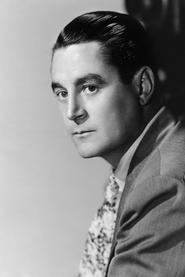
Mabel plays an out-and-out crook, a "Girl Bandit," no less. And she quickly hooks up with a male partner in crime, in this case a Gentleman Crook played by perpetually grinning Creighton Hale. Mabel seems a little livelier in than in some of her other late works. In the.
Cast & crew
More films like this
More Comedy films
View all →







More from Leo McCarey
View all →

More about this film
About the production
Release dateMarch 27, 1927
Box officeBox office figures not recorded for this short film
ProductionHal Roach Studios
Filmed inHal Roach Studios, Culver City, California
This was one of the final films in Mabel Normand's career before her declining health forced her retirement. The production was part of Hal Roach's series of two-reel comedies that were popular in the late 1920s. Leo McCarey, who would later become an Academy Award-winning director, was honing his craft on these comedy shorts at Hal Roach Studios during this period.
Themes
Criminal partnershipGender role reversalClass inversionComedy of errorsHeist narrative
Themes & topics
banditheistmansion partyjewel theftcriminal partnershiphitchhikingcar accidentdisguisecomedysilent film
Historical background
Silent-era production in 1927 relied on intertitles, live accompaniment, and studio systems that were rapidly consolidating into national industries.
Why this film matters
Should Men Walk Home? remains part of the screen heritage of its era, offering evidence of prevailing genres, production methods, and audience tastes. Later revivals, archive screenings, and digitization have kept such titles accessible to researchers and dedicated viewers long after their first commercial runs.
Making of
The production of 'Should Men Walk Home?' took place during a challenging period for Mabel Normand, whose career had been marred by scandal and declining health. Despite these difficulties, she reportedly maintained her professionalism and comic timing on set. Leo McCarey, then a young director learning his craft, worked closely with Normand to showcase her remaining talents. The film's relatively simple heist plot allowed for maximum physical comedy and visual gags, which were McCarey's strengths. The chemistry between Normand and Hale was reportedly genuine, with both actors enjoying the opportunity to play against type as criminals. The production was completed quickly, as was typical for two-reel comedies of the era, with filming likely taking only a few days.
What critics said
Trade and newspaper reviews from the silent period for Should Men Walk Home? survive only in fragments, making precise reception history difficult to reconstruct. Modern assessment tends to emphasize historical value, craft, and cultural context rather than box-office performance.
Did you know?
- This was Mabel Normand's penultimate film before her death in 1930 from tuberculosis
- Leo McCarey would later win three Academy Awards for Best Director, making this an early work from a filmmaker
- The film was released through Pathé Exchange, which was a major distributor of short comedies in the 1920s
- Creighton Hale was known for his distinctive wide-eyed, perpetually grinning expression that made him perfect for comedy roles
- Eugene Pallette, who appears in a supporting role, would become famous for his distinctive deep voice in talkies
- The title 'Should Men Walk Home?' was a play on the common phrase 'Should I walk home?' often used in romantic contexts
- This was one of the few films where Mabel Normand played an outright criminal character rather than her usual sweet comedic roles
- The film was produced during the transition period when studios were beginning to experiment with sound technology
- Hal Roach Studios was known as 'The Lot of Fun' and produced many classic comedy shorts during this era
- The mansion scenes were likely filmed on the same standing sets used for other Hal Roach productions
Visual style
The cinematography was handled by the Hal Roach Studios camera department, likely including regular Roach cinematographers such as Art Smith or Glen Gano. The visual style would have been typical of late 1920s comedy shorts, featuring clear, bright lighting and medium shots that allowed for physical comedy to be clearly visible. The mansion scenes would have utilized the studio's standing sets, creating an illusion of luxury through careful set dressing and lighting. Camera movement would have been minimal by modern standards, with the focus on capturing the performers' actions and expressions clearly.
Innovations
The film does not appear to feature any particular technical innovations, representing standard production techniques for Hal Roach Studios comedies of the period. The technical aspects were solid and professional, utilizing the established methods of silent filmmaking. The film's technical proficiency is evidenced by its smooth pacing and clear visual storytelling, which were hallmarks of the Hal Roach production system.
Music
As a silent film, 'Should Men Walk Home?' would have been accompanied by live musical performance during its theatrical run. The score would have been compiled from standard photoplay music libraries, with selections chosen to match the mood of each scene. The film's comedy elements would have been underscored with lively, upbeat pieces, while the heist sequences might have featured more suspenseful musical accompaniment. No specific composer is credited for this film, as was typical for short comedies of the era.
Famous quotes
No dialogue survives as this is a silent film, but intertitles would have included typical comedy exchanges about the heist and the characters' criminal partnership
Memorable scenes
- The opening scene where Mabel Normand's character narrowly avoids being hit by Creighton Hale's car while hitchhiking
- The sequence where the criminals infiltrate the high-society party and attempt to blend in with the wealthy guests
- The climactic heist scene where they attempt to crack the safe while avoiding detection
What audiences thought
Audiences in 1927 reportedly enjoyed the film's fast-paced comedy and the novelty of seeing Mabel Normand play a criminal character. The film performed well enough in its initial run as part of Hal Roach's comedy slate, though it didn't achieve the blockbuster success of some of the studio's other properties. Contemporary audience reaction was generally positive, with many noting that Normand seemed to be enjoying herself in the role. The film's theme of criminal partnership and class inversion resonated with audiences during the economically prosperous but socially turbulent late 1920s.
Film connections
Influenced by
- Earlier Mabel Normand comedies
- Hal Roach Studios comedy formula
- Crime comedy genre conventions of the 1920s
This film influenced
- Later Leo McCarey comedies
- Subsequent crime comedy shorts
- Films featuring female criminal protagonists
Film restoration
Unfortunately, 'Should Men Walk Home?' is considered a lost film. No complete copies are known to exist in any film archives or private collections. This loss is particularly significant as it represents one of Mabel Normand's final performances and an early example of Leo McCarey's directorial work. Only a few production stills and promotional materials survive to document the film's existence.
Where to watch
- This film is currently unavailable for viewing as it is considered lost. No known copies exist in film archives or private collections. Film enthusiasts can only learn about it through historical documentation, production stills, and contemporary reviews.