Also available on: YouTube

Silvio Pellico

1915 Italy
Political oppressionMartyrdom and sacrificeNational identityHistorical memoryImprisonment and endurance

Plot

The film dramatizes the persecution of the Italian patriot, writer, and playwright Silvio Pellico during the period of Austrian rule in northern Italy. Pellico is arrested on the charge of carbonarism, first taken to the Santa Margherita prison, and then transferred to the Piombi prison in Venice, where the harshness of his confinement reflects the political repression of the era. He is sentenced to death in February 1822, but the sentence is commuted to fifteen years of imprisonment, after which he is sent to the Spielberg fortress prison at Brno. The story follows his ordeal as a political prisoner and emphasizes his endurance, suffering, and symbolic importance as a figure of the Risorgimento. As with many Italian historical films of the period, the emphasis is less on psychological nuance than on emblematic scenes of arrest, captivity, and national martyrdom.

About the Production

Release Date 1915

This is an early Italian historical drama from the silent era, and surviving production documentation is limited. The film was directed by Livio Pavanelli and is associated with the wave of patriotic and literary subject films made in Italy before and during the First World War, when historical subjects tied to the Risorgimento and national identity were especially common. Like many films of 1915, it was likely staged largely in studio conditions with theatrical blocking and carefully arranged historical tableaux rather than extensive location work, though specific filming sites are not securely documented. No reliable surviving evidence has been found for its exact production company, budget, or box-office earnings. The film is historically notable mainly through catalog and archival references rather than through a richly documented production history.

Historical Background

Silvio Pellico was made in 1915, at a time when Italy's silent film industry was already internationally significant but also increasingly affected by the disruptions of the First World War. The choice of Pellico as a subject reflects the era's fascination with the Risorgimento, political imprisonment, and the struggle against foreign domination, especially Austrian rule. In Italian culture, Pellico had long been a symbolic martyr-figure through his writings and imprisonment, and his name carried patriotic and moral resonance well beyond literary circles. A film on this subject would have fit neatly into the national-historical cinema of the period, which often sought to elevate Italian identity through dramatizations of celebrated figures from the nineteenth century. Its significance lies not only in the subject itself but also in what it reveals about the aspirations of early Italian cinema to participate in cultural nation-building.

Why This Film Matters

The film is culturally significant as an example of how early Italian cinema engaged with the country's political memory and literary heritage. By dramatizing Pellico's imprisonment, it transforms a historical and literary figure into a screen martyr, reinforcing themes of sacrifice, patriotism, and moral endurance that were central to Italian national identity. Even without extensive surviving documentation or widespread modern availability, the film belongs to the tradition that helped establish Italy as a major producer of prestige historical cinema in the silent era. Its existence also demonstrates how cinema served as a vehicle for popularizing canonical national figures, bringing them into a mass visual culture that could reach audiences beyond the readers of Pellico's memoirs. For historians, the film is a useful artifact of the ways prewar Italian cinema blended biography, history, and patriotic sentiment.

Making Of

Very little detailed behind-the-scenes information survives for this production, which is typical for many Italian silent films from the mid-1910s. What can be inferred is that the film would have relied on the stage-derived acting and composition conventions of the period, with a strong emphasis on poses, gestures, and decoratively arranged interiors for prison scenes. The historical subject matter suggests a production shaped by the national prestige of literary adaptation and patriotic biography, rather than by star-driven spectacle or elaborate action. Because archival records are incomplete, it is not possible to verify casting rationale, shooting schedule, set designers, or censorship issues with certainty. The film nonetheless belongs to the important wave of Italian historical cinema that treated national history as a source of moral and cultural instruction.

Visual Style

Specific cinematographic credits and visual-analysis sources are not securely documented in the accessible record for this film, but its style would have been shaped by the dominant conventions of 1915 Italian silent cinema. One would expect composed tableaux, emphatic staging, and carefully balanced interior scenes, especially for prison sequences that needed to convey oppression and isolation without dialogue. The period's historical films often used strong architectural framing, deep-set interiors, and clear sightlines to present action in a highly legible manner for audiences watching in silence. If the film followed the norms of the era, its visual language likely emphasized sculptural poses, lighting contrasts that highlighted emotional seriousness, and a theatrical sense of pictorial order. These qualities would have supported the film's historical and moral tone.

Innovations

No specific technical innovations are securely associated with this title. Its importance lies instead in its participation in the mature early Italian historical drama tradition, which was known for large-scale cultural subjects, controlled staging, and pictorial sophistication. The film likely relied on the established techniques of silent-era storytelling, including intertitles, expressive acting, and tableau composition, rather than on novel mechanical effects. Its contribution was therefore aesthetic and historical rather than technological. In the context of 1915 Italian cinema, that still made it part of an advanced and influential production culture.

Music

As a 1915 silent film, Silvio Pellico did not have an original synchronized soundtrack. In exhibition, it would typically have been accompanied by live music, which might have ranged from a solo pianist to a small ensemble depending on the venue. Specific cue sheets, commissioned scores, or surviving music arrangements are not known from the available record. The music, whatever form it took, would have been intended to support the solemn historical mood, underscore scenes of imprisonment and sentencing, and help shape the audience's emotional response. Any modern presentations, if available, would likely use reconstructed or newly compiled accompaniment.

Memorable Scenes

  • Pellico's arrest on the charge of carbonarism, which establishes the political stakes of the story.
  • The transfer from Santa Margherita prison to the Piombi in Venice, emphasizing the machinery of state repression.
  • The death sentence pronounced in February 1822, a dramatic legal moment that marks the height of the film's tension.
  • The commutation of the sentence from death to fifteen years of imprisonment, turning the narrative toward prolonged suffering rather than immediate execution.
  • Pellico's confinement in the Spielberg fortress at Brno, presented as the central emblem of his endurance and historical martyrdom.

Did You Know?

  • The film is based on the life of Silvio Pellico, one of the most famous political prisoners of the Italian Risorgimento and the author of the influential memoir "Le mie prigioni".
  • The title identifies a historical person rather than a fictional protagonist, placing the film within the early Italian tradition of prestige historical biography.
  • The subject of carbonarism links the film to anti-Austrian nationalist history, a theme that resonated strongly with Italian audiences in the years surrounding World War I.
  • Because the film dates from 1915, it belongs to the silent era and would originally have been exhibited with live musical accompaniment rather than synchronized sound.
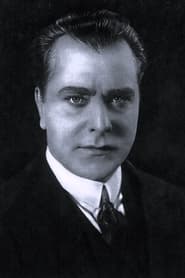
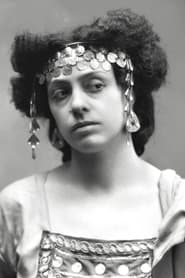
  • Available information about the cast is sparse, but the surviving records identify Ugo Bazzini, Gioacchino Grassi, and Elisa Grassi-Nicola among the performers.
  • The director, Livio Pavanelli, is documented here in connection with this film, though his surviving filmography is unevenly recorded in modern databases.
  • The film appears to be one of several Italian historical works that dramatized imprisonment, martyrdom, and patriotic sacrifice in a highly literary style.
  • No widely circulated surviving print is commonly cited in general film references, making the film difficult for modern viewers to access.

What Critics Said

Contemporary review material for Silvio Pellico is not readily available in the standard surviving reference sources, so a precise account of its initial critical reception cannot be established with confidence. As with many silent-era Italian historical dramas, it was likely judged in terms of its respectability, fidelity to historical atmosphere, and effectiveness in presenting a noble national subject. Modern critical discussion is limited primarily by the film's obscurity and the apparent lack of easily accessible surviving prints or detailed contemporary criticism. Today it is of interest chiefly to silent-film scholars, historians of Italian nationalism on screen, and archivists tracing the early Italian historical drama cycle. Its critical reputation is therefore more archival and historical than popularly canonical.

What Audiences Thought

There is no secure audience-survival record that allows a detailed reconstruction of public reaction to the film at the time of release. Given the popularity of patriotic and historical subjects in Italian silent cinema, it is plausible that the film appealed to viewers interested in national history and literary prestige material. Audiences of the era often responded strongly to melodramatic scenes of suffering, confinement, and martyrdom, all of which would have suited the Pellico story. In the modern era, however, the film is largely inaccessible to general audiences and is discussed mainly in reference works rather than in repertory screenings. As a result, its audience history is fragmentary and must be treated as such.

Film Connections

Influenced By

  • Silvio Pellico's memoir "Le mie prigioni
  • Italian Risorgimento historical tradition
  • Stage melodrama and literary biography
  • Early Italian patriotic silent films

This Film Influenced

  • Later Italian historical biographies of nationalist figures
  • Subsequent screen adaptations of nineteenth-century political martyr stories
  • Silent-era prison and persecution dramas in Italian cinema

Film Restoration

Preservation status is uncertain from readily accessible public references; the film is obscure and may survive only in incomplete archival form or may be lost to general circulation. No widely known restoration is commonly cited in standard modern film references. Because many Italian silent films of this period survive only fragmentarily, it should be treated as an archival rarity unless a specific holding is confirmed by a film archive.

Themes & Topics

Silvio PellicocarbonarismAustrian imprisonmentSpiegelbergRisorgimentopolitical prisoner