Sinners' Holiday
"Penny arcade secrets on Coney Island"
Keys: Space play/pause · ←/→ 10s · F fullscreen · M mute · </> speed
About this film
Ma Delano runs a penny arcade in Coney Island, living upstairs with her sons and daughter. Story involves rum-running, accidental murder and a frame-up.
Cast & crew
More films like this
More Crime films
View all →

More from John G. Adolfi
View all →

More about this film
About the production
Release dateOctober 11, 1930
BudgetApproximately $200,000 (Estimated based on standard Warner Bros. 'quickie' productions of the era)
ProductionWarner Bros. Pictures, The Vitaphone Corp.
Filmed inWarner Bros. Burbank Studios - 4000 Warner Boulevard, Burbank, California, USA, Coney Island, Brooklyn, New York City, New York, USA (Atmospheric stock footage and exterior plates)
The film was a rapid production, completed in just three weeks to capitalize on the success of the Broadway play 'Penny Arcade'. Al Jolson originally purchased the rights to the play for $20,000 with the specific intent of ensuring James Cagney and Joan Blondell were cast in the film version, as he was immensely impressed by their stage performances. This marked a significant transition for Warner Bros. as they began to move away from stagey 'all-talking' pictures toward more dynamic, gritty urban dramas. The director, John G. Adolfi, had to manage the transition of stage actors to the screen, which involved significant adjustments in acting style and makeup to suit the early sound cameras.
Themes
Maternal Protection and ObsessionProhibition and BootleggingThe Corruptive Nature of the UnderworldLoyalty vs. MoralityThe Gritty Reality of Working-Class Life
Themes & topics
Penny ArcadeConey IslandBootleggingAccidental MurderFrame-upMother-Son RelationshipCarnival BarkerPre-CodeProhibitionFalse Accusation
Historical background
Sinners' Holiday (1930) emerged during the studio-system peak and early sound decades, when exhibition habits and national film industries were still taking shape.
Why this film matters
Sinners' Holiday remains accessible through digital archives, giving modern viewers a direct link to 1930 screen culture.
Making of
During the production, director John G. Adolfi clashed with James Cagney over the actor's naturalistic and aggressive acting style, which differed from the more theatrical norms of the time. Cagney's insistence on realism extended to his makeup; he complained that the heavy 'Indian red' greasepaint used to compensate for early film stock made him look like a 'wraith' due to his pale complexion. Joan Blondell recalled that the studio executives initially had little faith in her or Cagney, focusing their promotional efforts on Grant Withers and Evalyn Knapp. The set of the penny arcade was built on a soundstage but designed with meticulous detail to replicate the claustrophobic, noisy atmosphere of a real Coney Island attraction, helping the actors maintain the 'carny' energy of the original play.
What critics said
Retrospective notes on Sinners' Holiday emphasize its value as a period production rather than blockbuster reception.
Did you know?
- This film marks the motion picture debut of actor James Cagney.
- It is also the film debut of Joan Blondell, who would go on to become a major star and frequent co-star of Cagney.
- James Cagney and Joan Blondell were the only members of the original Broadway cast of 'Penny Arcade' to be brought to Hollywood for the film.
- James Cagney famously refused to say the line 'I'm your baby, ain't I?' to his mother in the film, arguing it was too 'sappy' for his character.
- The film's title was changed from 'Penny Arcade' to 'Sinners' Holiday' because the studio felt the original title sounded too much like a documentary or a juvenile film.
- Lucille La Verne, who plays the mother, later provided the voice and physical inspiration for the Evil Queen/Witch in Disney's 'Snow White and the Seven Dwarfs' (1937).
- Despite being the debut for Cagney and Blondell, they were billed 4th and 5th respectively, behind the established stars Grant Withers and Evalyn Knapp.
- The film is one of the earliest examples of the 'gangster' genre that would define Warner Bros. in the 1930s.
- James Cagney was paid $500 a week for a three-week guarantee to make this film.
- The character of Harry Delano established the 'mama's boy' criminal archetype that Cagney would later perfect in 'White Heat' (1949).
Visual style
The cinematography by Ira H. Morgan is characteristic of early sound films, featuring relatively static camera setups due to the bulky sound-deadening 'blimps' required for cameras. However, the film makes effective use of low-key lighting in the arcade's backrooms to create a noir-ish, suspenseful atmosphere during the murder and subsequent cover-up scenes. The use of authentic-looking carnival sets and stock footage of Coney Island adds a layer of realism that was becoming a hallmark of the Warner Bros. style.
Innovations
While not a pioneer of new technology, the film is a proficient example of the 'all-talking' Vitaphone process. It successfully integrated complex ambient sound effects (the noise of the penny arcade) with dialogue, which was a technical challenge in 1930. The film's tight editing by James Gibbon was also noted for being more 'snappy' than many of its contemporary stage-to-screen adaptations.
Music
The film features a synchronized Vitaphone soundtrack. The music, directed by Erno Rapee and conducted by Louis Silvers, consists largely of incidental carnival music—calliopes and upbeat boardwalk tunes—which provides a jarring, ironic contrast to the dark criminal activities occurring behind the scenes. There are no major musical numbers, as the film is a straight drama, but the ambient sound of the arcade (bells, machines, crowds) is used effectively to build tension.
Famous quotes
Ma Delano: 'I've spent my life keeping this family together, and I'm not going to let a little thing like the law tear it apart now.'
Harry Delano: 'I didn't mean to do it, Ma! He was coming at me... I just fired!'
Angel Harrigan: 'A guy like me doesn't stand a chance when the cards are stacked by a lady like you.'
Myrtle: 'You're a big shot now, Harry. Just don't forget who knew you when you were just a punk in the arcade.'
Memorable scenes
- The murder scene in the back of the arcade, where Harry's panic and 'fretful tenseness' first showcased Cagney's explosive acting style.
- The confrontation between Ma Delano and Jennie, where the mother's fierce, almost villainous protection of her son clashes with the daughter's moral compass.
- The final scene where the truth is revealed, notable for its lack of a traditional 'happy ending' sentimentality, typical of the Pre-Code era.
What audiences thought
Audiences in 1930 responded well to the film's fast pace and carnival setting, though it was not a massive blockbuster. It performed well enough for Warner Bros. to realize they had a potential star in Cagney, leading them to quickly cast him in 'The Doorway to Hell' and eventually 'The Public Enemy'. Contemporary audiences and cinephiles primarily seek out the film today for its 'Pre-Code' grit and the novelty of seeing Cagney's first screen appearance.
Film connections
Influenced by
- The Broadway play 'Penny Arcade' by Marie Baumer
- The burgeoning 'Gangster' cycle of the late 1920s
- Real-life accounts of Coney Island racketeering
This film influenced
- The Public Enemy (1931)
- White Heat (1949)
- Nightmare Alley (1947)
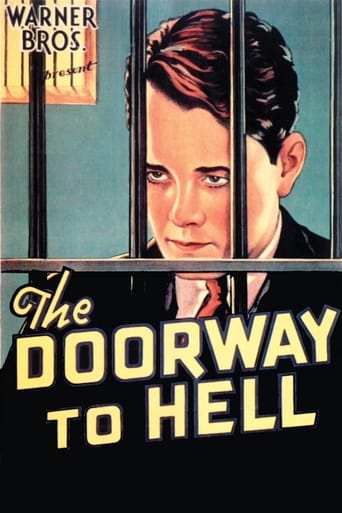
- The Doorway to Hell (1930)
Film restoration
The film is well-preserved. A complete print is held by the Library of Congress and the Warner Bros. archive. It has been restored and was released on DVD by the Warner Archive Collection in 2015.
Where to watch
- Warner Archive DVD
- TCM (Turner Classic Movies) periodic broadcasts
- Internet Archive (Public Domain/Streaming)
- Available for digital rental/purchase on platforms like Amazon Prime and Apple TV in certain regions