




Son of the Gods
"1930 film by Frank Lloyd"
Keys: Space play/pause · ←/→ 10s · F fullscreen · M mute · </> speed
About this film
Richard Barthelmess and Constance Bennett star as a couple in love who have a falling-out when she discovers that, though he looks Caucasian, he is actually Chinese. It was adapted from the novel of the same name by Rex Beach.
Cast & crew
More films like this
More Drama films
View all →







More from Frank Lloyd
View all →

More about this film
About the production
Release dateJanuary 30, 1930
Budget$436,000
Box office$1,432,000
ProductionFirst National Pictures, Warner Bros.
Filmed inWarner Bros. Burbank Studios, California, San Francisco, California, French Riviera (process shots)
The film was a significant production for First National, featuring an early use of Technicolor for a specific sequence involving Sam's backstory and his father's temple. Director Frank Lloyd, who had recently won an Academy Award for 'The Divine Lady,' brought a high level of prestige to the project. The production faced the challenge of balancing the sensitive themes of racial prejudice with the commercial requirements of 1930s Hollywood, ultimately leading to the 'safe' plot twist regarding the protagonist's true race.
Themes
Racial PrejudiceIdentity and BelongingSocial HypocrisyThe Burden of HeritageRedemption through Love
Themes & topics
YellowfacePassing as whiteChinese-AmericanSocialiteAdoption twistPre-CodeRacial discrimination
Historical background
Son of the Gods (1930) circulated in studio-era and wartime programming. Richard Barthelmess and Constance Bennett star as a couple in love who have a falling-out when she discovers that, though he looks Caucasian, he is actually Chinese. Contemporary trade papers and later preservation notes document its place among theatrical and archive releases.
Why this film matters
Son of the Gods remains accessible to researchers and viewers as a screen title in museum, archive, and streaming collections. Son of the Gods is a 1930 American pre-Code romantic drama film directed by Frank Lloyd with Technicolor sequences, that was produced and released by First National Pictures, a subsidiary of Warner Bros.
Making of
The production of 'Son of the Gods' was marked by the transition from silent to sound cinema. Director Frank Lloyd utilized a restrained acting style for Richard Barthelmess to emphasize the character's internal stoicism and the 'mask' he wore to protect himself from societal rejection. The 'yellowface' casting of Barthelmess was standard for the era, as major studios rarely cast Asian actors in leading romantic roles. The film's ending was a point of contention; while the source novel and film aimed to critique racism, the Hays Office and social norms of 1930 necessitated the revelation that the protagonist was white to allow for a 'happy' (non-miscegenated) ending.
What critics said
Day-one reviews for Son of the Gods are sparse in digitized press archives; later criticism treats it as a reference point for 1930 cinema programming and preservation.
Did you know?
- The film originally featured a Technicolor sequence that depicted Sam's childhood and his adoption, though this color footage is now considered lost and survives only in black and white or sepia-toned prints.
- Richard Barthelmess, a major silent film star, used this role to transition into more 'socially conscious' talkies, though he played the role in 'yellowface' makeup.
- The film was based on a popular novel by Rex Beach, who was paid $35,000 for the rights—a substantial sum at the time.
- It was one of the first 'talkies' to explicitly address the social ostracization of Asian Americans, even if it ultimately retreated from a truly interracial conclusion.
- A psychological study in 1930 used this film to measure social attitudes, finding that children who watched it showed a 'decided shift' in favor of more positive views toward Chinese people.
- The film was a significant box office success, earning over $1.4 million during the early years of the Great Depression.
- Constance Bennett's performance as the spoiled but ultimately loving Allana helped solidify her status as one of the highest-paid actresses of the early 1930s.
Awards & recognition
- Photoplay Magazine Medal of Honor (Nomination/Finalist status for 1930)
Visual style
Ernest Haller, who would later win an Oscar for 'Gone with the Wind,' provided the cinematography. The film features sophisticated use of shadows and lighting to reflect Sam's isolation. The lost Technicolor sequence was intended to provide a vibrant, 'exotic' contrast to the starker, more cynical black-and-white world of Western high society.
Innovations
One of the early features to integrate a Technicolor sequence into a primarily black-and-white 'talkie.' It also utilized advanced 'process shots' for the scenes set in the South of France, allowing the actors to appear in exotic locales without leaving the Burbank studio lot.
Music
The film features a synchronized musical score and sound effects typical of early talkies. It includes traditional Chinese-inspired motifs to underscore the scenes in Lee Ying's home, contrasting with the jazz and orchestral music of the European and college scenes.
Famous quotes
Sam Lee: 'I am a Chinese. To you, that means I am something less than human.'
Allana Wagner: 'I don't care what they say, Sam. I only know what I feel when I'm with you.'
Lee Ying: 'My son, the heart has no color, but the world has eyes that see nothing else.'
Memorable scenes
- The University Rejection: Sam is invited on a triple date only to have the girls recoil in horror and hurl racial slurs when they realize he is Chinese, leading to his silent, dignified exit.
- The Riviera Romance: A lushly filmed sequence where Sam and Allana fall in love, unaware of the social storm that awaits them.
- The Final Revelation: Lee Ying reveals the truth of Sam's birth, producing the documents that prove he is Caucasian, which serves as the film's emotional and narrative climax.
What audiences thought
Audiences in 1930 responded very positively, making the film a hit. It resonated particularly with viewers who enjoyed the 'Pre-Code' era's willingness to tackle more mature and controversial social themes. However, it was reportedly less well-received in China, where the 'Westernized' depiction of Chinese culture was seen as inaccurate.
Film connections
Influenced by
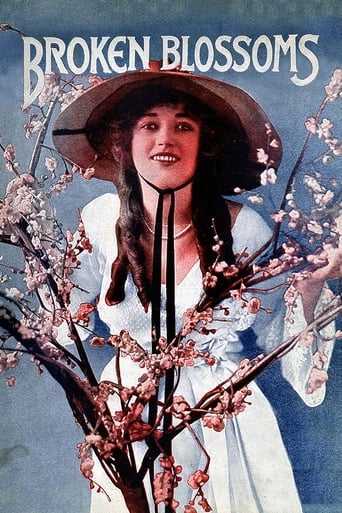
- Broken Blossoms (1919)
- The novel 'Son of the Gods' by Rex Beach
- The transition from Silent to Sound cinema
This film influenced
- The Good Earth (1937)
- Sayonara (1957)
- Imitation of Life (1934)
Film restoration
The film is extant and preserved in the Library of Congress and other archives. However, it survives only in black-and-white; the original Technicolor sequences are lost, though some prints retain a sepia tint for those specific scenes.
Where to watch
- Turner Classic Movies (TCM) occasionally broadcasts the film
- Available for research at the Library of Congress
- Warner Archive Collection (DVD/Digital)